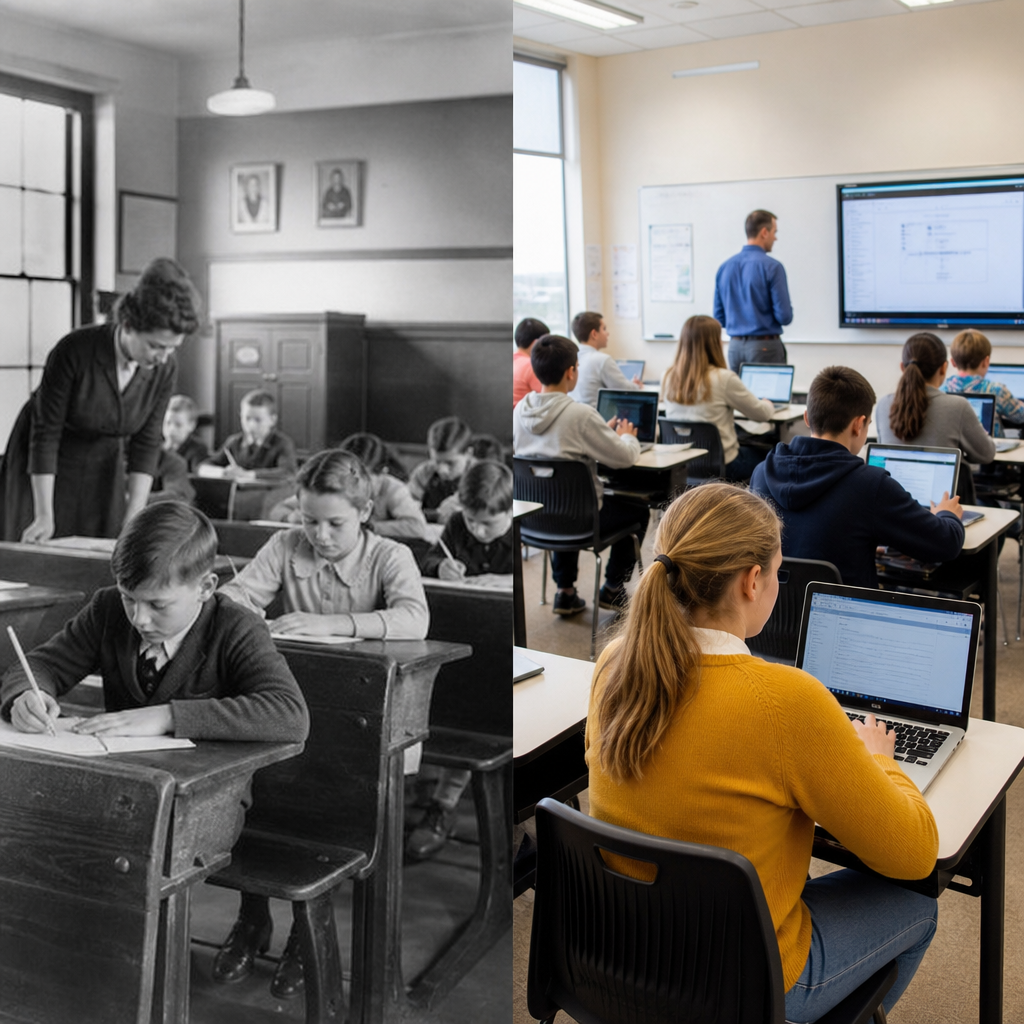

Educational testing is entering a period of rapid change, but its future makes sense only when viewed through its history. In schools, universities, licensing systems, and workforce pipelines, tests have long been used to sort, certify, diagnose, and compare learners. Educational testing refers to the design and use of structured measures to evaluate knowledge, skills, aptitudes, or readiness. That broad definition includes classroom quizzes, state accountability exams, college entrance tests, professional licensure exams, adaptive diagnostic screeners, and performance assessments scored with rubrics.
As someone who has worked with assessment frameworks, item specifications, standard-setting reports, and score interpretation guides, I have seen the same tension surface repeatedly: institutions want results that are efficient and comparable, while learners need measures that are fair, meaningful, and instructionally useful. That tension has shaped the history of educational testing from imperial civil service exams to modern computer-adaptive platforms. It also explains why the future of educational testing will not be a clean break from the past. Instead, it will be a negotiation among psychometrics, technology, public trust, and changing definitions of what schools should value.
This article serves as a hub for the history of educational testing within the broader foundations of educational assessment. It traces where major testing practices came from, why they gained influence, what problems they created, and what future models are likely to replace or refine them. Key terms matter here. Validity means a test supports the interpretation it claims to support. Reliability refers to score consistency. Norm-referenced testing compares learners with one another, while criterion-referenced testing measures performance against defined standards. High-stakes testing attaches major consequences to scores. Understanding those concepts is essential because every future debate about exams, accountability, admissions, or credentialing eventually returns to them.
The stakes are practical, not abstract. Families use test results to make decisions about tutoring, placement, and college applications. Teachers use assessment data to group students, adjust lessons, and identify unfinished learning. Policymakers use aggregate scores to evaluate systems, often imperfectly. Employers and licensing boards use examinations to protect the public and signal competence. If future testing becomes more personalized, more continuous, and more embedded in digital learning environments, the underlying questions will remain the same: what should be measured, how confidently can it be measured, and who benefits or is harmed by the result?
From ancient examinations to early modern measurement
The history of educational testing usually begins with China’s imperial examination system, developed over many centuries and formalized during dynastic rule. Those exams were not “educational testing” in the modern psychometric sense, but they established a durable idea: written examinations could help governments allocate opportunity beyond hereditary status. Candidates studied canonical texts, composition, and policy reasoning under highly controlled conditions. The system was far from equitable by modern standards, since access to preparation was uneven and success required years of specialized study, yet it influenced later beliefs that exams could offer meritocratic selection.
In Europe and North America, formal schooling expanded alongside bureaucratic states, universities, and professional institutions. Oral recitations, essay examinations, and inspector-based judgments dominated early practice. By the nineteenth century, written exams became more common because they scaled better and created records. The Industrial Revolution intensified demand for standard procedures, and mass schooling created pressure to compare students across classrooms. Examinations gradually shifted from local teacher judgment toward external standardization, especially in systems trying to control quality across large territories.
The scientific measurement movement transformed that shift. Researchers such as Francis Galton, Alfred Binet, and later Lewis Terman helped establish methods for quantifying human differences. Binet’s work, originally intended to identify students needing support, was later adapted into broader intelligence testing traditions. This period introduced statistical concepts still central today, including standard scores, norm groups, and distributions. It also embedded a lasting cautionary lesson: tools designed for one purpose are often stretched into others. Intelligence tests were used to guide intervention, but they were also used to justify tracking, exclusion, and sweeping claims about ability.
The rise of standardized testing in the twentieth century
Standardized testing became dominant in the twentieth century because it offered efficiency, comparability, and administrative control. During World War I, the Army Alpha and Beta tests demonstrated that large groups could be assessed quickly using uniform procedures. In the United States, this helped normalize machine-scored testing and large-scale score reporting. Soon after, college admissions testing expanded, culminating in exams such as the SAT and later the ACT. State and national systems adopted standardized assessments to monitor achievement, compare districts, and evaluate policy reforms.
Psychometrics matured during this period. Classical test theory provided practical tools for estimating reliability, item difficulty, and score error. Item analysis became a routine part of test development. Test blueprints, equating designs, and standard-setting methods made exam construction more disciplined. By the late twentieth century, item response theory improved scale development and enabled adaptive testing. These advances mattered because they moved assessment from ad hoc question writing toward evidence-based design. A good test was no longer just a hard test or a popular test; it needed technical quality documentation.
At the same time, standardized testing drew criticism. Civil rights advocates, educators, and researchers argued that many exams reflected cultural bias, narrow curriculum definitions, and unequal access to preparation. High-stakes uses often magnified those problems. When promotion, graduation, teacher evaluation, or school funding depended heavily on scores, incentives shifted toward test preparation and score gaming. I have seen districts narrow instruction to tested formats, not because leaders believed it was ideal pedagogy, but because accountability systems made short-term score movement the dominant priority. That pattern shaped public skepticism and still influences reform debates today.
Accountability, admissions, and the limits of score-driven systems
From the 1980s through the 2010s, test-based accountability became a defining feature of educational policy in many countries. Standards-based reform aimed to clarify what students should know and then measure progress consistently. In the United States, policies such as No Child Left Behind accelerated annual testing and subgroup reporting. The intended benefit was transparency: systems could no longer hide underperformance among low-income students, multilingual learners, students with disabilities, or racial subgroups inside average scores. That visibility remains one of large-scale testing’s strongest arguments.
But the limits also became clear. A single exam rarely captures the full domain of learning. Complex skills such as scientific investigation, historical argument, collaboration, or oral communication are difficult to represent well through selected-response formats alone. Admissions testing faced parallel criticism. Colleges increasingly found that grade point average, course rigor, and noncognitive indicators often predicted persistence better than a single Saturday morning exam. The pandemic-era move toward test-optional policies accelerated a trend already underway, though evidence remains mixed by institution type and applicant population.
| Testing model | Main strength | Main limitation | Likely future role |
|---|---|---|---|
| Standardized fixed-form exams | Comparable scores across large groups | Narrow sampling of complex learning | Accountability, certification, baseline monitoring |
| Computer-adaptive tests | Efficient measurement across ability levels | Less transparent item experience for users | Screening, placement, interim diagnostics |
| Performance assessments | Better capture of applied skills | Higher scoring cost and moderation demands | Capstones, course assessment, credentialing |
| Portfolio-based assessment | Shows growth over time | Standardization challenges | Program completion, exhibitions of learning |
The central lesson from this era is not that tests are useless. It is that tests become distorted when institutions ask them to do too much. A mathematics assessment can indicate proficiency in specified content, but it cannot fully explain instructional quality, motivation, home support, attendance, and curriculum coherence at the same time. Future systems are likely to distribute those responsibilities across multiple measures rather than concentrating them in one score.
What the future of educational testing might look like
The future of educational testing will likely be more continuous, more personalized, and more integrated with learning. Instead of relying mainly on isolated end-of-year exams, systems are moving toward balanced assessment architectures: formative checks during instruction, interim assessments for progress monitoring, summative measures for accountability, and authentic performances for demonstration of competence. This is not theoretical. District platforms already combine curriculum-embedded quizzes, adaptive screeners such as NWEA MAP, writing analytics, and standards dashboards in one ecosystem. The challenge is aligning those streams so they produce coherent decisions rather than data overload.
Computer-adaptive testing will expand because it reduces testing time while improving precision. By selecting items based on prior responses, adaptive systems estimate performance more efficiently than fixed forms. They are especially useful for wide achievement ranges, such as early literacy or algebra readiness. However, adaptivity must be paired with clear score reporting. When students receive different items, transparency matters. Parents, teachers, and policymakers need understandable explanations of scales, growth metrics, and confidence intervals, not just dashboards with colorful icons.
Performance-based assessment will also grow, especially where educators want evidence of transfer rather than recall. In a future-oriented science test, students might analyze a dataset, critique a method, and explain a recommendation instead of selecting one correct answer. In civics, they might evaluate sources and draft a policy brief. Digital platforms now make it easier to collect multimedia evidence, but quality scoring remains the bottleneck. Strong rubrics, scorer calibration, anchor responses, and moderation protocols are essential if performance tasks are to carry meaningful stakes.
Artificial intelligence will influence testing, but not simply by replacing human judgment. The more realistic path is augmentation. AI can support automated scoring for constrained writing tasks, flag unusual response patterns for review, generate item drafts aligned to content specifications, and personalize practice without altering the security of operational forms. Yet AI introduces validity risks, including construct-irrelevant support, hallucinated feedback, and unequal access to tools. If students can use generative systems during assessment, designers must decide whether they are measuring unaided knowledge, tool-assisted problem solving, or something in between. That construct definition must come first.
Fairness, accessibility, and trust in next-generation assessment
The strongest future testing systems will be those that improve fairness without sacrificing rigor. Accessibility can no longer be treated as an accommodation added late in development. Universal Design for Learning principles, accessible item authoring, screen-reader compatibility, multilingual supports where appropriate, and bias review by diverse panels should be built into assessment from the beginning. Leading testing organizations already use differential item functioning analyses to detect whether items behave differently across groups after controlling for ability. That technical step is necessary, but it is not sufficient. Fairness also depends on curriculum access, preparation opportunities, and score use.
Privacy and data governance will become central as assessment moves into digital environments. Continuous testing generates far more data than annual exams: keystrokes, response times, revision histories, click patterns, and sometimes audio or video evidence. Some of that information can strengthen interpretation, but schools need strict policies for consent, retention, vendor access, and cybersecurity. Standards from organizations such as the American Educational Research Association, the American Psychological Association, and the National Council on Measurement in Education remain foundational here, particularly their joint testing standards on validity, fairness, and appropriate use.
Public trust will depend on restraint as much as innovation. A technically sophisticated assessment can still fail if score reports are opaque or if consequences feel arbitrary. In my experience, educators accept difficult results when the purpose is clear, the evidence is defensible, and the next instructional step is visible. They resist when tests appear disconnected from curriculum or when a single cut score drives life-changing decisions without context. Future educational testing will work best when institutions explain what a score means, what it does not mean, and what evidence should accompany it.
Why history remains the best guide to the future
The future of educational testing will not eliminate exams, but it will narrow the gap between measurement and learning. History shows a repeated pattern. Systems embrace tests for scale, objectivity, and efficiency; critics expose bias, overreach, and narrowing effects; reformers then build more balanced models. That pattern is playing out again today with adaptive platforms, performance tasks, portfolio systems, and AI-assisted assessment. Each tool solves a real problem, but none removes the need for careful design, technical evidence, and humane score use.
For readers exploring the foundations of educational assessment, the history of educational testing is the essential starting point because it explains why modern debates are so persistent. Questions about merit, access, comparability, bias, and instructional value did not appear recently; they have accompanied testing for generations. The practical takeaway is straightforward. Use standardized exams where comparability matters, use richer assessments where complex competence matters, and never confuse a score with the whole learner. If you are building curriculum, reviewing policy, or choosing assessment tools, start with purpose, then match the method to the decision. That is what the future of educational testing should look like.
Frequently Asked Questions
1. How is educational testing likely to change in the future?
The future of educational testing will likely be defined by a move away from one-size-fits-all exams and toward more flexible, continuous, and purpose-driven assessment systems. For decades, many tests have been built primarily to rank students, compare schools, or make high-stakes decisions at a single point in time. Going forward, testing is expected to do more than sort learners. It will increasingly be used to support learning in real time, identify specific skill gaps, and provide more actionable feedback to students, teachers, institutions, and employers.
One major shift is the growing use of digital platforms, which make it easier to deliver assessments on demand, adapt questions based on student performance, and report results quickly. Instead of waiting weeks for a score report, learners and educators may receive immediate insights into strengths, weaknesses, and next steps. Another likely change is the expansion of performance-based and competency-based assessments, where students demonstrate what they can do through projects, simulations, writing tasks, problem-solving exercises, or job-relevant scenarios rather than relying only on multiple-choice formats.
At the same time, standardized testing is unlikely to disappear altogether. Large-scale exams still serve important functions in accountability systems, admissions, licensure, and benchmarking. The more realistic future is a mixed model: standardized measures will remain part of the system, but they will be complemented by richer evidence of learning, including portfolios, course performance, micro-credentials, and mastery records. In other words, the future of educational testing is not simply about replacing old tests with new tools. It is about building an assessment ecosystem that is more precise, more responsive, and better aligned with how people actually learn and apply knowledge.
2. Will artificial intelligence play a major role in the future of testing?
Yes, artificial intelligence is likely to play a significant role, but its impact will depend on how carefully it is designed, governed, and used. AI can make testing more adaptive by adjusting difficulty levels in real time based on a learner’s responses. That means two students may take different paths through an assessment while still being measured against the same underlying standards. This can improve efficiency, reduce frustration, and generate a more accurate picture of what a student knows and can do.
AI may also help with scoring and feedback, especially in areas that traditionally require time-intensive human evaluation, such as essays, short responses, spoken language tasks, and simulations. In some contexts, AI can identify patterns in student errors, flag misunderstandings, and provide targeted recommendations for practice. For institutions, it may support large-scale test administration, item analysis, test security monitoring, and the detection of unusual response behavior.
However, the future use of AI in educational testing comes with serious responsibilities. AI systems can reflect bias in training data, produce inconsistent judgments, or reward formulaic responses over genuine insight if they are poorly calibrated. There are also privacy concerns, especially when systems collect biometric, behavioral, or longitudinal learning data. Because of these risks, AI should not be treated as an unquestioned authority. Human oversight, transparency, validation, and fairness audits will be essential. The most credible future is not one in which AI replaces educators and assessment experts, but one in which it assists them by expanding capacity while preserving professional judgment and public trust.
3. Could traditional standardized tests become less important in college admissions and career pathways?
They could become less dominant, but probably not irrelevant. In recent years, many colleges, universities, and employers have started to reconsider how much weight they place on standardized test scores. Part of that shift comes from concerns about access, equity, test preparation advantages, and whether a single exam can fully capture a person’s readiness or potential. As a result, more institutions are exploring holistic review processes and skills-based hiring models that consider a broader range of evidence.
In the future, admissions and workforce decisions may rely more heavily on combinations of indicators, including grades, course rigor, writing samples, interviews, portfolios, certifications, capstone projects, and demonstrated competencies. Digital transcripts and verified learning records could make it easier to present this broader evidence in a structured and credible way. For career pathways in particular, employers may place increasing value on direct proof of skills, especially in technical, applied, and rapidly changing fields where practical performance matters as much as formal credentials.
That said, standardized tests still offer some advantages. They create a common metric across different schools, regions, and grading systems, which can be useful when decision-makers need a comparable measure. For some students, test scores can also provide a way to stand out, especially if they come from schools with fewer advanced coursework options or less familiar grading practices. The future is likely to involve a recalibration rather than a complete abandonment. Standardized tests may become one signal among many instead of the defining factor they have often been in the past.
4. What kinds of skills might future educational tests measure beyond memorization?
Future educational tests are expected to place greater emphasis on applied knowledge and transferable skills rather than focusing narrowly on recall of facts. Memorization will still matter in some domains, because foundational knowledge supports higher-level thinking, but assessment systems are increasingly being asked to capture how well learners can use what they know. That includes critical thinking, analytical reasoning, problem-solving, communication, collaboration, creativity, and decision-making in complex situations.
For example, instead of asking only whether a student can select the correct answer from a list, future assessments may ask the student to interpret data, defend an argument, revise a flawed solution, design an experiment, or respond to a realistic scenario. In professional and workforce contexts, testing may also expand to include job-relevant competencies such as digital literacy, ethical judgment, adaptability, and the ability to learn new tools quickly. Language assessments may evaluate real communication more authentically, while science and math assessments may use interactive tasks that reflect inquiry and application rather than routine procedures alone.
There is also growing interest in measuring durable skills that matter across disciplines and careers. The challenge, of course, is that these abilities are harder to assess reliably than factual recall. Good future tests will need to balance authenticity with fairness and consistency. That means carefully designed tasks, clear scoring criteria, and strong evidence that the results actually reflect the intended skills. If done well, this shift could make educational testing more meaningful because it would better connect assessment to the capabilities learners need in college, work, and civic life.
5. What are the biggest challenges facing the future of educational testing?
The biggest challenges are not just technical. They are also ethical, political, and practical. One major challenge is fairness. Any new testing model, whether AI-driven, adaptive, remote, or performance-based, must work well for students from different backgrounds, language groups, disability statuses, and educational settings. If a system is more sophisticated but less equitable, it is not really progress. Accessibility, bias review, accommodations, and inclusive design will remain central issues.
Another challenge is validity, which is the question of whether a test actually measures what it claims to measure and supports the decisions made from the results. As assessment expands into softer skills, authentic tasks, and digital behaviors, validity becomes more complex. Developers will need strong research to show that new formats are accurate, reliable, and meaningful. Security is another pressing concern, especially in online environments where identity verification, unauthorized assistance, item exposure, and data protection are all harder to control.
There is also the issue of public trust. Educational testing has always been controversial because scores often carry real consequences for students, educators, and institutions. If future systems become more opaque, especially through algorithmic scoring or proprietary analytics, people may question whether the outcomes are understandable and fair. Finally, implementation matters. Even well-designed innovations can fail if schools and institutions lack the funding, training, infrastructure, or policy support to use them effectively. The future of educational testing will depend not only on better tools, but on whether those tools are transparent, evidence-based, equitable, and realistically integrated into education systems.