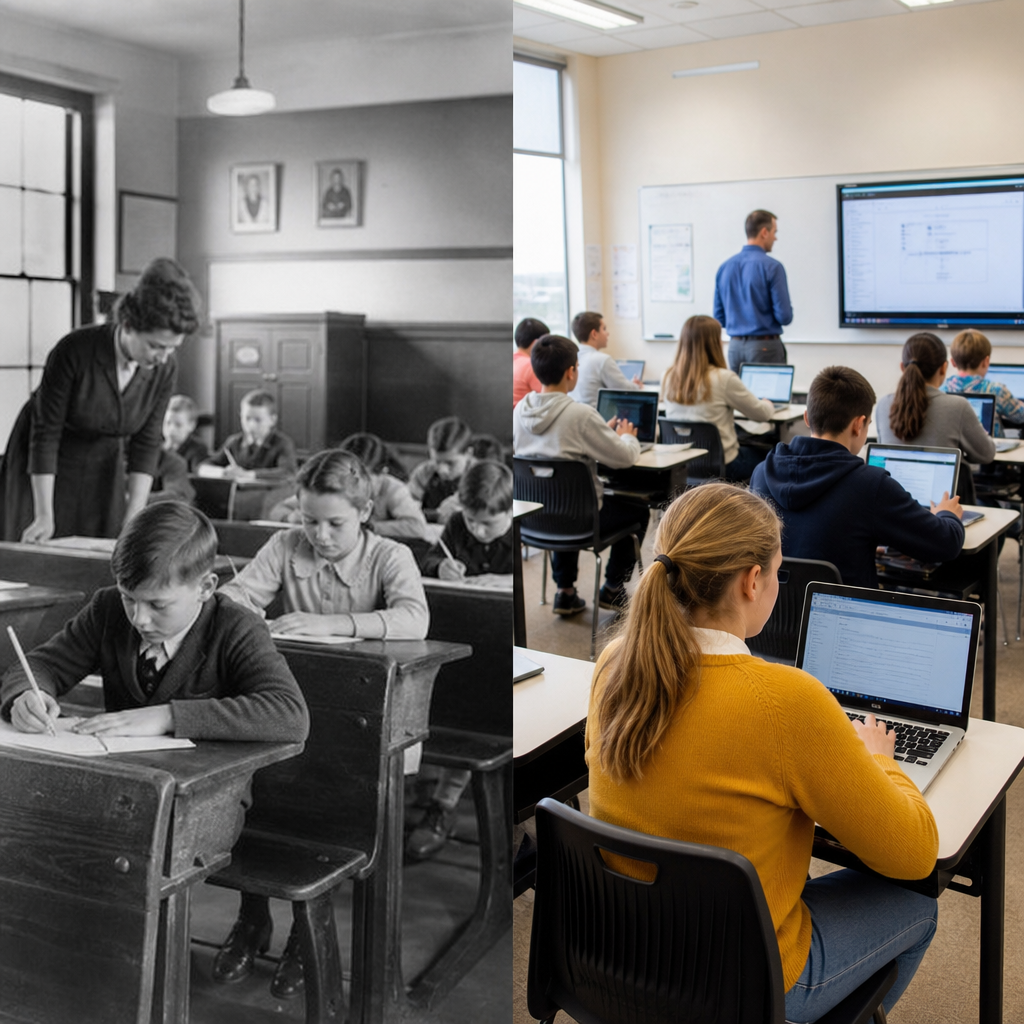

Continuous assessment models are structured approaches for evaluating learning through repeated, low-stakes and high-stakes measures over time rather than relying on a single final examination. In education, the term covers how teachers gather evidence, score performance, provide feedback, and use results to improve teaching and learning across a course, term, or program. As a subtopic within Foundations of Educational Assessment, it connects directly to the wider question of assessment types: diagnostic, formative, summative, ipsative, criterion-referenced, norm-referenced, authentic, and performance-based methods all appear inside continuous systems. I have worked with schools refining grading policies and teacher feedback cycles, and the pattern is consistent: when assessment is planned as an ongoing model instead of a series of disconnected tests, both instructional quality and student clarity improve.
Why does this matter? Because assessment shapes what students study, how teachers prioritize time, and how institutions define achievement. A weak model can reward memorization, create grading disputes, and hide learning gaps until it is too late to intervene. A strong continuous assessment model, by contrast, creates a dependable stream of evidence. It shows whether students understand prerequisite knowledge, can apply concepts, and are progressing toward standards. It also supports fairer decisions by distributing marks across multiple tasks, reducing the distortion caused by test anxiety, absenteeism, or one poorly designed exam.
Key terms need precision. Continuous assessment does not mean constant testing, and it does not simply mean giving more quizzes. It means systematic, planned, criterion-based evidence collection across time. Assessment types describe the purpose or format of a task; the model describes how those tasks work together. For example, a course may begin with diagnostic assessment, use formative checks weekly, include authentic projects midterm, and end with summative performance tasks. The model determines weighting, timing, moderation, feedback loops, and decisions about remediation or advancement. Understanding that architecture is the first step to building an effective assessment system.
What a Continuous Assessment Model Includes
A continuous assessment model has five core components: learning outcomes, assessment methods, scoring criteria, feedback processes, and decision rules. Learning outcomes define what students should know or be able to do. Assessment methods gather evidence through quizzes, essays, labs, presentations, observations, portfolios, practical demonstrations, and exams. Scoring criteria translate quality into marks or proficiency levels, often through rubrics or mark schemes. Feedback processes tell students what they did well, where they fell short, and what to do next. Decision rules determine how scores are combined, how reassessment works, and when intervention is triggered.
In practice, the best models align methods to outcomes. If the outcome is factual recall, selected-response quizzes may be efficient. If the outcome is scientific reasoning, lab reports and oral defenses produce better evidence. If the outcome is collaboration, group work can be included, but only with safeguards such as individual reflection or peer evaluation. I have seen schools weaken assessment validity by overusing one convenient method. A literature course graded mostly on multiple-choice tests does not adequately sample analytical writing; a design course graded only on final products misses process skills. Continuous assessment works when the evidence matches the claim being made about learning.
Reliability also matters. More tasks do not automatically mean better assessment if criteria are vague or teachers apply standards inconsistently. Effective models use common rubrics, moderation meetings, anchor samples, and calibration exercises. In many systems, departments review samples of student work together to reduce marker drift. That practice is not bureaucratic overhead; it is quality control. When teachers interpret “proficient” differently, continuous assessment becomes noisy and contested. When expectations are shared, students receive more consistent judgments and more trustworthy grades.
How Continuous Assessment Relates to Major Types of Assessment
Continuous assessment is best understood as a framework that organizes multiple assessment types. Diagnostic assessment happens before or at the start of instruction to identify prior knowledge, misconceptions, and readiness. A mathematics teacher might begin algebra with a short skills inventory covering arithmetic fluency, variable notation, and equation balancing. Those results should not simply produce marks; they should shape grouping, pacing, and targeted review. In a continuous model, diagnostic evidence establishes a baseline that later assessments can be compared against.
Formative assessment is the engine of continuous assessment. Its purpose is improvement during learning, not just judgment after learning. Exit tickets, hinge questions, draft reviews, mini whiteboard checks, retrieval practice, and conference notes all fit here. The defining feature is actionable feedback tied to next steps. John Hattie’s synthesis has repeatedly highlighted feedback among the most influential factors in student achievement, but only when it is specific, timely, and usable. “Good job” is not formative feedback. “Your argument is clear, but the evidence in paragraph three does not support the claim; add one primary source and explain its relevance” is formative feedback.
Summative assessment still belongs in continuous models. End-of-unit tests, final essays, capstone projects, and practical examinations provide formal judgments about achievement at a checkpoint. The difference is that summative tasks are not the only evidence source. They are one layer within a broader system. This matters because some competencies emerge over repeated performances. Writing quality, speaking confidence, coding fluency, and laboratory technique are difficult to judge fairly from a single event. Continuous models capture development while preserving meaningful summative decisions.
Other important assessment types also belong in this hub. Criterion-referenced assessment compares student work against fixed standards; norm-referenced assessment compares students to one another or to a representative cohort. Authentic assessment asks students to perform realistic tasks, such as drafting a business proposal or conducting a patient interview. Performance-based assessment requires students to demonstrate skills directly, often through presentations, experiments, or creative products. Ipsative assessment compares a student’s present work with their previous performance, highlighting growth. A strong continuous model does not treat these as competing camps. It uses each where it serves the learning goal best.
Common Continuous Assessment Models in Schools and Universities
Educational institutions usually implement continuous assessment through a small number of recurring models. The right choice depends on curriculum standards, class size, teacher capacity, moderation practices, and reporting requirements. Below is a practical comparison I use when advising departments on model selection and redesign.
| Model | How it Works | Best Use Case | Main Risk |
|---|---|---|---|
| Weighted task model | Marks come from several assignments, quizzes, projects, and exams with set percentages | General secondary and higher education courses | Overweighting easy tasks can inflate grades |
| Standards-based model | Students are rated against specific learning standards, often on proficiency scales | K-12 systems focused on mastery reporting | Complex reporting if too many standards are tracked |
| Portfolio model | Students compile work over time with reflection and teacher review | Arts, writing, teacher training, design | Scoring can become subjective without clear rubrics |
| Competency-based model | Progress depends on demonstrated mastery, not seat time | Adult learning, vocational education, online programs | Scheduling and transcript translation can be difficult |
| Assessment cycle model | Frequent low-stakes checks feed reteaching before periodic formal assessments | Data-informed classroom instruction | Teachers may collect more data than they can use |
The weighted task model is the most familiar. A course might allocate 10 percent to quizzes, 20 percent to homework, 25 percent to a midterm, 15 percent to participation, and 30 percent to a final project. This can work well, but only if each weight reflects importance and evidence quality. I often recommend reducing participation as a pure behavior grade and replacing it with observable academic behaviors, such as discussion preparation or documented contribution to seminars.
Standards-based models are stronger when clarity is the priority. Instead of averaging everything into one opaque percentage, teachers report proficiency on defined outcomes such as “analyzes source credibility” or “solves multi-step linear equations.” This improves communication with students and families because the grade explains what the learner can actually do. Universities use related approaches in professional programs where accreditation requires evidence for explicit competencies.
Benefits, Limitations, and Design Tradeoffs
The main benefit of continuous assessment is better evidence. Multiple measures sample learning more broadly than one exam, which improves validity. They also create more opportunities for feedback, revision, and intervention. In attendance-fragile contexts or courses with diverse learners, spreading assessment across time can reduce inequity. A student with strong analytical ability but poor timed-test performance may demonstrate mastery through essays, oral presentations, and projects. Teachers also gain real-time information. If half a class misses the same concept on a low-stakes check, reteaching can happen immediately rather than after final grades are issued.
There are limits. Continuous assessment can increase teacher workload substantially, especially when every task requires detailed marking. It can also create student fatigue if every activity feels graded. In some schools, too many small marks produce “point chasing,” where students focus on accumulating scores rather than improving understanding. Another risk is construct underrepresentation: teachers may choose frequent but shallow tasks because they are easier to score, leaving deeper skills underassessed. I have also seen grade inflation in systems where homework completion carries heavy weight, even though completion alone is a weak indicator of mastery.
Good design resolves these tradeoffs through balance. Not every task needs a grade, and not every graded task needs the same level of feedback. Use ungraded formative checks for instructional adjustment, reserve detailed feedback for major performance tasks, and keep summative checkpoints limited but meaningful. Build a manageable assessment calendar. Define reassessment rules in advance. Separate academic achievement from behavior where possible. Most importantly, audit whether the final grade reflects the intended constructs. If a science grade mostly captures punctuality and worksheet compliance, the model is measuring the wrong thing.
How to Build an Effective Continuous Assessment System
Start with course outcomes and map them across the term. Each outcome should appear in more than one assessment opportunity, and complex outcomes should be assessed in more than one format. Next, identify which tasks are diagnostic, formative, and summative. Then write criteria before setting weights. This sequence prevents the common mistake of designing assignments around convenience rather than evidence value. I advise departments to create an assessment blueprint showing outcomes, tasks, timing, weighting, and feedback method on one page. That document quickly reveals gaps, duplication, and overload.
Use rubrics carefully. Analytic rubrics are useful when students need feedback on separate dimensions such as organization, evidence, and technical accuracy. Holistic rubrics are faster when overall performance is the main concern. Anchor examples are essential. Show students anonymous samples at different quality levels and explain why they earned those judgments. Transparency improves fairness and performance because expectations become visible. Digital tools can support the process: learning management systems such as Canvas, Moodle, and Google Classroom organize submissions; Turnitin supports similarity checking and feedback; Gradescope speeds rubric-based marking for large classes.
Finally, review the model with evidence, not assumptions. Compare grade distributions with external exams, progression rates, and sampled student work. Ask whether weaker students are identified early enough, whether top grades reflect genuine mastery, and whether feedback changes later performance. The goal is not to assess more. The goal is to assess better, with a coherent model that turns evidence into learning.
Understanding continuous assessment models gives educators a practical foundation for the full landscape of assessment types. The central idea is simple: meaningful judgments about learning should come from planned evidence gathered over time, not from isolated events. When designed well, continuous assessment integrates diagnostic, formative, summative, authentic, performance-based, criterion-referenced, and growth-oriented methods into one coherent system. That coherence improves validity, fairness, and instructional usefulness.
The strongest models share recognizable features. They align every task to clear learning outcomes. They use scoring criteria that teachers can apply consistently. They provide feedback that students can act on before final judgments are locked in. They also acknowledge tradeoffs, especially workload, overtesting, and the temptation to reward compliance instead of mastery. Those issues are manageable when schools use assessment blueprints, moderation routines, sensible weighting, and selective grading practices.
As a hub within Foundations of Educational Assessment, this topic opens the door to deeper study of every major assessment type and decision point. If you are reviewing a course, department, or school policy, start by mapping the assessments already in use and asking a direct question: what evidence of learning does each task actually provide? That single exercise usually reveals where the model is strong, where it is noisy, and where better alignment can raise both student learning and confidence in grades.
Frequently Asked Questions
What is a continuous assessment model in education?
A continuous assessment model is a planned approach to evaluating student learning through multiple assessment activities spread across a course, term, or program rather than depending only on one final exam. It typically combines low-stakes measures, such as quizzes, classwork, discussion tasks, reflections, drafts, and homework, with higher-stakes measures like projects, presentations, practical tasks, portfolios, midterms, or final performance assessments. The key idea is that learning is observed over time, which gives teachers a broader and more accurate picture of what students know, can do, and still need to improve.
In practice, continuous assessment is not just “more testing.” It is a structured system for collecting evidence of learning, scoring performance against clear criteria, giving feedback, and using results to guide both instruction and student improvement. Because it tracks progress across many points in time, it can capture growth, consistency, effort, application, and mastery more effectively than a single snapshot assessment. Within the broader study of educational assessment, continuous assessment models are important because they show how assessment can serve both summative purposes, such as grading and certification, and formative purposes, such as supporting learning while it is still happening.
How is continuous assessment different from a single final examination?
The biggest difference is timing and purpose. A single final examination measures performance at one point, usually at the end of instruction. Continuous assessment, by contrast, gathers evidence throughout the learning process. This means teachers do not have to wait until the end of a term to discover whether students understood key concepts, developed required skills, or need intervention. Instead, they can detect gaps early and adjust teaching before problems become deeply rooted.
Another important difference is the kind of learning that can be measured. Final exams often emphasize recall, speed, and performance under pressure, while continuous assessment can evaluate a much wider range of outcomes, including writing development, problem-solving, collaboration, practical application, research, creativity, and improvement over time. It also tends to reduce the risk that one bad day, one stressful event, or one narrow test format will unfairly define a student’s overall achievement. That said, continuous assessment does not necessarily replace exams entirely; in many strong assessment systems, it works alongside exams to create a more balanced and valid picture of student learning.
What are the main components of an effective continuous assessment model?
An effective continuous assessment model usually includes several core components working together in a deliberate way. First, it needs clearly defined learning outcomes so that teachers and students understand what knowledge, skills, and competencies are being assessed. Second, it needs a variety of assessment methods, since different tasks reveal different aspects of learning. For example, quizzes may check understanding of core concepts, while projects or presentations may show application, communication, and higher-order thinking.
Third, strong continuous assessment depends on transparent scoring tools such as rubrics, marking schemes, checklists, or performance descriptors. These help improve fairness and consistency and make expectations visible to students. Fourth, feedback is essential. The model is most effective when results are not merely recorded for grades but are used to provide timely, specific guidance on how students can improve. Fifth, there must be a process for using assessment data to inform teaching decisions, such as reteaching a topic, changing pacing, grouping students for support, or offering enrichment. Finally, an effective model includes manageable scheduling and workload design so that assessment remains meaningful, reliable, and sustainable for both teachers and learners rather than becoming excessive or fragmented.
What are the benefits of continuous assessment for students and teachers?
For students, one of the greatest benefits is that continuous assessment supports learning as an ongoing process. Because students receive regular opportunities to demonstrate understanding, they can build confidence gradually, correct mistakes early, and improve before high-stakes decisions are made. Frequent feedback helps them understand where they stand, what is expected, and what steps they should take next. This often encourages stronger study habits, greater engagement, and more active responsibility for learning. It can also be more equitable because it recognizes performance across multiple contexts rather than relying entirely on one final event.
For teachers, continuous assessment provides richer evidence for decision-making. It reveals patterns in student understanding, identifies misconceptions, shows which teaching strategies are working, and highlights where additional support is needed. This makes instruction more responsive and targeted. It can also improve the quality of grading because judgments are based on a broader body of evidence. At the program level, continuous assessment helps schools and institutions monitor progress, evaluate curriculum effectiveness, and strengthen accountability. When designed well, it creates a stronger connection between teaching, feedback, learning, and achievement.
What challenges can arise with continuous assessment models, and how can they be addressed?
Although continuous assessment has many advantages, it also presents practical and professional challenges. One common issue is workload. If teachers assign too many assessment tasks, the process can become difficult to manage, reduce feedback quality, and create stress for students. Another challenge is consistency and fairness, especially when multiple teachers are involved or when tasks are more open-ended than traditional tests. There is also the risk of over-assessing minor activities, which can shift attention away from meaningful learning and toward constant grade collection.
These challenges can be addressed through thoughtful design. Schools and teachers should select assessment tasks strategically rather than simply increasing the number of assignments. Each task should have a clear purpose linked to learning outcomes. Using rubrics, moderation processes, shared standards, and exemplars can improve reliability and fairness. Feedback systems should prioritize usefulness over volume, focusing on actionable guidance. It is also important to balance low-stakes and high-stakes measures so that students have room to practice without feeling that every activity carries major grade consequences. When continuous assessment is planned carefully, aligned with curriculum goals, and supported by sound assessment literacy, it becomes a powerful model for improving both teaching quality and student learning outcomes.