
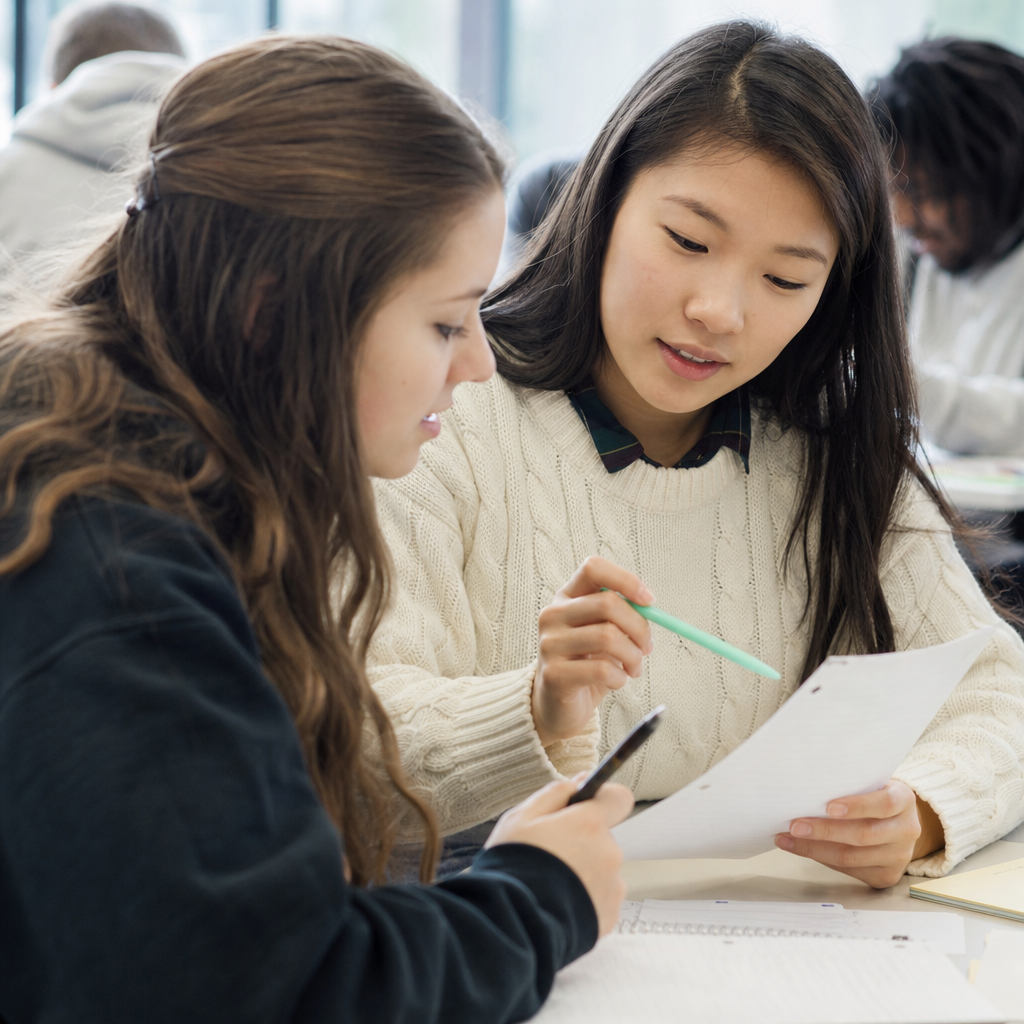
Peer feedback in the classroom is one of the most practical ways to make Assessment for Learning visible, routine, and useful for students and teachers. In simple terms, peer feedback is information students give one another about the quality of work, progress toward success criteria, and next steps for improvement. Assessment for Learning, often shortened to AfL, is the broader approach of using assessment during learning rather than only after learning, so evidence of understanding helps shape what happens next. When peer feedback is designed well, it turns students from passive recipients of marks into active participants who can identify strengths, spot misconceptions, and revise work with purpose.
I have seen this most clearly in classrooms where teachers stop treating feedback as an event attached to grading and instead build it into instruction. A Year 8 writing class using a simple rubric, sentence stems, and modeled examples can generate more useful revision in twenty minutes of peer review than from a week of waiting for teacher comments alone. In a university seminar, students critiquing draft arguments before submission often catch weak evidence, unclear claims, and missing citations that would otherwise appear in final papers. Across K–12 and higher education, the value is the same: better feedback loops, stronger self-regulation, and clearer evidence of learning.
This matters because feedback is consistently linked to learning gains, but not all feedback works. Research synthesized by scholars such as Paul Black, Dylan Wiliam, John Hattie, and Helen Timperley shows that feedback is effective when it is timely, specific, aligned to learning goals, and connected to action. Peer feedback can meet those conditions at scale if teachers teach students how to do it. It also supports the core moves of Assessment for Learning: clarifying learning intentions, making success criteria explicit, eliciting evidence of learning, activating students as instructional resources for one another, and activating learners as owners of their own learning. As a hub topic within assessment in practice, peer feedback sits at the center of formative assessment, self-assessment, questioning, rubric use, conferencing, and revision cycles.
For schools and universities, peer feedback also addresses real operational constraints. One teacher with 150 students cannot provide the same volume of immediate, individualized commentary that a well-structured peer process can generate. That does not mean replacing teacher judgment. It means expanding the feedback ecosystem so students receive more information, sooner, and in language they can use. The key is quality control: clear criteria, modeling, calibration, respectful routines, and opportunities to act on feedback. Without those, peer review becomes vague praise or unhelpful criticism. With them, it becomes a reliable engine for learning.
What peer feedback looks like within Assessment for Learning
Within Assessment for Learning, peer feedback is not a standalone activity at the end of a lesson. It is part of a sequence: students understand the learning intention, examine examples, apply success criteria, give evidence-based comments, and revise. In practice, that means a Grade 5 science teacher might begin with the goal “construct a claim supported by evidence from an investigation,” unpack what counts as strong evidence, show an annotated exemplar, and then ask students to review a partner’s explanation using a checklist. In a first-year engineering course, students might swap design proposals and comment specifically on feasibility, user constraints, and clarity of justification before prototypes are built.
The defining feature is that feedback is tied to criteria, not personal preference. Effective comments answer three questions: Where am I going? How am I doing? What should I do next? Those questions map neatly onto feed up, feedback, and feed forward. Students can learn this structure. For example, instead of saying, “This essay is good,” a peer might say, “Your claim is clear and directly answers the prompt. The second paragraph needs stronger evidence from the source text. Add a quotation and explain how it supports your argument.” That is actionable because it names a strength, identifies a gap, and gives a next step.
Peer feedback also broadens the evidence base teachers can use. Listening to student conversations during review often reveals misconceptions that finished work hides. I have used these moments to adjust mini-lessons immediately: reteaching topic sentences after hearing repeated confusion in English, or revisiting unit conversion after students challenged one another’s method in chemistry. This is why peer feedback belongs in a hub discussion of formative assessment. It does not only help the student receiving comments; it generates diagnostic information for everyone involved, including the teacher.
Benefits for learning, motivation, and classroom culture
The strongest argument for peer feedback is not efficiency. It is cognition. Giving feedback requires students to interpret criteria, compare work against standards, justify judgments, and propose improvements. Those actions deepen learning for the reviewer as much as for the receiver. In mathematics, a student explaining why a classmate’s solution is incomplete has to articulate procedural accuracy and conceptual understanding. In art, identifying how composition directs attention strengthens the reviewer’s own design decisions. In teacher education, reviewing a peer lesson plan often sharpens understanding of alignment between objective, activity, and assessment.
Peer feedback also builds academic language. Students learn to speak in the vocabulary of the discipline: thesis, evidence, variable, method, tone, citation, criterion, coherence. Over time, that language supports self-assessment. Students begin to internalize the questions they once asked a partner. Can a reader follow this reasoning? Is my evidence sufficient? Did I meet the success criteria? That shift from external feedback to internal monitoring is one of the central goals of Assessment for Learning because it develops independent learners rather than students who wait passively for teacher approval.
There are social benefits as well. When routines are respectful and predictable, peer feedback normalizes revision and reduces the idea that strong work appears fully formed on the first attempt. Students see drafts as part of learning. In many classrooms, this can improve belonging because feedback becomes something people do together, not something done to them. The caveat is important: culture must be intentionally built. Without trust, some students will soften every comment to avoid discomfort, while others may overcorrect and sound harsh. Teachers need to model tone, use sentence stems, and make psychological safety a nonnegotiable condition of participation.
Core structures, protocols, and tools that make peer feedback effective
Successful peer feedback is designed, not improvised. The most reliable protocols I have used share several features: a clearly defined product, visible success criteria, a narrow feedback focus, modeled examples, and time for revision. If students are reviewing everything at once, comments become superficial. If the task is narrowed to one or two dimensions, quality rises. For instance, in a history essay draft, ask reviewers to focus only on claim clarity and evidence integration. In a lab report, focus first on method replication and data presentation. In an oral presentation, focus on organization and use of supporting examples.
Teachers can use a range of tools to support consistency. Single-point rubrics are especially useful because they list proficiency criteria in the center and leave space for noting where work exceeds or falls short. Checklists help younger students and multilingual learners by simplifying the task into observable features. Anchor papers or exemplars are essential for calibration; students need to see what quality looks like before they can recognize it. Digital platforms such as Google Classroom, Microsoft Teams, Canvas, Turnitin Feedback Studio, and Peergrade can streamline anonymous exchange, comment tracking, and revision history, but the platform never substitutes for instructional design.
| Element | What it does | Classroom example |
|---|---|---|
| Learning intention | Defines what students are trying to learn | “Explain how character actions reveal theme” |
| Success criteria | Shows what quality work includes | Claim, text evidence, explanation, precise language |
| Exemplar | Makes expectations concrete | Annotated paragraph showing strong evidence use |
| Sentence stems | Supports respectful, specific comments | “A strength is…,” “A next step is…” |
| Calibration | Improves reviewer accuracy | Whole class scores a sample and discusses why |
| Revision time | Turns comments into learning | Students redraft using peer suggestions |
Two protocols work across age groups. The first is “warm and cool feedback”: one comment names a strength tied to criteria, and one comment identifies an area for improvement. The second is “question-based feedback,” where peers ask clarifying questions instead of making judgments: “What evidence best supports this claim?” or “How could a reader interpret this graph?” Questioning can feel less threatening and often prompts deeper revision. In higher education, structured peer review forms with rating scales and comment prompts can improve reliability, especially in writing-intensive courses and capstone projects.
Timing matters. Feedback should occur early enough for students to act on it and close enough to the task that understanding is still fresh. A common mistake is placing peer review the day before submission, which invites perfunctory comments and minimal revision. Better practice is to build at least one draft cycle into the sequence. I recommend a short review, immediate discussion, and visible revision plan. Students might highlight one change they will make based on peer comments and explain why. That move creates accountability and helps teachers judge whether the feedback was understood and used.
Common challenges and how to address them
The first challenge is accuracy. Students are not experts, and some teachers worry that peers will give wrong advice. That concern is valid, especially in novice classrooms. The solution is not to avoid peer feedback but to constrain and scaffold it. Use tight criteria, model examples, and teacher moderation. Ask students to comment on observable features before abstract qualities. In a biology report, peers can accurately check whether a conclusion references data before they evaluate the sophistication of analysis. In writing, they can identify where evidence appears and whether citation format is present before judging argument quality.
The second challenge is quality drift toward vague praise. Students often say, “Looks good,” because they have never been taught how to respond. Explicit instruction fixes this. Teach the difference between evaluation and feedback. Evaluation labels quality; feedback guides improvement. Sentence stems help: “Your introduction states the topic clearly. To strengthen it, add a precise claim,” or “The graph is readable, but the axis labels need units.” I have found that live modeling with a sample piece of work is far more effective than handing out a rubric alone. Students need to hear what a useful comment sounds like.
A third challenge is bias and social pressure. Friends may inflate comments; conflict may make others overly critical. Anonymous review can reduce this in some contexts, especially online or in large classes, but anonymity is not automatically better for younger students who need relational trust and guided discussion. Another approach is random pairing and rotating partners. Teachers should also separate formative peer feedback from summative peer grading unless students are very well trained. Asking students to assign marks can distort the process and shift attention from improvement to points.
Equity requires attention too. Multilingual learners, students with disabilities, and less confident learners may need adapted supports. That can include visual checklists, audio feedback options, chunked criteria, collaborative review before independent review, or teacher-selected pairings. In inclusive classrooms, universal design principles improve the process for everyone. For example, allowing verbal peer feedback recorded on a tablet can help students who struggle with writing comments, while color-coded criteria can reduce cognitive load. The goal is not uniformity but access to meaningful participation.
Implementing peer feedback across grade levels and subjects
In elementary classrooms, peer feedback should be brief, concrete, and heavily modeled. Young students can successfully use two-star-and-a-wish structures, picture-supported checklists, and oral conferencing. A Grade 2 student may comment on whether a narrative has a beginning, middle, and end, or whether handwriting leaves spaces between words. In upper elementary, students can review science explanations, art work, and reading responses using simple criteria. The emphasis should be on noticing evidence and naming one next step, not on lengthy written critique.
In secondary settings, the complexity can increase. Students can compare work to rubrics, annotate drafts, and conduct gallery walks or structured dialogue. In mathematics, peers can review solution strategies and reasoning, not just final answers. In social studies, students can test whether claims are supported by credible sources. In career and technical education, peers can assess performance tasks such as culinary presentation, machining precision, or coding functionality using industry-aligned criteria. These are powerful because they resemble real workplace review processes.
In higher education, peer feedback is especially valuable in seminars, labs, studios, and professional programs where iterative improvement matters. Law students can review case briefs for logic and citation. Nursing students can debrief simulation performance against clinical communication standards. Design students can critique prototypes in relation to usability and audience need. The principle remains consistent across contexts: clarify standards, train reviewers, focus comments, and require revision. Institutions that embed peer feedback across courses often produce graduates who are better at receiving critique, collaborating, and managing quality in professional settings.
To make this hub actionable, connect peer feedback with adjacent Assessment for Learning practices: learning intentions and success criteria, questioning strategies, exit tickets, self-assessment, conferencing, rubric design, retrieval practice, and responsive teaching. Peer feedback works best when these practices reinforce one another. If students already know how to interpret criteria and reflect on their own work, peer review becomes sharper. If teachers routinely use evidence from student responses to adjust instruction, the feedback cycle becomes coherent. Start small with one protocol, one task, and one revision opportunity, then build a sustainable routine that fits your subject, learners, and timetable.
Peer feedback in the classroom is most effective when it is understood as a core part of Assessment for Learning rather than an occasional add-on. Its value comes from the disciplined use of criteria, evidence, dialogue, and revision. Students learn more when they can see what quality looks like, compare work to clear standards, and act on specific next steps. Teachers benefit as well because peer review surfaces misconceptions, multiplies feedback opportunities, and helps build a classroom culture where improvement is normal.
The essential lesson is straightforward. Do not ask students to “give feedback” and hope for the best. Teach them how. Model high-quality comments, calibrate with exemplars, narrow the focus, protect trust, and always make time for revision. These design choices are what turn peer feedback from a compliance exercise into a learning strategy. They also connect directly to the broader aims of formative assessment: making thinking visible, increasing student ownership, and informing instructional decisions while learning is still in progress.
For schools, departments, and individual instructors, the next step is to audit one current assignment and redesign it around a simple feedback cycle. Identify the learning intention, write student-friendly success criteria, choose a protocol, and schedule revision time before final submission. Done consistently, peer feedback strengthens achievement, independence, and academic conversation across K–12 and higher education. Start with one class this week, gather evidence from student revisions, and use what you learn to refine the process.
Frequently Asked Questions
What is peer feedback in the classroom, and how does it connect to Assessment for Learning?
Peer feedback in the classroom is the process of students reviewing one another’s work and offering specific, useful comments about what is working, what could be improved, and what next steps would help move the learning forward. It is much more than students simply saying “good job” or pointing out mistakes. Effective peer feedback is anchored in clear learning intentions and success criteria, so students are commenting on the quality of the work in relation to shared expectations. This makes feedback more objective, more actionable, and more valuable for everyone involved.
Its connection to Assessment for Learning, or AfL, is direct and important. AfL is about using evidence of learning during the learning process so teaching and student action can be adjusted in real time, rather than waiting until the end of a unit or project. Peer feedback supports this by making assessment visible and routine within everyday classroom practice. When students read, discuss, and respond to each other’s work, they generate evidence about understanding, misconceptions, and progress. Teachers can then use those insights to guide instruction, while students use them to improve their own work immediately.
In other words, peer feedback is one of the clearest examples of AfL in action because it turns students into active participants in assessment. Instead of being passive recipients of grades or comments, students learn how quality looks, how to identify strengths and gaps, and how to take practical next steps. Over time, this helps build independence, self-regulation, and a stronger understanding of what successful learning actually involves.
What are the main benefits of using peer feedback with students?
Peer feedback offers benefits on both the academic and classroom culture levels. Academically, it helps students deepen their understanding of the success criteria because they have to apply those criteria to real examples of work. That process sharpens their judgment and often improves their own performance, since evaluating another student’s work can make expectations more concrete than hearing them explained once by the teacher. Students begin to recognize what quality looks like, where common weaknesses appear, and how specific revisions can strengthen a piece of work.
It also promotes stronger student ownership of learning. When learners are invited to give and receive feedback, they are no longer working only for the teacher’s approval. They become part of an active learning community where improvement is normal, discussion is expected, and revision is purposeful. This can increase engagement because students see learning as a process rather than a single attempt followed by a final judgment.
Another major benefit is that peer feedback builds communication and metacognitive skills. Students learn how to explain their thinking, justify their comments with evidence, ask clarifying questions, and reflect on whether advice is useful. These are valuable skills well beyond one lesson or subject. They support collaboration, critical thinking, and confidence in academic dialogue.
From the teacher’s perspective, peer feedback can also make formative assessment more efficient and more visible. While students are engaged in feedback exchanges, the teacher can observe patterns, listen for misconceptions, and identify who needs support or extension. That means peer feedback does not replace teacher feedback, but it expands the amount of meaningful feedback happening in the room and helps create a classroom where improvement is ongoing rather than occasional.
How can teachers make peer feedback effective instead of superficial?
For peer feedback to be effective, teachers need to teach it explicitly rather than assume students naturally know how to do it well. The first essential step is clarity. Students need a clear learning intention and success criteria before they can comment helpfully on someone else’s work. If the target is vague, the feedback will usually be vague too. Success criteria should be student-friendly, visible, and specific enough that learners can use them as a reference point during review.
Modeling is equally important. Teachers should show students what strong peer feedback sounds like, looks like, and does. This can include using examples of anonymous student work, thinking aloud while reviewing it, and demonstrating the difference between comments that are kind but unhelpful and comments that are precise and improvement-focused. For example, “I like it” is pleasant but weak, while “Your explanation is clear, but adding evidence in paragraph two would strengthen your argument” is useful because it identifies both a strength and a next step.
Structures and sentence stems also make a big difference, especially for younger students or groups new to peer review. Prompts such as “One strength is…,” “A question I have is…,” and “One next step could be…” help students stay focused and constructive. Teachers can also use checklists, rubrics, guided protocols, or success-criteria grids to prevent feedback from drifting into general opinion.
Finally, effective peer feedback includes time for action. Feedback only improves learning when students are expected to use it. After receiving comments, students should revise, reflect, or respond in some way. Teachers can ask them to highlight the feedback they will act on, explain which suggestions they found most useful, or show where they made changes. That final step is what turns peer feedback from a classroom activity into a genuine AfL strategy that supports progress.
What challenges can happen with peer feedback, and how can teachers overcome them?
One of the most common challenges is that students may give feedback that is too vague, overly positive, or not accurate enough to be useful. This usually happens when students are unfamiliar with the criteria, unsure how to phrase comments, or anxious about criticizing a classmate’s work. The solution is not to abandon peer feedback, but to scaffold it carefully. Teachers can reduce this problem by modeling examples, using structured prompts, and limiting the focus to one or two criteria at a time so students are not overwhelmed.
Another challenge is classroom trust. Peer feedback works best in an environment where students feel safe to share unfinished work and where critique is understood as part of learning, not as a personal attack. Teachers can build this culture by emphasizing respect, kindness, and the idea that everyone is improving. It helps to establish ground rules such as commenting on the work rather than the person, balancing strengths with suggestions, and using evidence from the success criteria rather than personal preference.
Some teachers also worry that peer feedback may spread misconceptions if students give incorrect advice. That is a valid concern, which is why teacher oversight remains important. Teachers can circulate during feedback sessions, sample comments, pause the class to address common misunderstandings, or ask students to justify feedback using the criteria. In many classrooms, the strongest approach is a combination of peer feedback, self-assessment, and teacher feedback rather than relying on only one source.
Time can be another barrier, especially in busy classrooms. However, peer feedback does not have to be a long formal event every time. It can be brief and routine: a two-minute partner check, a checklist review, a targeted discussion of one paragraph, or a quick response to a problem-solving method. When built into regular instruction in manageable ways, peer feedback becomes sustainable and much more effective over time.
What does high-quality peer feedback look like in practice across different classroom activities?
High-quality peer feedback is specific, linked to success criteria, and focused on improvement. In a writing lesson, for example, students might review whether a classmate’s introduction clearly states the main argument, whether evidence supports each point, and whether the conclusion reinforces the central message. Instead of saying “This is confusing,” strong feedback would identify exactly where clarity breaks down and suggest a next step, such as adding a transition, defining a key term, or including a more relevant example.
In mathematics, peer feedback might focus on strategy, reasoning, and accuracy rather than just the final answer. A student could comment that the method used is efficient, but the explanation needs to show why that formula applies, or that a calculation error appears in a specific step. This helps students understand that quality in math includes thinking and communication, not only correctness.
In practical or creative subjects, such as science investigations, art, or presentations, peer feedback can be just as powerful. Students might evaluate whether a science conclusion matches the evidence collected, whether an artwork reflects the intended technique, or whether a presentation uses clear structure, eye contact, and supporting details. The principle stays the same: feedback should be grounded in agreed criteria and point toward a realistic improvement the student can make next.
Perhaps most importantly, strong peer feedback is part of a cycle. Students produce work, receive feedback, reflect on it, revise, and then improve. Over time, they internalize the language of quality and begin applying those same standards to their own work before anyone else comments on it. That is one of the most powerful outcomes of peer feedback in the classroom: it helps students become more thoughtful, independent learners who can recognize progress and take informed next steps for themselves.