Observational research methods in education are systematic ways of studying teaching, learning, and school life by watching what people actually do rather than relying only on what they say in surveys or interviews. In educational research, observation can be structured or open ended, participant or nonparticipant, live or recorded, and brief or longitudinal. Because this article sits within the broader field of qualitative research methods, it also needs a wider lens: qualitative inquiry seeks meaning, context, process, and perspective. In practice, that means researchers examine classrooms, staff meetings, playgrounds, online discussions, and family interactions to understand how education works in real settings. I have used observation schedules in schools, coded lesson videos, and compared field notes with interview transcripts, and the same lesson comes up repeatedly: what people report and what they enact are often different. That gap is why observational research matters. It helps educators see classroom culture, participation patterns, discipline routines, teacher questioning, peer collaboration, and inclusion in ways that test scores cannot capture. It also serves as a hub method within qualitative research because strong studies often combine observation with interviews, documents, and artifact analysis. When done rigorously, observational methods generate credible evidence about everyday educational practice, implementation quality, and learner experience.
What observational research means within qualitative educational research
Observational research in education is the deliberate, documented study of behavior, interaction, and environment in natural or designed learning settings. It belongs to qualitative research methods because the goal is usually interpretation rather than measurement alone. A researcher might observe how novice teachers use wait time, how multilingual students enter group discussions, or how special education supports are delivered during literacy blocks. The emphasis is on context: who is present, what norms shape behavior, what sequence events follow, and how participants interpret the moment.
Qualitative research methods include case study, ethnography, phenomenology, grounded theory, narrative inquiry, and action research. Observation appears across all of them. In ethnography, observation is central because the researcher studies culture over time. In case study, it helps explain a bounded system such as one school or one classroom. In grounded theory, repeated observations can support category development and constant comparison. In action research, observation documents whether a classroom intervention changes practice. That is why a hub page on qualitative research methods must treat observational research as both a method in its own right and a core component of other designs.
Researchers generally distinguish descriptive observation from evaluative observation. Descriptive observation records events, talk, gestures, seating, materials, and timing with minimal judgment. Evaluative observation applies criteria, often through a rubric or protocol, to assess quality or fidelity. Both have value. For example, a principal using the Danielson Framework or CLASS is conducting structured evaluative observation, while a qualitative researcher shadowing a student through the school day is producing descriptive fieldwork.
Major types of observational research used in schools and universities
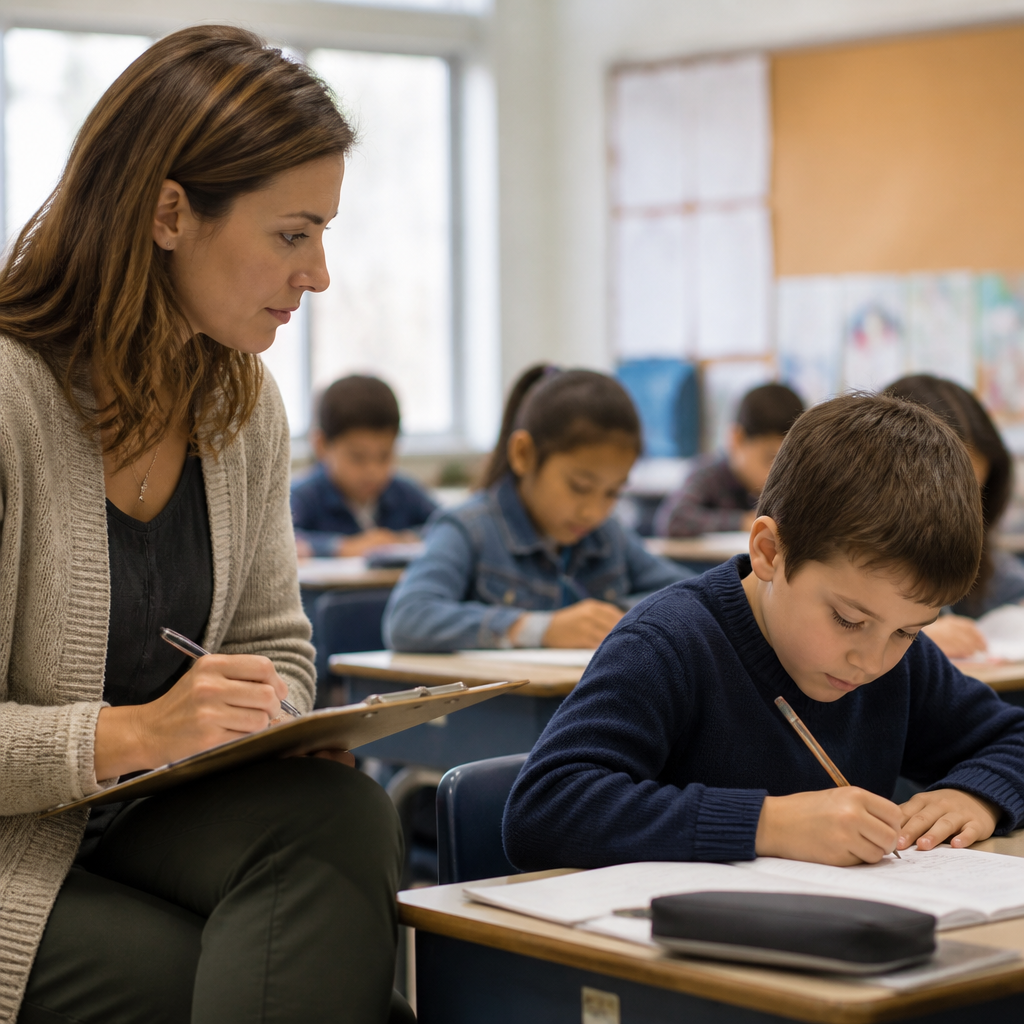
The main types of observation are participant, nonparticipant, structured, unstructured, naturalistic, and controlled. Participant observation means the researcher joins the setting to some degree, perhaps assisting in a classroom or attending staff activities while taking notes. Nonparticipant observation keeps more distance and is common when the researcher wants to reduce disruption. Structured observation uses predefined categories such as teacher praise, student off-task behavior, or turn-taking counts. Unstructured observation begins with broader attention and lets patterns emerge from field notes. Naturalistic observation occurs in routine educational settings, while controlled observation may involve specific tasks, laboratory settings, or staged learning activities.
Video observation has become especially important. Recording lessons allows repeated viewing, multiple coders, and finer analysis of interaction, gesture, and timing. Tools such as NVivo, ATLAS.ti, Dedoose, and ELAN support coding of text, audio, and video, while classroom-specific systems such as CLASS, COPUS in higher education, and Stallings observation frameworks offer structured lenses. In teacher education, video clubs and lesson study often rely on observation clips to support professional reflection.
Different questions call for different forms. If the question is how students experience recess inclusion, naturalistic nonparticipant observation may be best. If the question is whether a literacy program is implemented as intended across six schools, structured observations using a fidelity checklist are more suitable. Good design starts with the research question, not with a favorite tool.
| Observation type | Best use in education | Strength | Limitation |
|---|---|---|---|
| Participant | Understanding classroom culture or school routines | Rich insider perspective | Role conflict and bias risk |
| Nonparticipant | Documenting lessons with minimal interference | Clearer researcher distance | Less access to participant meanings |
| Structured | Measuring instructional practices or fidelity | Comparable data across sites | May miss unexpected events |
| Unstructured | Exploratory studies and ethnography | Captures nuance and emergence | Harder to standardize |
| Video based | Interaction analysis and teacher development | Repeatable and reviewable evidence | Consent and storage demands |
How researchers plan, record, and analyze observations
Strong observational studies begin with a clear sampling plan. Researchers decide where observation will occur, who will be observed, how long sessions will last, and whether timing should capture key routines such as transitions, guided reading, labs, or seminars. Time sampling observes at set intervals. Event sampling records specific behaviors whenever they occur. In my own fieldwork, short pilot visits almost always improved the final protocol because they revealed blind spots, such as hallway interactions or digital platform use that were missing from the original plan.
Data collection usually combines jottings, expanded field notes, analytic memos, and, when permitted, audio or video recording. Field notes should separate description from interpretation. A practical format is two columns: one for what happened and one for reflections, emerging codes, and questions. Details matter. Instead of writing “students were engaged,” a stronger note says “during the seven-minute pair task, nineteen of twenty-two students remained on task, and three pairs referenced the anchor chart without teacher prompts.” That level of specificity supports credible analysis.
Analysis often starts with coding. Researchers label segments of notes for themes such as teacher scaffolding, peer assistance, classroom management, language choice, or identity positioning. Through constant comparison, they group codes into categories and look for patterns, exceptions, and sequences. They may triangulate observations with interviews, lesson plans, student work, attendance data, or policy documents. Trustworthy studies also use interrater agreement when structured coding is involved, member checking when appropriate, and an audit trail that documents decisions. In university settings, observation data can also be linked to learning analytics or discussion board archives, but interpretation still depends on context, not just counts.
Strengths, limitations, and ethical requirements
The biggest strength of observational research methods in education is ecological validity. Researchers can examine teaching and learning as they naturally unfold, including routines participants may not notice themselves. Observation captures nonverbal communication, power relations, timing, and spatial arrangements that interviews often miss. It is particularly useful for studying young children, emergent bilingual learners, and students with communication differences because it does not depend entirely on formal verbal self-report.
However, observation has real limitations. The Hawthorne effect is possible: people may alter behavior because they know they are being observed. Access can be difficult in schools with strict safeguarding or privacy rules. Interpretation is shaped by the observer’s positionality, assumptions, and prior experience. A single classroom visit can be misleading if it happens on a testing day, assembly schedule, or substitute coverage day. That is why prolonged engagement, reflexive memoing, and transparent reporting are essential.
Ethics are not optional. Researchers need informed consent, and in many contexts assent from students as well. They must address confidentiality, secure storage, image and voice recording permissions, and mandatory reporting obligations when safety concerns emerge. Institutional review processes often require special protections for minors. In online and blended learning spaces, ethics extend to screenshots, chat logs, and platform metadata. The safest rule is simple: collect only what the question requires, anonymize early, and explain clearly how the data will be used.
Real educational applications and how this hub connects to wider qualitative methods
Observational methods answer practical questions across the education sector. Early childhood researchers observe play to study language growth, self-regulation, and social interaction. K–12 researchers examine how teachers differentiate instruction, how restorative practices operate in hallways, or how group work includes students with disabilities. Higher education researchers use classroom observation to study active learning, seminar discussion patterns, lab teamwork, and faculty questioning techniques. Policymakers and school improvement teams use observation to monitor implementation of curricula, coaching models, and behavior frameworks such as PBIS.
Consider a real-world style example. A district introduces inquiry-based science in middle schools. Test scores alone cannot show whether classrooms actually changed. An observational study might use a protocol to track student talk, hands-on investigation, evidence use, and teacher prompting across twenty lessons. Interviews then explain why some teachers adopt the model quickly while others struggle with pacing or materials. The resulting picture is far stronger than either method alone.
As a hub within qualitative research methods, this topic links naturally to ethnography, case study, interview research, focus groups, document analysis, discourse analysis, and action research. If you are building an educational research methods reading path, start here to understand what observation reveals, then move to interviews for participant perspective, case study for bounded systems, ethnography for culture, and document analysis for policy and artifact evidence. Used together, these methods help researchers answer the central educational question with depth: not just whether something happened, but how, why, for whom, and under what conditions.
Observational research methods in education matter because they bring researchers closest to the lived reality of schools, colleges, and learning communities. They show what teaching looks like in motion, how students participate, where routines support learning, and where hidden barriers persist. As part of qualitative research methods, observation is both foundational and flexible. It can stand alone in naturalistic inquiry or strengthen mixed evidence when paired with interviews, documents, and student work. The key is disciplined design: align the observation type with the research question, record detail rather than impressions, analyze patterns systematically, and handle ethics with care.
For educators, leaders, and graduate students, the main benefit is practical insight. Good observation turns abstract ideas such as engagement, inclusion, rigor, and classroom climate into visible evidence that can be studied and improved. It helps schools move beyond assumptions and gives researchers a credible way to understand context, implementation, and interaction. If you are exploring educational research methods, use this hub as your starting point for qualitative research methods, then continue to related topics such as interviews, case study, ethnography, and action research to build a complete toolkit for investigating learning well.
Frequently Asked Questions
What are observational research methods in education?
Observational research methods in education are systematic approaches to studying what happens in classrooms, schools, and other learning environments by directly watching behavior, interactions, routines, and contexts as they naturally unfold. Instead of depending only on what students, teachers, or administrators report in interviews or surveys, observation focuses on what people actually do in practice. This makes it especially valuable for understanding teaching strategies, student engagement, peer relationships, classroom management, school culture, and the many subtle dynamics that shape learning.
In educational research, observation can take several forms. It may be structured, where the researcher uses a checklist or coding system to track specific behaviors, or open ended, where the researcher records broader impressions and patterns as they emerge. It can also be participant observation, in which the researcher becomes involved in the setting, or nonparticipant observation, where the researcher remains more detached. Some studies are conducted live in real time, while others rely on video or audio recordings that can be reviewed repeatedly for deeper analysis. Observation may occur during a single lesson or continue over weeks or months in longitudinal designs.
Because this topic sits within the broader family of qualitative research methods, observational research often aims to capture meaning, context, and lived experience. Qualitative inquiry seeks to understand how people interpret their worlds, how social settings operate, and how behaviors are shaped by relationships, routines, expectations, and institutional norms. In education, that wider lens matters because learning is not just an individual cognitive process. It is also social, cultural, and contextual. Observation helps researchers see those dimensions in action.
Why is observation important in educational research?
Observation is important in educational research because many of the most meaningful aspects of teaching and learning are visible in action rather than fully accessible through self-report. Teachers may describe a lesson one way, students may remember it another way, and both accounts can be useful. However, observation reveals how instruction actually unfolds moment by moment: who participates, who stays silent, how questions are handled, how transitions affect attention, how feedback is delivered, and how classroom norms are maintained or challenged.
This matters because educational settings are complex social environments. Small details can have a major impact on student experience and academic outcomes. For example, an observer may notice that a teacher asks open questions but consistently calls on the same few students, or that collaborative group work appears active on the surface while some students are excluded from meaningful participation. These kinds of patterns may not be obvious in survey data, and participants themselves may not always be fully aware of them.
Observation also strengthens research by providing contextual depth. It helps explain not just whether something is happening, but how, when, and under what conditions it happens. In qualitative studies, that depth is essential for building rich, credible interpretations. In mixed methods or program evaluation, observational data can complement test scores, attendance records, or interview responses by showing how policies, interventions, or teaching approaches are enacted in real educational settings. For that reason, observation is often one of the most powerful ways to connect educational theory with everyday practice.
What are the main types of observational research used in education?
The main types of observational research used in education are usually described along several dimensions rather than as one fixed set of categories. One major distinction is between structured and unstructured observation. Structured observation uses predefined categories, rubrics, time samples, or event counts to record specific behaviors, such as how often a teacher gives feedback or how many times students initiate discussion. This approach is helpful when the researcher wants consistency, comparability, and clearer measurement across multiple classrooms or lessons. Unstructured observation, by contrast, is more open and exploratory. It allows the researcher to document emerging patterns, unexpected events, and the broader social atmosphere of a setting.
Another key distinction is participant versus nonparticipant observation. In participant observation, the researcher enters the setting in a more involved way, perhaps assisting in classroom activities, interacting with students, or becoming part of the school environment over time. This can produce deeper insight into norms, meanings, and relationships, but it also raises questions about influence and researcher role. In nonparticipant observation, the researcher remains more separate, observing without direct involvement. This can reduce disruption and create distance that supports analytic focus, though it may limit access to insider perspectives.
Observation can also be direct or indirect, live or recorded, and short term or longitudinal. Direct live observation allows researchers to capture immediate context and situational detail, while recorded observation makes it possible to review events multiple times and analyze fine-grained interactions more carefully. Longitudinal observation is particularly useful in education because learning, behavior, and school culture often develop gradually. Watching the same classroom, teacher, or student group over time can reveal shifts in routines, relationships, and instructional practices that would be invisible in a single visit. Researchers often combine several observational forms to create a fuller and more trustworthy picture.
What are the strengths and limitations of observational research in education?
One of the greatest strengths of observational research in education is that it captures authentic behavior in context. It allows researchers to see classroom life as it unfolds, including the routines, interactions, and environmental factors that shape teaching and learning. This is especially valuable when studying issues like engagement, collaboration, discipline, equity, inclusion, teacher decision making, and school climate. Observation can reveal discrepancies between official policy and everyday practice, between intended instruction and enacted instruction, or between what participants say and what they do.
Another major strength is richness. Observational data can produce detailed descriptions that support strong qualitative analysis and practical educational insight. Researchers can attend to body language, tone, timing, spatial arrangements, materials, interruptions, and informal interactions that would rarely appear in questionnaires. Observation is also adaptable. It can be used in early exploratory research, in case studies, in ethnography, in lesson analysis, in intervention studies, and as part of broader mixed methods designs.
At the same time, observational research has limitations that researchers must manage carefully. One common concern is observer effect, sometimes called reactivity, where people may change their behavior because they know they are being watched. Another challenge is subjectivity. What the researcher notices, records, and interprets can be shaped by prior assumptions, theoretical commitments, and personal perspective. This does not make observation invalid, but it does make reflexivity, transparency, and careful documentation essential. Time and access can also be significant barriers. High-quality observation often requires repeated visits, detailed field notes, transcription, coding, and prolonged analysis. In addition, ethical issues such as consent, privacy, and the protection of children must be handled with particular care in educational settings. For these reasons, strong observational research depends on thoughtful design, clear protocols, and rigorous interpretation.
How do researchers ensure quality and ethics in observational studies in education?
Researchers ensure quality in observational studies by being systematic, transparent, and reflective throughout the research process. A strong study begins with a clear purpose: what is being observed, why it matters, and how the observation connects to the research questions. From there, researchers choose an observational approach that fits the study goals, whether that means using a structured coding framework, taking open field notes, conducting repeated site visits, or combining observation with interviews and document analysis. Clear procedures improve consistency and make the study more credible.
In qualitative educational research, quality is often strengthened through practices such as prolonged engagement, triangulation, thick description, and reflexivity. Prolonged engagement means spending enough time in the setting to understand routines and reduce the risk of drawing conclusions from unusual moments. Triangulation involves comparing observational findings with other sources of evidence, such as interviews, student work, school documents, or recordings. Thick description provides detailed contextual accounts so readers can understand how interpretations were developed. Reflexivity requires the researcher to examine how their background, role, assumptions, and presence may shape what they see and how they make meaning from it.
Ethics are equally central, especially because educational observation often involves children, adolescents, and institutional settings with power differences. Researchers typically need informed consent from appropriate parties, and in many cases assent from students as well. They must protect confidentiality, store data securely, and avoid collecting or sharing information in ways that could identify participants or cause harm. Researchers also need to be sensitive to classroom disruption, teacher evaluation concerns, and the trust required to gain access to school communities. When video or audio recording is used, ethical responsibilities become even more important because recordings can capture highly personal information. Overall, ethically sound and methodologically rigorous observation depends on respect for participants, careful planning, and a clear commitment to representing school life accurately and responsibly.