
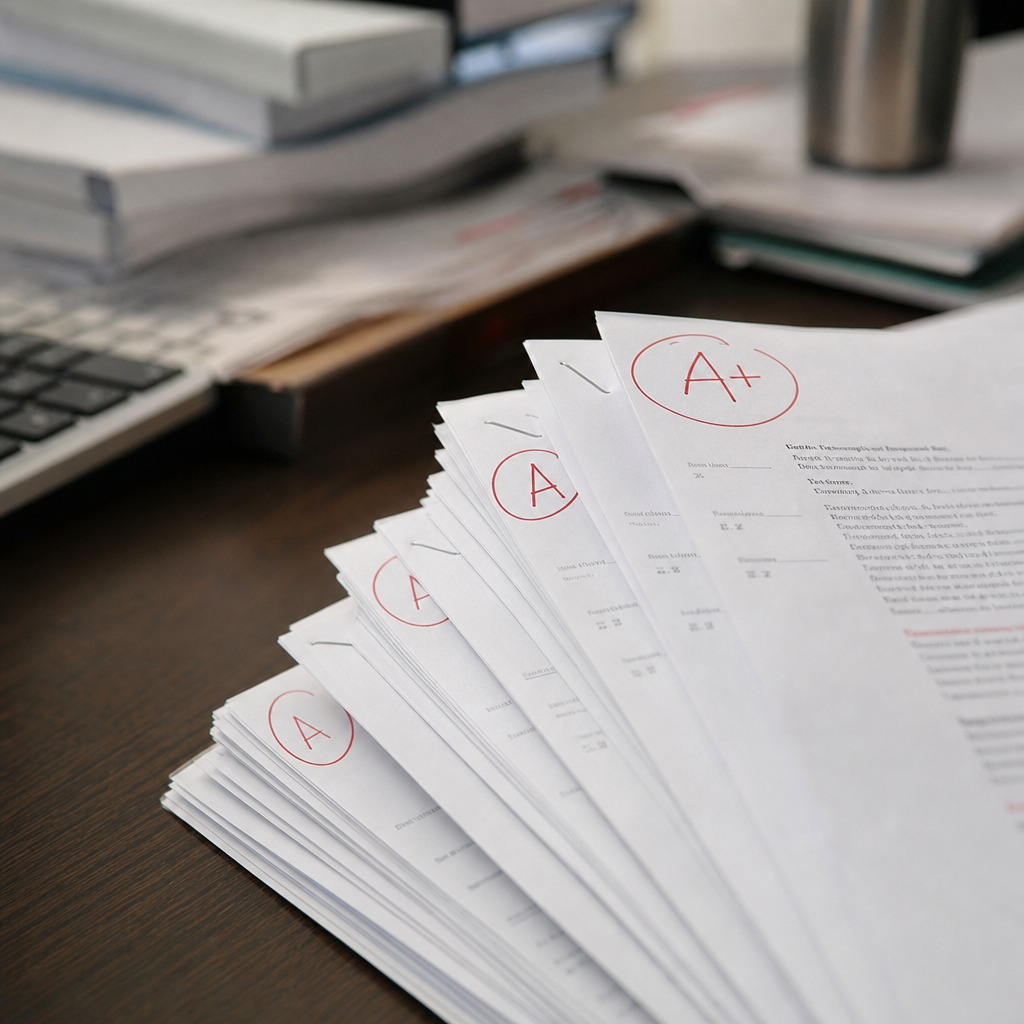
Grade inflation is the long-term rise in awarded grades without a matching rise in learning, mastery, or difficulty-adjusted performance. In practical terms, more students receive A grades, honors labels, or high GPAs even when external measures such as standardized tests, writing quality, quantitative reasoning, or course rigor do not show the same upward movement. Within grading and reporting systems, grade inflation matters because grades are supposed to communicate achievement clearly to students, families, colleges, employers, and policymakers. When that signal becomes distorted, almost every downstream decision becomes harder to make well.
In schools and universities, I have seen the issue from both sides of the gradebook. Teachers want to reward effort, protect student motivation, and avoid punishing learners for uneven access to resources. Administrators want consistent pass rates, satisfied families, and equitable outcomes. Students need grades that open opportunities. Those pressures are real, yet they can produce transcripts that say less and less about actual performance. A grade then shifts from being evidence of demonstrated learning to being a negotiated summary of behavior, compliance, extra credit, attendance, deadline flexibility, and institutional incentives.
Any useful discussion starts by defining terms. Grade inflation is not the same as improved teaching, stronger students, or fairer grading. If instruction improves and more students truly master the standards, higher grades are justified. Grade inflation occurs when grading becomes more lenient or less discriminating than the underlying level of achievement. It also differs from compression, where too many students cluster at the top because the scale has limited room to show advanced distinctions. Related concepts include grade deflation, standards-based grading, mastery learning, norm-referenced grading, criterion-referenced grading, GPA weighting, and transcript reporting. Together, these concepts shape how schools measure and communicate learning.
This hub article explains the main causes of grade inflation, the consequences for K–12 and higher education, and the grading and reporting practices that reduce distortion while protecting fairness. It also serves as a roadmap for deeper work on rubrics, reassessment policies, standards-based reporting, transcript design, GPA calculation, late work, weighting, and academic integrity. If your central question is simple—why grade inflation happens and why it matters—the answer is direct: it grows when incentives reward higher marks more than accurate reporting, and it matters because unclear grades weaken accountability, equity, placement, and trust.
What grade inflation looks like in K–12 and higher education
Grade inflation usually appears as a steady increase in average grades over time, especially at the top of the scale. In U.S. higher education, widely cited research by Stuart Rojstaczer and Christopher Healy found that average college grades rose from roughly a C average in the 1960s to around a B average decades later, with A grades becoming the most common mark at many institutions. K–12 systems show similar patterns through rising GPAs, larger honor rolls, and declining rates of low grades, even when NAEP, SAT, ACT, state assessment, or college-readiness indicators remain flatter. The pattern does not prove misconduct; it signals a need to examine grading policy, curriculum rigor, and reporting design.
In schools, the shift often hides inside common routines. A teacher may round up a borderline grade, allow unlimited retakes without guardrails, remove penalties for missing work, or fold completion points into academic averages. A district may set minimum grades such as 50 percent, reduce failure rates through credit recovery, or encourage no-zero policies. A university department may face student evaluation pressure, competition for enrollments, and expectations that high tuition should lead to high grades. None of these choices is automatically wrong. Inflation emerges when the cumulative effect is a transcript that reports success more generously than the evidence supports.
The strongest warning sign is misalignment. If classroom grades say students are thriving but external measures, subsequent course performance, or employer feedback say otherwise, the reporting system is not calibrated. Another sign is reduced spread in grades. When almost everyone earns an A or B, grades stop distinguishing among levels of mastery. That affects scholarship decisions, admissions, honors, interventions, and course placement. It also changes student behavior. When students learn that deadlines, revision limits, or quality thresholds are flexible in practice, they rationally adjust effort. Reporting systems always shape incentives, whether educators intend that or not.
Why grade inflation happens: incentives, policy, and culture
The causes of grade inflation are structural as much as personal. First, there is incentive pressure. Teachers and professors are more likely to face complaints for giving low grades than for giving high ones. Student course evaluations can influence promotion, contract renewal, and departmental reputation. Families may interpret strict grading as poor teaching rather than accurate reporting. In tuition-dependent colleges, lenient grading can support retention. In K–12 systems, graduation targets, accountability dashboards, and chronic absenteeism concerns can push schools toward policies that reduce failing marks. Over time, the easiest path is to make grades less punitive and more generous.
Second, many grading systems mix achievement with nonacademic factors. Homework completion, participation, bringing supplies, extra credit, behavior, punctuality, and attendance often count in the same average as quizzes and exams. That blending creates construct-irrelevant variance, the assessment term for scores influenced by factors beyond the intended learning target. A student can raise a grade through compliance while still lacking proficiency, or lower a grade through disorganization despite strong understanding. In my work with gradebook audits, this mixed-measure problem is one of the most common reasons transcripts lose meaning.
Third, curriculum and assessment design can unintentionally inflate grades. Easier assignments, predictable tests, heavy weighting of low-level recall, and generous curves all raise marks without raising mastery. So do poorly aligned rubrics that reward effort language instead of evidence. Digital platforms can amplify this by auto-scoring completion, allowing multiple attempts without item variation, or averaging reassessments in ways that produce mathematically high course grades from modest performance. Inflation is often less about one dramatic policy than about a dozen small design choices pushing in the same direction.
Culture matters too. Many schools have moved, for understandable reasons, away from punitive grading. They want grades to reflect learning rather than privilege, and they recognize that rigid deadlines or one-shot testing can magnify inequities. Those concerns are valid. But when reform is implemented without clear definitions of proficiency, common rubrics, and consistent reassessment rules, the result can be softer grading rather than more accurate grading. Equity does not require inflated marks; it requires better opportunities to learn, stronger feedback, and reporting practices that separate achievement from behavior.
| Cause | How it inflates grades | Typical example |
|---|---|---|
| Evaluation pressure | Discourages strict grading | Faculty avoid low averages to protect course ratings |
| Mixed categories | Adds nonacademic points | Homework completion counts as mastery |
| No-zero or minimum grade policies | Raises floor of averages | Missing work recorded as 50 instead of 0 |
| Unlimited retakes | Raises marks without stronger evidence controls | Students retry the same test until an A appears |
| Curriculum simplification | Maintains high grades on easier tasks | More completion work, fewer demanding assessments |
How grading and reporting systems amplify or reduce inflation
Grading and reporting systems are not neutral containers; they determine what a grade means. Traditional percentage grading is especially vulnerable because it blends many tasks into one average and gives disproportionate mathematical weight to zeros and low scores. A single missing assignment can overwhelm later evidence of mastery, which is why schools introduce policies to soften those penalties. Yet the fix is often blunt. Instead of redesigning grade categories, schools raise minimum scores or add recovery points, and the grade becomes less precise. Better systems begin by deciding what the grade should represent: current proficiency, cumulative performance, growth, habits of work, or some combination reported separately.
Standards-based grading can reduce inflation when implemented carefully. By reporting performance against specific learning standards and separating academic achievement from behaviors, it narrows the construct being measured. It also encourages reassessment based on new evidence rather than point chasing. But standards-based systems can still inflate if proficiency scales are vague, if “meeting standard” is set too low, or if teachers default to the highest recent score without enough evidence. The model helps only when there are common expectations, anchor papers, moderation protocols, and disciplined use of rubrics.
Transcript design also matters. Weighted GPAs can create the appearance of stronger achievement by boosting grades in advanced courses, even when letter grades already mask variation in rigor. Class rank can intensify competition for inflated marks in honors and AP pathways. Narrative comments, competency dashboards, and separate citizenship indicators often provide better context than a single omnibus grade. Colleges and employers increasingly value course rigor and demonstrated skill, not just GPA. Reporting systems should make those distinctions visible instead of forcing everything into one number.
A practical safeguard is calibration. Departments that use common assessments, blind scoring, moderation meetings, and exemplar papers typically produce more stable grade meanings across classrooms. External benchmarks help too. If Algebra I grades rise sharply while common end-of-course exam performance does not, that discrepancy is actionable evidence. The same applies in college writing, nursing clinicals, and introductory science labs. Reliable reporting depends on repeated checks between local grading and independent indicators. Without calibration, even sincere teachers can drift toward inconsistent and inflated standards.
Consequences for students, institutions, and public trust
The most immediate consequence of grade inflation is weaker information. When grades no longer distinguish levels of understanding, students receive less useful feedback about what they know and what they still need to learn. A student earning an A in a course but struggling in the next level often experiences that mismatch as a shock, not as a predictable result of vague reporting. Inflated grades can delay intervention, especially in literacy and mathematics, where early misconceptions compound. They can also erode resilience by teaching students that outcomes will be adjusted upward regardless of performance.
Admissions and selection processes are affected as well. Colleges, scholarship committees, selective high schools, and employers rely on transcripts because they are available at scale. If nearly every applicant presents very high grades, decision-makers shift weight toward standardized tests, recommendations, school profiles, interviews, portfolios, or institutional reputation. That can worsen inequity because students with better advising and more social capital often navigate those secondary signals more effectively. In other words, inflated classroom grades do not eliminate sorting; they move sorting to other measures.
Institutions also pay a cost. Universities facing inflated incoming grades may see more students placed into courses for which they are not prepared, increasing DFW rates, support service demand, and transfer friction. K–12 schools can report strong pass rates while masking curriculum gaps that appear later on state tests, college placement exams, or workplace credentials. Public confidence declines when families and employers see transcripts that overpromise. Trust, once lost, is difficult to rebuild because stakeholders begin to assume every high mark is strategic rather than earned.
There are also ethical implications. Grades influence scholarships, visas, athletic eligibility, licensure pathways, and financial aid. If the grading system systematically overstates some kinds of performance and understates others, it distributes opportunities unfairly. That is why inflation cannot be treated as a minor technical issue. It is a governance issue tied to standards, transparency, and due process. Accurate grading protects students not only by recognizing success, but by ensuring that reported success corresponds to demonstrable competence.
What schools and colleges can do instead
The solution is not harsher grading for its own sake. The goal is accurate, fair, and instructionally useful reporting. Start by separating academic achievement from behaviors such as effort, attendance, and timeliness. Report learning habits, but do not hide them inside the academic grade. Next, define proficiency with clear performance descriptors, common rubrics, and anchor examples of student work. Train teachers to score against those standards through moderation sessions. In higher education, departments should review grade distributions alongside common assignment samples, licensure outcomes, and subsequent course success.
Reassessment policies need structure. Allowing students to learn from mistakes is sound practice, but retakes should require new preparation, use varied tasks, and focus on the same standards. Unlimited retries on identical items reward persistence in gaming rather than deeper understanding. Likewise, late-work policies should preserve opportunities to demonstrate learning without implying that deadlines have no meaning. Many effective schools use separate work-habit indicators, replacement scoring for reassessed standards, and reasonable cutoffs linked to reporting periods.
Schools should also audit their gradebooks. Look for categories that distort meaning, such as extra credit unrelated to standards, excessive completion points, or averages built from too many minor tasks. Review whether weighting reflects the intended importance of outcomes. Analyze subgroup patterns to ensure reforms do not create hidden inequities. Publish school profiles that explain grading scales, weighting, course rigor, and reporting conventions. Clear communication reduces conflict because families understand what a grade includes and what it does not.
The best grading and reporting systems tell the truth in a form people can use. They motivate students through clarity, not generosity; they support equity through opportunity, not ambiguity; and they strengthen decisions because the transcript matches demonstrated learning. If your school or institution is revisiting grading practices, begin with one question: does each reported grade mean the same thing across classrooms and over time? If the answer is uncertain, that is the place to start. Build definitions, calibrate evidence, separate behaviors from achievement, and make the transcript more honest. Better grading improves teaching, placement, and trust—and it gives students feedback they can actually use.
Frequently Asked Questions
What is grade inflation, and how is it different from students simply performing better?
Grade inflation is the long-term increase in grades awarded to students without a comparable increase in actual learning, skill development, or difficulty-adjusted achievement. In other words, more students may receive A grades, higher GPAs, or academic honors even when outside indicators of performance—such as standardized test scores, writing quality, quantitative reasoning, or the rigor of coursework—do not improve at the same pace. That distinction is important because rising grades alone do not automatically mean students are learning more. If stronger grades are the result of better teaching, improved preparation, stronger study habits, and more demanding academic work successfully completed, that reflects real academic progress. Grade inflation occurs when the signal sent by grades becomes less accurate than it used to be.
A useful way to think about it is that grades are supposed to communicate achievement clearly to students, families, schools, colleges, and employers. When grade inflation takes hold, that communication weakens. An A no longer represents the same level of mastery it once did, and it becomes harder to tell whether a student has truly excelled or has simply benefited from more generous grading standards. This is why grade inflation is not just a complaint about “too many high grades.” It is a concern about whether grades still function as reliable measures of performance, readiness, and academic distinction.
What causes grade inflation in schools and colleges?
Grade inflation usually does not come from a single source. It tends to emerge from a mix of institutional pressures, cultural expectations, and classroom-level practices. One major cause is the increasing pressure on teachers and professors to support student success in visible ways, with grades becoming one of the easiest metrics to adjust. Schools want strong graduation rates, satisfied families, student retention, and positive reputations. Colleges may worry about course evaluations, enrollment, and competition for students. In that environment, strict grading can feel risky, while generous grading can appear supportive or even strategic.
Another common cause is the shift in how academic struggle is interpreted. In many settings, low grades are increasingly viewed not just as feedback about performance, but as indicators that the instructor, system, or assignment has failed the student. That can lead educators to offer more extra credit, more retakes, more curve adjustments, more deadline flexibility, and broader definitions of mastery. Some of these practices can be valuable when used thoughtfully, but when they are layered together without clear standards, grades can drift upward even if expectations have not truly been met at a higher level.
Curriculum and assessment design also matter. If assignments emphasize completion over quality, or if rubrics reward participation more than demonstrated understanding, students may earn high marks without showing deep mastery. In higher education, there can also be discipline-specific trends, where some departments grade much more generously than others, creating a culture in which tougher grading becomes harder to justify. Over time, once higher grades become normal, they create their own momentum. Teachers may feel pressure not to disadvantage their students compared with peers in other classes or schools, and institutions may hesitate to reverse grading trends because doing so can trigger complaints and perceptions of unfairness.
Why is grade inflation a problem if it helps students earn better GPAs and feel more confident?
At first glance, grade inflation can seem beneficial. Higher grades may boost confidence, improve class rank or GPA-based opportunities, and reduce stress for students and families. But the deeper problem is that inflated grades can create a false sense of readiness. If a student consistently receives top marks without fully mastering the material, that student may move on to more advanced coursework, college-level expectations, or workplace responsibilities without the skills needed to succeed. In that sense, grade inflation can delay rather than prevent academic difficulty.
It also reduces the meaning of grades as a form of feedback. Students need honest signals about what they understand, where they are improving, and what still needs work. When grading becomes overly generous, those signals become blurred. A student who earns an A on weak writing, shaky analysis, or incomplete conceptual understanding may have little reason to seek improvement. That can be especially harmful in cumulative subjects such as mathematics, science, writing, and languages, where gaps in foundation grow over time.
There are broader fairness concerns as well. Grade inflation can make it harder to distinguish among levels of performance, which affects scholarships, admissions decisions, honors recognition, and competitive opportunities. Students who truly perform at an exceptional level may find that their work is less visible when nearly everyone receives similarly high grades. At the same time, students from schools or instructors with stricter standards may appear weaker on paper even if they are better prepared. So while grade inflation may produce short-term benefits, it often undermines trust, comparability, and long-term student development.
How does grade inflation affect colleges, employers, and the value of academic credentials?
When grades become inflated, colleges and employers have a harder time using transcripts and GPAs as reliable evidence of achievement. If high grades are widespread but do not consistently reflect strong mastery, decision-makers must look for other signals to identify preparedness and potential. That is one reason admissions offices and hiring managers often place added weight on writing samples, interviews, recommendation letters, course rigor, portfolios, internships, standardized exams where available, and evidence of sustained achievement in demanding contexts. In effect, grade inflation can weaken the stand-alone value of the transcript.
This has important consequences for educational equity and credential credibility. Students from schools with more lenient grading may appear stronger than they really are, while students from more rigorous programs may be undervalued if evaluators do not understand the context. Over time, institutions may feel pressure to add more layers of evaluation because grades alone are no longer enough. That can make admissions and hiring more complicated, more resource-intensive, and sometimes less transparent.
There is also a broader reputational effect. Academic credentials are valuable because they are trusted signals of knowledge, discipline, and capability. If grade inflation becomes widespread and obvious, people may start to question what high GPAs, honors distinctions, or even certain degrees actually mean. That does not mean credentials become worthless, but it does mean their interpretive power declines. Institutions then face a difficult challenge: they must preserve student opportunity while also maintaining standards strong enough that grades and credentials continue to carry real meaning.
What can schools and instructors do to reduce grade inflation without being unfairly harsh?
Reducing grade inflation does not require a return to punitive grading or a disregard for student support. The goal is not to give lower grades for their own sake, but to ensure that grades accurately reflect demonstrated learning. One of the most effective strategies is to define standards clearly. Schools and instructors can use transparent rubrics, shared benchmarks, common assessments, and examples of work at different performance levels so that students understand what distinguishes excellent work from adequate work. When expectations are explicit and consistently applied, grading becomes both fairer and more credible.
Another important step is separating academic achievement from behaviors that, while valuable, are not the same thing as mastery. Attendance, participation, effort, and punctuality can matter, but if they are weighted too heavily, the final grade may say more about compliance than learning. Schools can also review the impact of extra credit, retake policies, deadline flexibility, and grading curves to ensure these tools support learning recovery rather than artificially raising averages. Used carefully, revisions and reassessments can strengthen learning; used loosely, they can inflate grades without improving understanding.
At the institutional level, departments and schools can compare grading patterns over time, calibrate expectations across sections, and examine whether grade distributions align with external evidence such as capstone performance, licensing exams, standardized assessments, or later course success. Professional development can help instructors design more rigorous assignments and more reliable assessments. Most importantly, schools should create a culture in which honest feedback is seen as a form of respect, not punishment. Students benefit most when grades are accurate, expectations are high, support is meaningful, and success reflects real growth rather than softened standards.