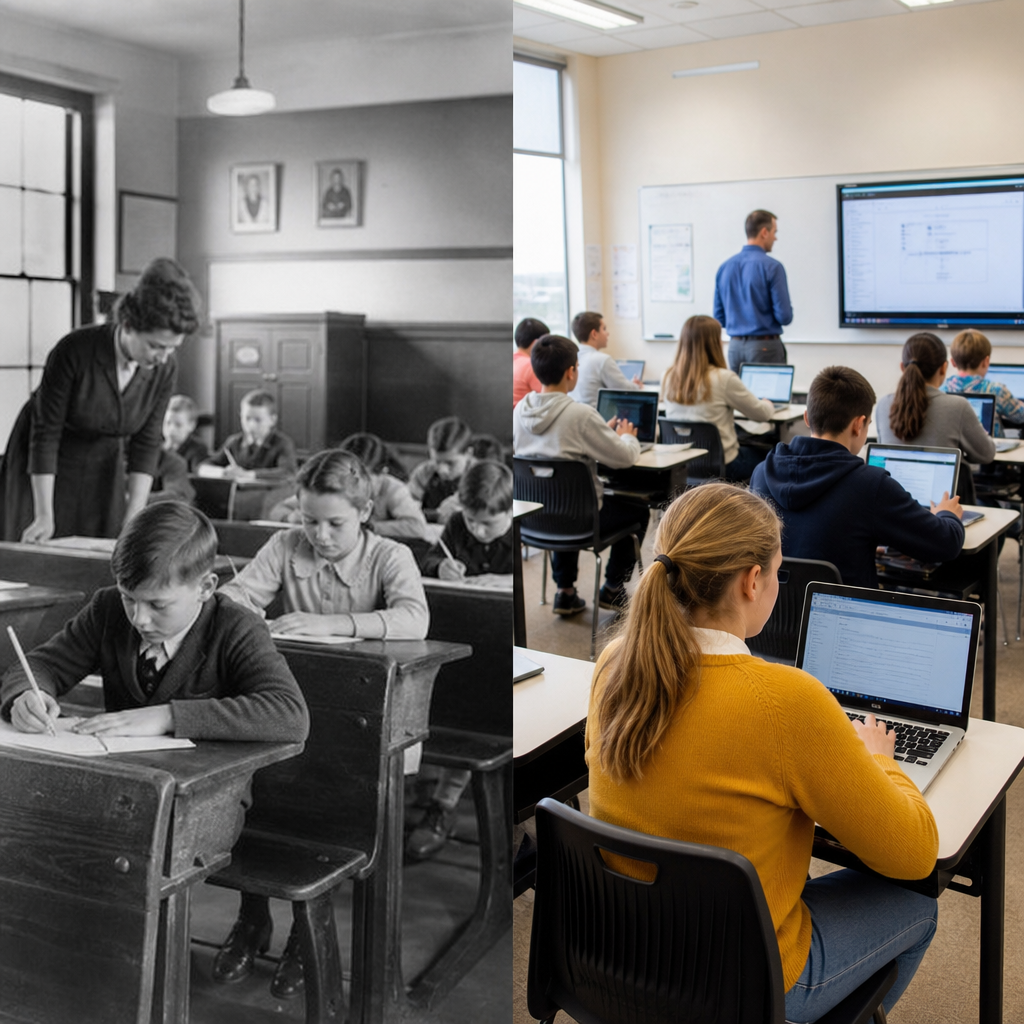

Informal assessments in the classroom are the day-to-day checks teachers use to understand what students know, where they are confused, and what instruction should happen next. In practical terms, an informal assessment is any low-stakes method for gathering evidence of learning without the structure, timing, or scoring rules of a formal test. I have relied on them in elementary, secondary, and teacher-training settings because they reveal far more than a single quiz ever can when used consistently. They sit within the broader topic of types of assessment, which also includes diagnostic, formative, summative, performance-based, norm-referenced, and criterion-referenced approaches. As a hub topic, informal assessment matters because it connects these categories: it often serves formative purposes, can support diagnosis, and can prepare students for more formal demonstrations of mastery.
Teachers use informal assessments to answer immediate questions. Did students understand the mini-lesson? Can they apply a concept independently? Which misconceptions are spreading across the room? Unlike standardized measures, informal assessments are flexible. A teacher can change the prompt, mode, or grouping in real time. That flexibility is especially valuable in mixed-ability classrooms, multilingual settings, and inclusive environments where students may need several ways to show understanding. Informal evidence can come from observation, conversation, short written responses, peer discussion, quick digital polls, notebooks, or student self-reflection. The key is not the format alone, but the instructional decision that follows.
Strong classroom assessment is never only about grading. It is about collecting valid evidence and responding to it. Informal methods help teachers do this efficiently because they are embedded in instruction rather than added on after learning supposedly ends. They reduce the delay between teaching and feedback, and that short feedback loop improves retention, engagement, and transfer. Research summarized by organizations such as the Education Endowment Foundation and the Council of Chief State School Officers consistently points to feedback, questioning, and responsive teaching as high-impact practices. Informal assessment is where those practices become visible. When teachers ask hinge questions, listen to think-alouds, or review exit tickets before planning tomorrow’s lesson, they are turning assessment into a daily engine for better teaching.
This article explains the main examples of informal assessments in the classroom and shows how they fit within the wider landscape of assessment types. It also clarifies when informal assessment is the right tool, where its limits are, and how to use it well. If you are building a strong foundation in educational assessment, start here: informal assessments are the bridge between instruction and evidence, and they make every other assessment type more useful.
What Informal Assessment Means Within the Types of Assessment
Informal assessment is best understood by comparison. Formal assessments usually follow standardized procedures, fixed administration conditions, and predetermined scoring methods. Examples include end-of-unit tests, benchmark exams, state assessments, and externally moderated performance tasks. Informal assessments, by contrast, are flexible, embedded, and often ungraded. They are usually teacher-created or spontaneously adapted. A teacher circulating during guided practice, asking students to explain how they solved a fraction problem, is conducting an informal assessment. So is a kindergarten teacher noting phonemic awareness during a read-aloud.
Within the broader types of assessment, informal methods overlap most closely with formative assessment, but the terms are not identical. Formative assessment refers to the purpose: using evidence to improve learning during instruction. Informal assessment refers to the method and conditions: low-stakes, adaptable, and often observational or conversational. An informal assessment can be formative when it changes teaching. A formal quiz can also be formative if the teacher analyzes results and reteaches promptly. This distinction matters because schools sometimes confuse “informal” with “unplanned” or “formative” with “small.” In reality, effective informal assessment is deliberate, even when it looks natural.
Informal assessments also support diagnostic assessment. Early in a unit, a teacher might use a concept map, class discussion, or quick writing sample to surface prior knowledge and misconceptions. In literacy, running records and anecdotal notes help identify decoding, fluency, or comprehension needs. In mathematics, number talks reveal whether errors come from place value misunderstanding, operation confusion, or weak fact fluency. These examples show why informal assessment belongs at the center of a types of assessment hub: it can serve multiple purposes across the learning cycle.
Another important distinction is between assessment of learning and assessment for learning. Informal assessments are typically designed for learning, not merely to record attainment. Because they are low stakes, students are more likely to take risks, expose uncertainty, and revise ideas. That creates better evidence for teachers. However, quality still matters. If prompts are vague, observations are unsystematic, or criteria are hidden, informal assessment can become impressionistic and biased. The most effective teachers anchor even quick checks to clear learning intentions and success criteria.
Common Examples of Informal Assessments in the Classroom
The most useful informal assessments are simple enough to use often and precise enough to guide next steps. Exit tickets are one of the strongest examples. At the end of a lesson, students answer one or two focused questions, such as “Solve this equation and explain your method” or “What is one cause of the French Revolution?” A well-designed exit ticket isolates the day’s objective, making patterns easy to spot before the next class. When I review them, I sort responses into three piles: secure understanding, partial understanding, and major misconception. That sorting can immediately determine grouping and pacing.
Observation is another core method, but effective observation is more than watching. Teachers look for specific behaviors linked to learning goals: use of academic vocabulary, problem-solving strategy choice, lab safety procedure, or reading stamina. Anecdotal notes, checklists, and seating-chart codes make observations more reliable. In early years classrooms, observational assessment is essential because young children often show understanding through action, language, and play before they can produce extended written work.
Questioning is one of the oldest and most powerful informal assessments. Cold calling, think-pair-share, hinge questions, and Socratic prompts all reveal student thinking when used carefully. Hinge questions, a term popularized by Dylan Wiliam, are especially useful midway through a lesson because one well-crafted multiple-choice or short-response item can uncover common misconceptions before the class moves on. The critical feature is that every wrong answer should represent a specific misunderstanding.
Other common examples include journals, learning logs, whiteboard responses, quick writes, peer review, self-assessment checklists, oral retells, concept maps, conferences, and digital polls in tools such as Google Forms, Kahoot, Nearpod, or Pear Deck. Each one works best under certain conditions.
| Informal assessment example | Best use | What it reveals |
|---|---|---|
| Exit ticket | End of lesson check | Immediate grasp of objective and misconceptions |
| Observation with notes | During practice or centers | Strategy use, engagement, skill execution |
| Hinge question | Mid-lesson decision point | Whether class is ready to proceed |
| Student conference | Writing, reading, projects | Reasoning, metacognition, next-step needs |
| Journal or quick write | Reflection or content explanation | Depth of understanding and vocabulary control |
| Peer and self-assessment | Revision stages | Awareness of criteria and quality |
These examples are effective because they can be repeated frequently without exhausting students. They also broaden what counts as evidence. A student who freezes on timed tests may explain a scientific process clearly in a conference or model a math strategy accurately on a whiteboard. Informal assessments do not replace formal measures, but they often provide a truer day-to-day picture of learning progress.
How Informal Assessments Work Across Subjects and Grade Levels
In literacy, informal assessments include running records, oral reading fluency checks, retellings, vocabulary discussions, annotation reviews, and writing conferences. A first-grade teacher listening to a child read can quickly note whether miscues reflect visual guessing, weak phonics knowledge, or syntax confusion. In secondary English, a seminar discussion can show whether students can infer theme, use textual evidence, and respond to peers. Those insights are difficult to capture through multiple-choice items alone.
In mathematics, whiteboard checks, number talks, error analysis, and observation during manipulatives work are especially valuable. Suppose students are solving 34 × 6. One student uses repeated addition, another decomposes 34 into 30 and 4, and another sets up the standard algorithm incorrectly. A short scan of work reveals not just who is right or wrong, but how they are reasoning. That information matters because different errors require different interventions. Informal assessment in math should focus on strategy, representation, and explanation, not only final answers.
Science classrooms benefit from prediction prompts, lab observations, claim-evidence-reasoning discussions, and notebook checks. During an experiment, a teacher can assess whether students can control variables, record data accurately, and connect observations to scientific concepts. In social studies, quick writes, timeline construction, map talk, source analysis, and debate preparation help uncover whether students can contextualize events and evaluate evidence. Fine arts, physical education, and career and technical education also rely heavily on informal assessments because performance unfolds in real time. A music teacher listening for phrasing, a PE teacher observing movement patterns, or a welding instructor checking tool setup is gathering actionable evidence continuously.
Grade level changes the form more than the purpose. In primary classrooms, teachers may use picture sorts, oral language prompts, and play-based observation. In upper elementary and middle school, notebooks, discussion protocols, and response cards become more common. In high school, conferences, seminar participation, draft reviews, and discipline-specific questioning dominate. Across all levels, the principle is the same: collect evidence close to the learning moment and use it before misconceptions harden.
Benefits, Limits, and Best Practices for Using Informal Assessment Well
The main benefit of informal assessment is responsiveness. Because evidence is gathered during learning, teachers can reteach immediately, adjust grouping, provide scaffolds, or extend challenge. This improves efficiency. Instead of waiting until a unit test exposes failure, teachers can intervene at the point of confusion. Informal assessment also supports student agency. When learners use rubrics, reflection prompts, or traffic-light self-ratings, they become better at monitoring their own progress. Over time, that builds metacognition, which is strongly associated with independent learning.
There are limits. Informal assessments can be less reliable than standardized measures because conditions vary and teacher interpretation can drift. Bias is a real concern, especially when participation, behavior, or language proficiency is mistaken for understanding. Students who are quiet, anxious, or culturally less inclined to volunteer may be underestimated if teachers rely too heavily on whole-class discussion. Documentation can also become a challenge. If evidence is not captured in a usable way, it cannot inform patterns over time or support communication with families and specialists.
Best practice starts with clarity. Teachers should identify the exact learning target, decide what evidence would demonstrate it, and choose the lightest method that will produce that evidence. A one-minute whiteboard response is often better than a ten-question worksheet if the goal is to check whether students can identify equivalent fractions. Next, use routines. Consistent structures such as entry slips, hinge questions, conferencing notes, and exit tickets make assessment faster and fairer. Then calibrate interpretation. Department teams can review student responses together, compare what counts as secure understanding, and refine prompts. This reduces inconsistency.
Feedback should be timely, specific, and actionable. Comments like “good job” do not move learning. Comments like “Your claim is clear, but the evidence does not yet prove it; add one quote that shows motive” do. Finally, triangulate evidence. No single informal assessment should carry too much weight. Combine observation, student work, and conversation, a principle long supported in balanced assessment systems. When these elements align, informal assessment becomes one of the most dependable tools in classroom practice.
How Informal Assessment Connects to a Strong Assessment System
Informal assessments are most powerful when they are part of a coherent assessment system rather than isolated teacher habits. A balanced system uses different assessment types for different decisions. Diagnostic assessments identify starting points. Informal and formative checks guide daily instruction. Interim or benchmark measures track broader progress. Summative assessments evaluate what students can do at the end of a sequence. Performance assessments ask students to apply knowledge in authentic contexts. Informal methods tie all of these together because they explain the story behind the scores.
For example, if a benchmark reading score declines, informal evidence may show that students can decode accurately but struggle to cite evidence in written responses. If a lab report grade is weak, conferences may reveal confusion about variables rather than poor effort. This is why schools that invest only in testing platforms often miss the point. Data dashboards can display outcomes, but informal assessments explain causes. They also improve instruction between reporting windows, where most learning actually happens.
For teachers building expertise in types of assessment, the practical takeaway is clear: master informal assessment first. Learn to ask sharper questions, observe with purpose, capture evidence efficiently, and respond instructionally. Then connect those habits to larger assessments, curriculum planning, and intervention systems. Start by selecting two or three routines you can use this week, such as an entry question, a hinge check, and an exit ticket. When informal assessment becomes systematic, teaching becomes more precise, students receive support sooner, and every other assessment type becomes more meaningful.
Frequently Asked Questions
What are some common examples of informal assessments in the classroom?
Common examples of informal assessments include observation, class discussions, exit tickets, think-pair-share activities, quick writes, journal responses, thumbs up/thumbs down checks, whiteboard responses, student conferences, and review games. Teachers also use reading aloud, listening to partner conversations, checking notebooks, and asking follow-up questions during instruction as informal ways to gather evidence of learning. What makes these strategies “informal” is not that they are casual or unimportant, but that they are flexible, low-stakes, and woven into everyday teaching rather than delivered as a separate, high-pressure event.
For example, a teacher might ask students to solve one problem on a whiteboard and hold it up for a fast scan of understanding. In a reading lesson, the teacher may listen as students explain the main idea to a partner and notice who can summarize accurately and who needs support. In writing, a quick paragraph response can show whether students understand a concept before moving on. These classroom checks are valuable because they provide immediate information about what students know, what they misunderstand, and what the teacher should do next. Used consistently, they create a clearer picture of student learning than a single quiz alone.
How are informal assessments different from formal assessments?
Informal assessments differ from formal assessments in structure, purpose, timing, and pressure level. Formal assessments usually follow a fixed format, such as unit tests, standardized exams, benchmark assessments, or graded final projects. They often have specific administration procedures, scoring criteria, and scheduled dates. Informal assessments, by contrast, happen during daily instruction and are often adapted in the moment. They may not receive a grade at all, and they are primarily used to guide teaching rather than to produce a final score.
Another important difference is the kind of information each one provides. Formal assessments can show whether students met a standard at a particular point in time, but informal assessments help teachers understand the learning process while it is still unfolding. A formal test might reveal that a student missed questions on fractions, but an informal assessment can show whether the problem is vocabulary confusion, weak number sense, or a misunderstanding of the model being used. That level of insight allows a teacher to adjust instruction immediately.
Informal assessments also tend to lower student anxiety. Because they are embedded in normal classroom routines, students often respond more naturally and reveal their actual thinking. This makes them especially useful for catching misconceptions early, supporting hesitant learners, and making instruction more responsive. Formal and informal assessments both matter, but informal assessments are often the tools that make effective day-to-day teaching possible.
Why are informal assessments important for student learning?
Informal assessments are important because they give teachers timely, usable evidence of student understanding before gaps become bigger problems. Instead of waiting until the end of a lesson, week, or unit, teachers can identify confusion in real time and respond immediately. This might mean reteaching a concept, providing a different example, grouping students for targeted practice, or accelerating instruction for students who are ready to move ahead. In that sense, informal assessment is deeply connected to strong instruction. It helps teachers make decisions based on evidence rather than assumptions.
They also support students by making learning more visible. When teachers regularly ask students to explain, reflect, demonstrate, or apply what they know, students become more aware of their own understanding. They begin to recognize where they feel confident and where they need help. This builds metacognition, which is a key part of long-term academic growth. Informal assessments can also increase participation because they create more opportunities for every student to show learning, not just the students who tend to speak first or test well.
In practice, informal assessments often reveal details that a formal score cannot capture. A student may answer correctly on a worksheet but be unable to explain the reasoning. Another may give a wrong answer for the right reason because of a small calculation error. Those distinctions matter. They help teachers respond more precisely, and they help students receive support that actually fits their needs. Over time, consistent informal assessment leads to more accurate instruction, stronger engagement, and better learning outcomes.
How can teachers use informal assessment results to adjust instruction?
Teachers can use informal assessment results to make immediate and practical instructional decisions. If several students show confusion during a discussion or exit ticket, the teacher may pause and reteach the concept using a different strategy, example, or visual model. If only a small group is struggling, the teacher can pull those students for targeted support while others continue practicing independently or in small groups. If most students demonstrate mastery, the teacher can move forward confidently instead of spending unnecessary time reviewing material they already understand.
These adjustments can happen within minutes or across several days. During a lesson, a teacher might notice through questioning that students can define a term but cannot apply it, so the next activity shifts toward practice and application. After reviewing journal entries or notebook work, the teacher may discover a pattern of misunderstanding and plan the next lesson around that issue. Informal assessment results can also guide grouping decisions, pacing, intervention, enrichment, and even which students need additional language supports or modeling.
The key is that the information must lead to action. Informal assessment is most effective when teachers are actively looking for patterns, not just collecting responses. A strong teacher asks: What are students getting right? Where are they stuck? Is the problem conceptual, procedural, or language-based? Who needs more challenge, and who needs scaffolding? When used this way, informal assessment becomes a practical decision-making tool that keeps instruction responsive and focused on student needs.
What makes an informal assessment effective in the classroom?
An effective informal assessment is aligned to the learning goal, easy for students to access, and useful to the teacher in the moment. The best informal assessments are not random activities; they are purposeful checks designed to reveal whether students understand a specific concept, skill, or process. If the lesson objective is identifying theme, for instance, the assessment should require students to explain or apply theme rather than simply recall a definition. Clarity matters. Teachers need to know exactly what they are looking for before they ask students to respond.
Effective informal assessments also invite authentic thinking. Good prompts encourage students to explain, justify, compare, create, or demonstrate rather than guess. Open-ended questions, brief written reflections, modeled problem solving, and short conferences often provide richer evidence than simple yes-or-no checks alone. At the same time, efficiency matters in a real classroom. An informal assessment should be manageable enough to use regularly, whether that means scanning whiteboards, listening to partner talk, or reading a set of exit slips in a few minutes.
Perhaps most importantly, an effective informal assessment leads to instructional follow-through. If the teacher gathers information but does not use it, the value is limited. The strongest informal assessments help teachers respond with reteaching, clarification, enrichment, or feedback right away. They also work best in classrooms where students feel safe taking risks and making mistakes. When students understand that these checks are tools for learning rather than judgment, they are more likely to respond honestly. That honesty gives teachers better information, and better information leads to better teaching.