
Ethical considerations in impact studies shape every stage of impact evaluation, from the first research question to the final report shared with funders, policymakers, and communities. In program evaluation, an impact study asks a specific question: did an intervention cause a measurable change compared with what would have happened otherwise? That simple definition hides difficult choices about consent, fairness, data use, risk, and representation. I have worked on education, workforce, and public health evaluations where a technically strong design still failed ethical review because the team had not fully considered who carried the burden of research and who benefited from the findings.
Impact evaluation usually refers to methods that estimate causal effects, including randomized controlled trials, quasi-experimental designs, difference-in-differences, regression discontinuity, propensity score methods, interrupted time series, and matched comparison studies. Ethical practice in this context means more than complying with an institutional review board. It means protecting participants, respecting communities, minimizing harm, handling uncertainty honestly, and making design decisions that are defensible in both scientific and human terms. This matters because impact findings influence budget allocations, service delivery, regulation, and public trust. Poor ethics can distort evidence, damage vulnerable populations, and undermine otherwise valuable program evaluation work.
As a hub article for impact evaluation, this guide explains the core ethical issues that cut across methods, sectors, and stakeholders. It covers informed consent, equipoise, control groups, privacy, bias, measurement, community engagement, independent oversight, and responsible reporting. It also points to the practical standards evaluators rely on, including the Belmont Report principles, Common Rule requirements in the United States, GDPR where applicable, UNICEF guidance, and norms from organizations such as the American Evaluation Association and the World Bank. If you need a clear foundation for ethical impact studies, start here before moving into design-specific topics.
Why ethics is central to impact evaluation
Ethics is not an accessory added after methodology is selected; it is part of the design logic itself. A causal design can be statistically elegant and still ethically weak if it withholds a necessary service, creates stigma, or collects data that participants do not understand will be used for secondary analysis. In practice, the most common ethical failure in impact studies is not dramatic misconduct. It is narrow framing: teams optimize internal validity while underestimating participant burden, cultural context, and downstream consequences of publication.
The strongest impact evaluations begin with a legitimate decision need. If a program is already proven effective in a similar context and the intervention is low cost with minimal implementation uncertainty, random assignment may be harder to justify than performance monitoring or phased rollout learning. By contrast, if policymakers truly do not know whether a promising intervention works, for whom, or at what cost, rigorous impact evaluation serves the public interest. This state of genuine uncertainty is often called equipoise. Without it, the ethics of assigning some people to receive less support become much weaker.
Ethics also affects data quality. Participants who feel misled are less likely to answer accurately or remain in the study. Frontline staff who believe the design is unfair may alter implementation, creating contamination or differential attrition. Communities that do not trust the evaluation team may refuse future research entirely. Ethical planning, then, is not separate from validity. It is one of the conditions that makes credible causal inference possible.
Informed consent, participant autonomy, and power
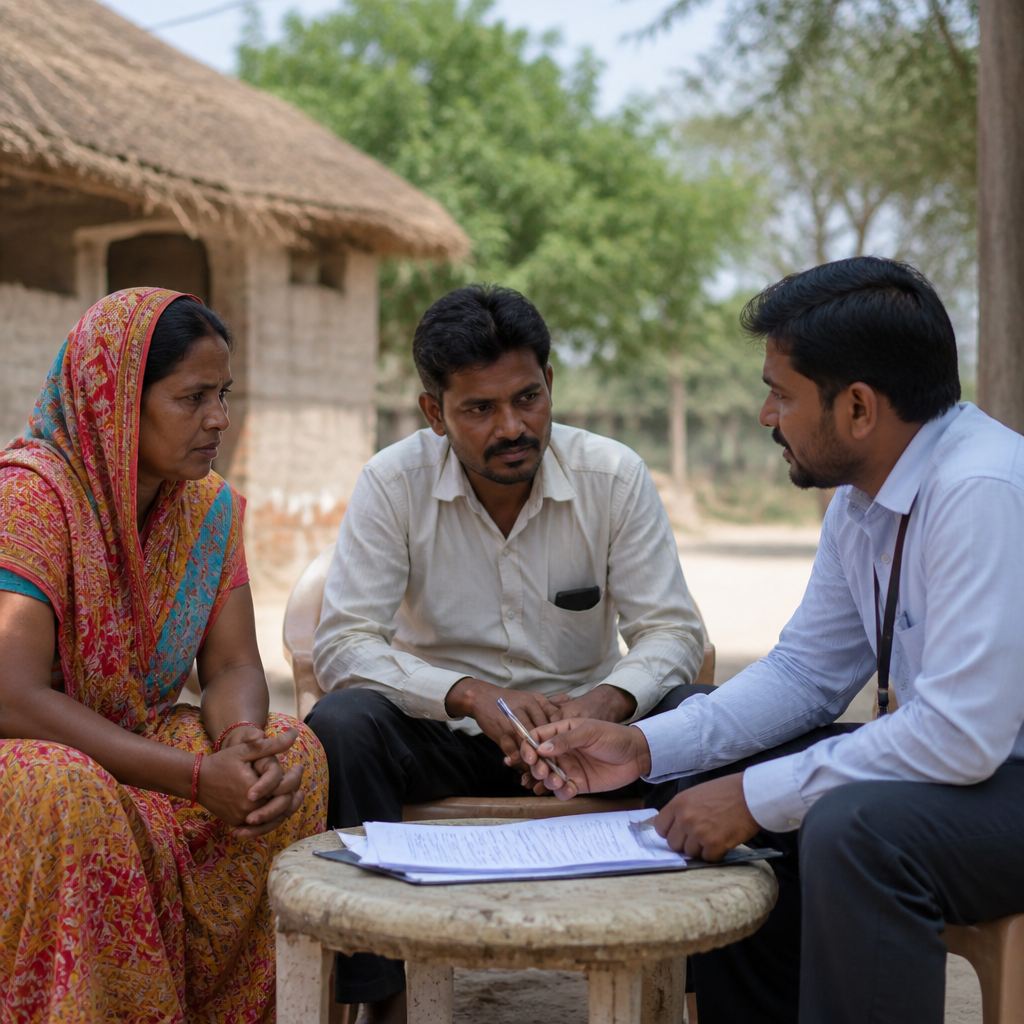
Informed consent in impact studies must be specific, understandable, and proportionate to the risks involved. Participants should know the purpose of the study, what data will be collected, how long participation lasts, whether services differ across groups, what risks or discomforts exist, and how confidentiality will be protected. In my experience, the hardest part is not drafting the consent form. It is making sure consent is meaningful when participants face language barriers, low literacy, dependence on the service provider, or fear that refusal could affect benefits.
Autonomy is especially complex in evaluations of schools, clinics, prisons, workplaces, and social assistance programs. A parent may technically consent to a child survey while feeling there is no real choice because the school is administering it. A jobseeker may agree to data sharing because the program case manager requests it during intake. Ethical evaluators account for these power dynamics by separating service delivery from consent processes where possible, using plain-language scripts, offering translated materials, and making clear that declining participation will not alter eligibility or service quality.
Some studies qualify for waivers or altered consent, particularly when using administrative records, cluster assignment, or minimal-risk procedures. Those cases still require a strong justification. A waiver is not a shortcut around participant respect. If the study uses linked records from education, health, and employment systems, for example, the privacy implications can be substantial even when no new survey is fielded. The ethical test is whether the rights and welfare of participants remain protected and whether a more transparent alternative is feasible.
Control groups, randomization, and fairness
Randomized controlled trials are often described as the gold standard for impact evaluation because random assignment balances observed and unobserved factors on average. Ethically, however, randomization is acceptable only under defined conditions. The intervention should be scarce, uncertain in effectiveness, or impossible to deliver to everyone at once. The allocation process should be transparent. The comparison condition should not deprive participants of services they are otherwise entitled to receive. And the study should have a credible plan to learn something useful enough to justify the burden of research participation.
Fairness concerns are often strongest when evaluating social programs for vulnerable populations. Consider a homelessness prevention initiative with limited slots. If demand exceeds capacity, a lottery may be fairer than ad hoc staff judgment and can generate strong evidence at the same time. By contrast, withholding an established lifesaving treatment from a control group would usually be unethical. Between those poles lie many gray areas, including behavioral nudges, supplementary coaching, curriculum enhancements, and digital tools where the baseline standard of care is less clear.
Stepped-wedge and phased implementation designs sometimes offer an ethical alternative by ensuring all eligible groups eventually receive the intervention while preserving variation in timing. They are not automatically superior, because delayed access can still matter when needs are urgent, and operational changes over time can complicate analysis. Still, in municipal and health system settings, I have seen phased rollout create better stakeholder acceptance than a permanent no-treatment control. Ethics here depends on context, urgency, feasibility, and the plausibility of learning from the chosen design.
Privacy, confidentiality, and data governance
Modern impact studies increasingly rely on integrated data systems, remote surveys, learning platforms, mobile phones, and administrative records. These sources create powerful opportunities for longitudinal analysis, but they also raise serious privacy risks. Confidentiality is not just about removing names from a dataset. Re-identification can occur through combinations of variables such as age, location, school, diagnosis, and service dates. Evaluators must treat data minimization, secure storage, access controls, retention limits, and audit trails as core design elements, not IT afterthoughts.
When handling personal data, teams should define the legal basis for processing, limit collection to variables that serve the evaluation questions, and document who can access raw files. Data sharing agreements should specify permitted uses, deletion schedules, incident response procedures, and restrictions on onward transfer. In cross-border projects, local data sovereignty rules may be as important as donor requirements. I have seen otherwise solid evaluations stall because implementers promised anonymization when the actual analytic plan required person-level linkage across datasets.
Small samples and subgroup reporting create another ethical challenge. A report may avoid naming individuals yet still expose a tiny community, clinic, or school to stigma. Public dashboards are particularly risky when filters allow users to infer outcomes for very small cells. Good practice includes suppression rules, aggregation thresholds, and review of outputs before publication. The rule is simple: if a finding is analytically interesting but could reasonably harm participants through disclosure or labeling, the evaluator needs a safer way to present it.
Bias, inclusion, and culturally competent measurement
Ethical impact evaluation requires more than equal treatment on paper. It requires attention to who is represented, whose outcomes count, and whether instruments work across groups. Sampling frames often underrepresent people with unstable housing, limited literacy, disabilities, or informal employment. If those populations are central to the program, exclusion is not just a technical flaw. It is an ethical failure that can bias conclusions and misdirect resources.
Measurement choices also carry value judgments. A youth employment program may look successful if the only outcome is job placement at ninety days, yet participants may value schedule stability, safety, wage progression, and dignity at work more than initial placement. In community health projects, a biomedical indicator may improve while trust in local providers declines because the intervention changed how services were delivered. Ethical evaluators involve stakeholders early to identify outcomes that are meaningful, valid, and nonstigmatizing.
Instrument adaptation is equally important. Survey items validated in one country or language cannot be assumed equivalent elsewhere. Terms for mental health, gender identity, food insecurity, or household decision-making may not map cleanly across contexts. Pretesting, cognitive interviewing, back translation, and enumerator training reduce the risk of collecting misleading data under the appearance of rigor. When subgroup differences are reported, evaluators should distinguish between true heterogeneous effects and artifacts caused by differential nonresponse, cultural mismatch, or measurement error.
Practical safeguards across the study lifecycle
Ethical practice becomes manageable when teams build safeguards into routine operations. The table below summarizes the controls I use most often during impact evaluations and the risk each one addresses.
| Study stage | Safeguard | Primary ethical risk addressed |
|---|---|---|
| Scoping | Document decision need and uncertainty | Unnecessary or unjustified experimentation |
| Design | Assess alternatives to randomization | Unfair allocation or excessive burden |
| Approval | Independent ethics or IRB review | Conflict of interest and overlooked harm |
| Recruitment | Plain-language consent and opt-out protections | Coercion and misunderstanding |
| Data collection | Enumerator training and distress protocols | Psychological harm and inconsistent treatment |
| Data management | Encryption, access logs, retention limits | Unauthorized disclosure |
| Analysis | Pre-analysis plans and subgroup checks | Selective reporting and hidden bias |
| Reporting | Cell suppression and contextualized findings | Stigma, re-identification, overclaiming |
Independent review matters because evaluation teams face pressure from funders, implementers, and policy timelines. An ethics committee or IRB can test assumptions the project team may overlook, such as whether incentives are so large that they become coercive, whether adverse event monitoring is adequate, or whether participants are likely to interpret randomization as a service decision rather than a research procedure. In high-risk studies, a data and safety monitoring approach may be warranted even outside clinical settings.
Pre-analysis plans also have an ethical role. They reduce the temptation to search for favorable results after seeing the data, which protects decision-makers from overstated claims. Transparent protocols for attrition, missing data, subgroup analysis, and deviations from implementation help preserve trust. Ethics in impact evaluation is not only about participant protection; it is also about analytic honesty.
Reporting results responsibly and linking ethics to use
Reporting is where ethical intent is tested publicly. Impact estimates should be presented with confidence intervals, limitations, implementation context, and clear statements about what the design can and cannot support. A null result does not prove a program never works. It may indicate weak implementation, inadequate dosage, low statistical power, contamination, or the wrong outcome window. Likewise, a positive result in one region does not justify universal scaling without considering context, cost, and operational capacity.
Language matters. Reports that describe participants as deficient, noncompliant, or hard to reach often hide system barriers and reinforce stigma. Better practice names the structural factors involved, such as transportation access, documentation requirements, broadband gaps, or staffing instability. Community debriefs are also essential. Participants and local implementers should hear what was learned in accessible terms, not only through a technical report months later. When findings suggest harm or inequity, evaluators should communicate that promptly so corrective action can begin.
As a hub for impact evaluation within program evaluation, the main lesson is straightforward: ethics is not a checklist completed after methods are chosen. It is the discipline of making causal learning compatible with human dignity, fairness, and trustworthy evidence. Strong impact studies ask whether a design is necessary, whether participants understand it, whether data are governed carefully, whether measures fit the population, and whether results are reported without distortion. If you are planning an impact study, use these principles to review your design before fieldwork starts, then carry them through analysis and dissemination. That is how impact evaluation produces findings decision-makers can use with confidence.
Frequently Asked Questions
Why are ethics so important in impact studies?
Ethics are central to impact studies because these evaluations do more than measure outcomes; they directly affect people, communities, and decisions about funding, policy, and program design. An impact study asks whether an intervention caused a measurable change compared with what would have happened otherwise, and answering that question often requires researchers to make difficult choices about who participates, what data are collected, how comparison groups are formed, and how findings are communicated. Each of those choices can create benefits, but they can also create harm if handled poorly.
In practice, ethical considerations help ensure that the study respects the dignity, privacy, and autonomy of participants. They also support fairness by asking whether the design places burdens on some groups while others receive benefits. In education, workforce, public health, and other applied settings, researchers often work with people whose opportunities, services, or personal information are tied to the evaluation itself. That means the study cannot be treated as a purely technical exercise. Ethics guide researchers in balancing rigor with responsibility, especially when there is pressure from funders or policymakers to produce fast, clear answers.
Strong ethics also improve the quality and credibility of the study. Communities are more likely to participate honestly when they trust the process. Decision-makers are more likely to rely on findings when they know the evaluation was conducted transparently and responsibly. In short, ethics are not separate from methodological quality; they are part of what makes impact evidence trustworthy, useful, and legitimate.
How does informed consent work in an impact evaluation?
Informed consent in an impact evaluation means that participants understand what the study is, what their involvement includes, what risks or benefits may exist, how their information will be used, and whether they can decline or withdraw without penalty. The goal is not simply to collect a signature. The goal is to make sure people have a meaningful opportunity to make an informed, voluntary decision about participation.
This can be more complicated in impact studies than in some other forms of research. Evaluations may involve surveys, interviews, administrative data, classroom observations, employment records, or follow-up contact over time. In some cases, participants are enrolled in a program first and only later approached about data collection. In others, researchers may be studying existing systems where direct contact with every individual is not practical. These situations require careful judgment about when formal consent is needed, when consent can be simplified, and when legal or institutional permissions must be paired with participant notification and privacy protections.
Good consent processes use plain language, avoid technical jargon, and explain limits clearly. For example, participants should know whether their data will be de-identified, whether results will be reported only in aggregate, whether there is any chance of re-identification, and who may ultimately see the findings. Researchers also need to be especially careful when working with children, students, employees, patients, or others who may feel pressure to participate because of authority relationships. In those cases, consent must be designed to reduce coercion and make clear that services, grades, benefits, or employment will not be affected by a refusal to participate.
Ultimately, informed consent is an ongoing ethical commitment, not a one-time administrative step. If the study changes, if new uses of data are proposed, or if new risks emerge, participants may need updated information. That ongoing transparency is what gives consent real ethical value.
Is it ethical to use control groups or withhold a program from some participants?
Using control groups is one of the most debated ethical issues in impact studies because it raises a basic fairness question: is it acceptable for some people to receive an intervention while others do not, simply for the sake of evaluation? The answer depends heavily on context, and there is no one-size-fits-all rule. In many cases, a control or comparison group is ethically justified because it is the strongest way to learn whether a program truly works. Without a credible counterfactual, organizations may continue investing in interventions that are ineffective, wasteful, or even harmful.
At the same time, the ethical acceptability of a control group depends on whether participants are being denied something they would otherwise have received. If a program has limited capacity and not everyone can be served immediately, random assignment may be a fairer allocation method than informal selection or first-come, first-served enrollment. In that case, the evaluation may not be creating scarcity but rather studying decisions that have to be made anyway. A waitlist design, phased rollout, or lottery can sometimes balance fairness with methodological rigor.
Ethical concerns become sharper when an intervention is already known to be beneficial or when withholding it could expose people to serious harm. In those situations, researchers should consider alternative designs, such as comparing different versions of a program, studying variations in implementation, or using quasi-experimental methods. The stronger the evidence that a program is essential, the harder it is to justify a no-treatment control group.
Researchers also have a responsibility to explain the rationale for the design clearly to stakeholders, including participants, providers, community leaders, and oversight bodies. Ethical evaluation design is not only about internal validity; it is about proportionality, transparency, and justice. A control group can be ethical, but only when the study design is carefully matched to the real-world consequences for the people involved.
What are the biggest data privacy and confidentiality concerns in impact studies?
Data privacy and confidentiality are major concerns in impact studies because evaluations often combine sensitive information from multiple sources over time. Researchers may work with demographic data, income records, school performance, attendance, health indicators, employment outcomes, or service histories. Even when names are removed, detailed datasets can sometimes make individuals identifiable, especially in small samples, geographically specific studies, or analyses involving rare characteristics.
The first major concern is collecting more data than the study truly needs. Ethical impact evaluation begins with data minimization: only gather information that is necessary to answer the research question. The second concern is secure data handling. This includes restricted access, encryption, secure storage, clear retention schedules, and procedures for sharing data only with authorized team members or approved partners. A third concern is secondary use. Participants may agree to one specific evaluation, but that does not automatically justify future use of their data for unrelated analyses.
Confidentiality also matters in reporting. Even when results are presented in aggregate form, small subgroup findings can unintentionally reveal identities or stigmatize communities. For example, publishing outcomes for a very small school, neighborhood, or demographic subgroup can expose participants or reinforce harmful narratives if findings are presented without context. Ethical reporting requires researchers to think not only about legal compliance but also about how data presentation may affect reputation, trust, and future opportunities for the people represented in the study.
Strong privacy practice requires clear governance from the beginning of the project. That means written protocols, staff training, agreements on data access, plans for de-identification, and transparency about who owns the data and who can use it. Privacy is not just a technical problem solved by software; it is an ethical obligation tied to respect, trust, and the responsible use of evidence.
How can researchers make sure impact study findings are represented fairly and used responsibly?
Fair representation begins with recognizing that impact study findings are never just numbers on a page. Results influence budgets, policy decisions, public narratives, and perceptions of the communities involved. That means researchers have an ethical duty to present findings accurately, with appropriate nuance, and without overstating certainty. A statistically significant result does not always mean a practically meaningful effect, and a null finding does not necessarily mean a program has no value in every context. Responsible interpretation requires honesty about limitations, implementation quality, sample characteristics, missing data, and sources of uncertainty.
Researchers should also pay close attention to whose perspectives are reflected in the study. Ethical representation includes more than reporting average treatment effects. It means asking whether certain groups were excluded, whether subgroup analysis is appropriate and responsibly interpreted, and whether participant experience is visible alongside quantitative outcomes. In fields such as education and workforce development, community members may understand program effects that are not fully captured by administrative metrics alone. Bringing those perspectives into interpretation can make the final account both more accurate and more just.
Another key issue is avoiding misuse by external audiences. Funders, agencies, and advocates may prefer simplified conclusions that support a policy position or justify continued investment. Researchers should resist pressure to overclaim and should clearly distinguish between what the evidence shows, what it suggests, and what remains uncertain. That includes reporting adverse effects, uneven impacts across groups, and implementation challenges, even when those findings are inconvenient.
Finally, responsible use of findings includes thinking about how results are shared back with participants and communities. Ethical dissemination is not limited to academic articles or technical reports. It also involves accessible summaries, respectful language, and communication formats that make the findings understandable to the people most affected by them. When impact studies are represented fairly and used responsibly, they become tools for learning and accountability rather than instruments of extraction or oversimplification.