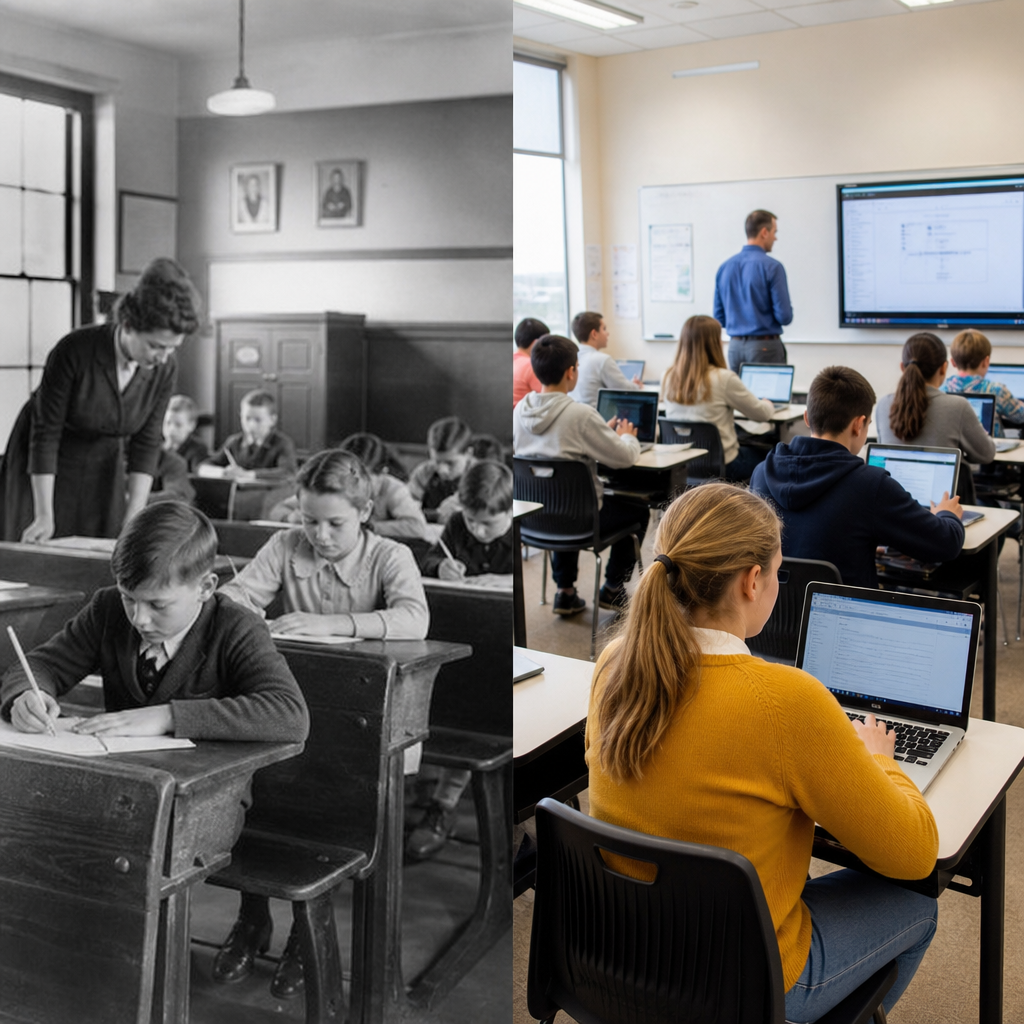

Technology is reshaping assessment types across schools, universities, and workplace learning, changing not only how educators measure performance but also what they can measure with accuracy and speed. In educational assessment, the term assessment types refers to the major ways learning is evaluated, including formative assessment, summative assessment, diagnostic assessment, ipsative assessment, criterion-referenced assessment, norm-referenced assessment, performance assessment, and authentic assessment. I have worked with institutions moving from paper tests and static rubrics to learning management systems, adaptive platforms, plagiarism detection, e-portfolios, and analytics dashboards, and the shift is larger than simple digitization. It changes timing, evidence, feedback loops, accessibility, reliability, and decision-making. This matters because assessment drives instruction: when tools change assessment design, they also influence curriculum, teaching practice, student motivation, and institutional accountability. A strong understanding of how technology affects types of assessment helps educators choose methods that fit purpose rather than chasing novelty. It also helps students and leaders ask better questions about fairness, validity, privacy, and the quality of evidence used to judge learning.
At its core, assessment is the systematic collection of evidence about knowledge, skills, attitudes, or progress. Different assessment types serve different functions. Diagnostic assessment identifies prior knowledge and misconceptions before instruction begins. Formative assessment monitors learning during instruction so teaching can adapt. Summative assessment evaluates achievement at the end of a unit, course, or program. Performance and authentic assessments ask learners to demonstrate skills in realistic tasks, while criterion-referenced and norm-referenced approaches interpret results against standards or peer groups. Technology now touches every one of these categories. Online quizzes can instantly identify gaps, adaptive tests can personalize item difficulty, simulations can capture complex decision-making, and dashboards can reveal patterns invisible in paper gradebooks. Yet every gain introduces tradeoffs. Automated scoring can save time but miss nuance. Remote proctoring can deter cheating but raise equity and surveillance concerns. To understand modern assessment practice, educators need a clear map of the main types of assessment and the specific ways digital tools are changing each one.
Diagnostic Assessment: Faster Baselines and Earlier Intervention
Diagnostic assessment happens before or at the start of instruction. Its goal is not grading but locating readiness levels, prerequisite knowledge, and misconceptions. Technology has made this assessment type more useful because it shortens the time between evidence collection and intervention. In a paper-based environment, teachers often needed days to score pretests and sort students into support groups. With tools such as Google Forms, Microsoft Forms, Moodle quizzes, and adaptive placement platforms like NWEA MAP or ALEKS, results can appear immediately, often with item-level analysis.
That speed changes classroom decisions. A mathematics teacher can assign a short online diagnostic on linear equations and see that one group struggles with integer operations while another is ready for graphing. A language instructor can use a computer-adaptive placement test to identify listening gaps separately from grammar knowledge. In higher education, diagnostic writing platforms can flag sentence-level weaknesses, citation errors, and organizational patterns before a composition course formally begins. The advantage is precision. Instead of reteaching an entire unit, instructors can target the exact concepts blocking progress.
Technology also broadens what counts as diagnostic evidence. Analytics from prior course activity, discussion participation, and even video-view completion can indicate readiness. The limitation is that convenience can tempt educators to overinterpret thin data. A short auto-scored pretest may identify content gaps but not test anxiety, language barriers, or motivation. Diagnostic assessment works best when digital results are triangulated with observation and conversation.
Formative Assessment: Continuous Feedback at Classroom Scale
Formative assessment is the assessment type most visibly transformed by technology because it depends on frequent feedback. Digital polling, low-stakes quizzes, collaborative documents, classroom response systems, and game-based tools such as Kahoot, Quizizz, Nearpod, and Pear Deck allow instructors to check understanding in real time. In my experience, the practical value is not the novelty of clicking an answer on a device. It is the immediate pattern detection. When seventy percent of a class selects the same wrong answer, the teacher knows exactly where to pause and reteach.
Learning management systems extend formative assessment beyond live sessions. In Canvas, Blackboard, or Google Classroom, educators can embed knowledge checks inside modules, attach rubric-based comments to drafts, and monitor submission timing and revision history. Students benefit because feedback becomes more specific and timely. A science teacher can annotate a lab report online, linking comments to rubric criteria such as hypothesis quality, evidence use, and error analysis. A student can revise while the task is still fresh, which is central to formative practice.
Technology also supports multimedia feedback. Audio comments often communicate tone better than text, and screencast feedback lets an instructor walk through a spreadsheet model, coding project, or design portfolio. However, more data does not automatically mean better formative assessment. If every click becomes a metric, teachers can drown in dashboards without improving instruction. Effective digital formative assessment requires clear success criteria, limited high-value checks, and feedback students can actually use.
Summative Assessment: Efficiency, Security, and New Risks
Summative assessment measures achievement after a defined period of learning. Traditional exams remain common, but technology has altered delivery, scoring, reporting, and security. Online testing platforms can randomize items, draw from question banks, and provide rapid results for multiple-choice or short-response questions. District benchmark systems and university testing software reduce administrative burden, especially in large enrollment settings. Standardized testing programs increasingly use digital administration because it streamlines accommodations, scaling, and data reporting.
Yet the biggest change is not simply moving final tests to screens. Technology allows summative assessment to include richer evidence. Students can submit digital portfolios, recorded presentations, coded prototypes, GIS maps, or multimedia case studies. In career and technical education, a summative task might require documenting a process with photos, measurements, and reflection logs. In teacher education, candidate performance can be captured through video and evaluated against professional standards.
Still, high-stakes digital summative assessment introduces serious concerns. Device access, bandwidth stability, keyboarding speed, and familiarity with interfaces can affect performance independently of subject mastery. Remote proctoring software has been criticized for false flags, facial recognition bias, and invasive monitoring. Automated essay scoring can support consistency for constrained tasks, but it should not be treated as a complete substitute for expert human judgment on complex writing. The sound principle is straightforward: use technology to improve efficiency and evidence quality, not to weaken validity.
Performance and Authentic Assessment: Measuring What Students Can Do
Performance assessment asks learners to demonstrate skills by doing something observable, while authentic assessment places that demonstration in a realistic context. Technology has significantly expanded both forms. Simulations, virtual labs, coding sandboxes, digital fabrication tools, and video-based tasks make it possible to assess problem-solving, collaboration, design, and professional judgment more directly than a selected-response test can. This is one of the most important shifts in modern educational assessment because complex competencies are increasingly central to curriculum goals.
Consider nursing education. Instead of relying solely on written exams, programs can use simulation software and recorded scenario performance to assess clinical reasoning, patient communication, and procedural sequencing. In business courses, students may analyze live datasets in Excel, Tableau, or Power BI and present recommendations through dashboards. In world languages, learners can record spoken responses and receive rubric-based scoring on fluency, pronunciation, and interactional competence. In K-12 science, virtual labs can assess experimental design when physical resources are limited.
The challenge is reliability. Rich tasks generate rich evidence, but scoring that evidence consistently requires well-designed rubrics, scorer training, anchor examples, and moderation procedures. Technology can help by storing exemplars, enabling blind scoring, and organizing portfolio artifacts over time. It cannot remove professional judgment from complex performance assessment, nor should it. Good authentic assessment uses digital tools to capture evidence of real capability, not to automate every decision.
| Assessment Type | How Technology Changes It | Common Tools | Key Caution |
|---|---|---|---|
| Diagnostic | Instant baseline data and item analysis | ALEKS, MAP, LMS quizzes | Do not infer too much from narrow pretests |
| Formative | Real-time checks and rapid feedback | Nearpod, Kahoot, Canvas | Avoid overload from excessive data points |
| Summative | Scalable delivery, faster scoring, digital artifacts | Question banks, proctoring tools, e-portfolios | Protect validity, access, and privacy |
| Performance/Authentic | Captures complex skills in simulations and portfolios | Virtual labs, video assessment, Adobe, GitHub | Requires strong rubrics and scorer calibration |
Criterion-Referenced, Norm-Referenced, and Adaptive Models
Some assessment types are defined not by format but by interpretation. Criterion-referenced assessment compares performance against specific standards or learning outcomes. Norm-referenced assessment compares performance against a broader group. Technology strengthens both approaches by making data aggregation and reporting more sophisticated. Standards-based gradebooks can show whether a student met a defined proficiency target rather than just earning points. At the same time, large testing systems can place an individual score within local, state, or national distributions.
Adaptive testing deserves special attention because it is one of the clearest examples of technology changing assessment design itself. In computer-adaptive testing, the system selects the next question based on previous responses, often using item response theory. This increases efficiency because students do not all need to answer the same set of items to produce a reliable estimate of ability. Graduate admissions, language proficiency, and K-12 interim assessment programs commonly use adaptive methods. When well built, adaptive assessments reduce frustration from questions that are far too easy or impossibly difficult.
But interpretation still matters more than technical sophistication. A beautifully designed adaptive test may provide precise measurement of a narrow construct while telling little about applied performance. Likewise, norm-referenced comparisons can be useful for large-scale decisions, yet they are weak guides for day-to-day teaching unless connected back to clear criteria. Technology makes score reporting more impressive; it does not remove the need for careful judgment about what the score actually means.
Equity, Integrity, Accessibility, and the Future of Assessment Types
As technology reshapes types of assessment, the most important questions are increasingly ethical and practical. Equity comes first. If students lack stable internet, updated devices, assistive technology, or quiet testing spaces, digital assessment can widen opportunity gaps. Accessibility must be designed in from the start using principles aligned with Universal Design for Learning and standards such as the Web Content Accessibility Guidelines. That means captions, screen-reader compatibility, keyboard navigation, color contrast, flexible timing where appropriate, and alternatives for tasks that depend on a single mode of response.
Academic integrity is also changing. Lockdown browsers, plagiarism detection systems such as Turnitin, authorship analysis, and question randomization can reduce some forms of misconduct, but they do not solve the core issue. The strongest response is assessment design. When tasks require explanation, process evidence, oral defense, personalized application, or iterative drafts, cheating becomes harder and learning becomes more visible. This is especially relevant in the age of generative AI. Educators should distinguish between prohibited substitution and transparent, guided use of AI for brainstorming, feedback, coding support, or language assistance, depending on course goals.
Looking ahead, the future of assessment types is not a single digital model replacing all others. It is a more intentional ecosystem. Short adaptive diagnostics, embedded formative checks, standards-based reporting, performance tasks, portfolios, and carefully chosen summative measures can work together when each has a defined purpose. The central benefit of technology is not automation alone. It is the ability to gather better evidence, return it faster, and align assessment more closely with real learning. Educators building or revising an assessment system should audit every assessment type they use, ask what decision it supports, and adopt technology only where it improves validity, feedback, access, or efficiency.
Technology is changing assessment types by making evaluation more immediate, more data-rich, and in many cases more authentic to the skills learners need beyond school. Diagnostic assessment now identifies readiness gaps quickly. Formative assessment provides continuous signals that can shape instruction in real time. Summative assessment can scale efficiently while incorporating digital products and portfolios. Performance and authentic assessment can capture complex capabilities through simulations, multimedia, and applied tasks. Criterion-referenced, norm-referenced, and adaptive approaches also benefit from stronger reporting and more precise measurement. Across all of these forms, however, the same rule applies: the tool must serve the purpose of the assessment, not the other way around.
For institutions building a strong foundation in educational assessment, this hub topic matters because every later decision about grading, feedback, accountability, and curriculum depends on selecting the right assessment type. The best systems combine multiple forms of evidence, use technology thoughtfully, and protect fairness, accessibility, and privacy. If you are refining your assessment strategy, map your current assessments by purpose, identify where digital tools genuinely improve evidence quality, and strengthen the areas where convenience has started to replace sound judgment.
Frequently Asked Questions
How is technology changing the main assessment types used in education and workplace learning?
Technology is transforming assessment types by making them more continuous, data-rich, and responsive to the learner. Traditionally, many schools, universities, and training programs relied heavily on summative assessment such as final exams, end-of-unit tests, or certification checkpoints. Digital platforms now support a much broader mix of assessment types, including formative assessment through live quizzes and instant feedback tools, diagnostic assessment through adaptive pre-tests, and performance assessment through simulations, video submissions, and portfolio platforms. In workplace learning, technology also supports scenario-based evaluation, skills tracking, and real-time competency mapping in ways that were difficult to scale before.
One of the biggest shifts is that technology does not just speed up grading; it expands what can be measured. Instead of only capturing right-or-wrong answers, digital systems can track revision patterns, response times, problem-solving paths, participation, collaboration, and consistency over time. That makes criterion-referenced assessment more precise because learners can be evaluated against clearly defined standards with stronger evidence. It also improves ipsative assessment by allowing individuals to compare current performance to their own past work, which is especially useful for growth-focused learning environments.
At the same time, technology is changing expectations around assessment design. Educators and trainers are increasingly expected to choose the assessment type that best matches the learning goal rather than defaulting to a standard test. If the goal is knowledge recall, a digital quiz may be effective. If the goal is application, communication, or judgment, then authentic assessment through projects, simulations, or case analysis may be more appropriate. In that sense, technology is not replacing assessment types; it is helping institutions use them more strategically and more effectively.
What role does technology play in formative and summative assessment?
Technology has had a major impact on both formative and summative assessment, but the changes are especially significant for formative assessment. Formative assessment is meant to guide learning while it is happening, and digital tools are exceptionally well suited for that purpose. Learning management systems, classroom response apps, interactive whiteboards, and AI-supported tutoring tools allow instructors to check understanding in real time, identify confusion quickly, and adjust instruction immediately. Students can receive feedback within seconds rather than days, which makes learning more active and more responsive.
For formative assessment, the value of technology lies in frequency and usability. A teacher can run short polls, quick concept checks, discussion prompts, peer reviews, low-stakes quizzes, and reflective journals without losing large amounts of class time. In workplace learning, managers and trainers can use digital checkpoints, embedded questions, and skill-practice tasks throughout a course rather than waiting until the end. This creates a more accurate picture of progress because performance is captured across multiple moments instead of a single event.
In summative assessment, technology improves efficiency, scalability, and reporting. Online exams, digital essay submission systems, remote proctoring tools, and automated scoring engines allow institutions to administer large-scale assessments more consistently. Results can be compiled quickly, benchmarked across cohorts, and analyzed for trends. However, technology also raises important questions in summative settings, including exam security, accessibility, bias in automated scoring, and whether the assessment format truly reflects the intended learning outcomes. The best use of technology in summative assessment is not simply digitizing old tests, but improving reliability while ensuring that high-stakes decisions are based on fair and meaningful evidence.
How does technology improve diagnostic, criterion-referenced, and norm-referenced assessment?
Technology improves diagnostic assessment by making it easier to identify a learner’s starting point with speed and precision. Digital diagnostic tools can analyze patterns in prior knowledge, misconceptions, skill gaps, and readiness levels before instruction begins. For example, adaptive pre-assessments can change question difficulty based on a learner’s responses, helping instructors pinpoint exactly where support is needed. In workplace settings, onboarding assessments can quickly identify whether employees need foundational training or are ready for advanced content. This leads to more personalized instruction and more efficient use of learning time.
Criterion-referenced assessment also benefits significantly from digital systems. In this assessment type, learners are judged against a fixed set of standards or competencies rather than against each other. Technology supports this by linking assignments, quizzes, simulations, and rubric-based evaluations directly to learning outcomes. Educators can see not only an overall score, but also which standards have been mastered and which need reinforcement. This level of detail is particularly valuable in competency-based education and professional certification, where stakeholders need clear evidence that specific skills have been demonstrated.
Norm-referenced assessment is also strengthened by technology because digital platforms can aggregate results across large populations and generate comparative data quickly. Institutions can benchmark learners against classmates, school systems, national samples, or industry groups with greater ease than in the past. That said, technology does not automatically make norm-referenced assessment better in an educational sense. Comparative data can be useful for broad decision-making, but it should be interpreted carefully. Strong assessment practice requires balancing large-scale comparisons with individual learning needs, and technology is most effective when it supports both perspectives rather than overemphasizing ranking alone.
Can technology make performance assessment and authentic assessment more effective?
Yes, technology can make performance assessment and authentic assessment far more practical, scalable, and informative. Performance assessment asks learners to demonstrate skills by doing something meaningful, such as presenting, solving a problem, conducting an experiment, designing a product, or responding to a real-world scenario. Authentic assessment goes even further by placing those tasks in contexts that closely resemble real life. In the past, these assessment types were often limited by time, logistics, and scoring complexity. Technology helps remove many of those barriers.
Digital platforms now allow learners to submit videos, audio recordings, design files, coding projects, lab reports, slide decks, digital portfolios, and collaborative artifacts. Simulations and virtual environments can recreate workplace or academic situations that are difficult to stage in person, such as clinical decision-making, engineering troubleshooting, customer service interactions, or crisis response exercises. These tools allow assessors to observe judgment, application, communication, and process, not just final answers. That makes the evidence richer and often more aligned with the skills learners actually need outside the classroom.
Technology also improves the scoring and feedback side of authentic assessment. Rubric tools, annotation platforms, calibration systems, and review workflows help maintain consistency across evaluators. Students and employees can receive more targeted feedback tied directly to specific criteria. In addition, digital records make it easier to track growth over time, which supports reflective learning and ipsative comparison. Still, effectiveness depends on careful design. A flashy digital task is not automatically authentic. The task must reflect meaningful goals, clear standards, and relevant real-world performance for technology to truly add value.
What challenges should educators and organizations consider when using technology in assessment?
While technology offers clear benefits, it also introduces challenges that educators, institutions, and employers need to address thoughtfully. One of the most important concerns is validity: does the digital assessment actually measure what it claims to measure? A well-designed paper-based assessment can lose quality if it is moved online without adjusting for format, interaction style, or accessibility. For example, a timed online test may unintentionally measure typing speed, device familiarity, or internet stability along with subject knowledge. Good assessment practice requires careful alignment between the tool, the task, and the intended outcome.
Equity and access are also major concerns. Not all learners have the same access to reliable devices, broadband, assistive technologies, or quiet testing environments. If these issues are ignored, digital assessment can widen existing gaps rather than improve learning. Accessibility must be built in from the start, including support for screen readers, captioning, alternative formats, flexible timing when appropriate, and mobile-friendly design. In workplace learning, organizations should also consider whether all employees have equal opportunity to engage with digital assessment platforms during work hours and with adequate technical support.
Other important challenges include data privacy, academic integrity, algorithmic bias, and overreliance on automation. Assessment technology often collects large amounts of learner data, so institutions need strong policies on storage, consent, security, and appropriate use. Automated scoring and AI-supported feedback can be valuable, but they should be monitored carefully to avoid unfairness or shallow evaluation. Finally, educators should resist the temptation to use technology simply because it is available. The strongest assessment systems use technology to enhance professional judgment, improve feedback, and better match assessment types to learning goals. When adopted strategically, technology can strengthen assessment; when adopted carelessly, it can create new problems while solving old ones.