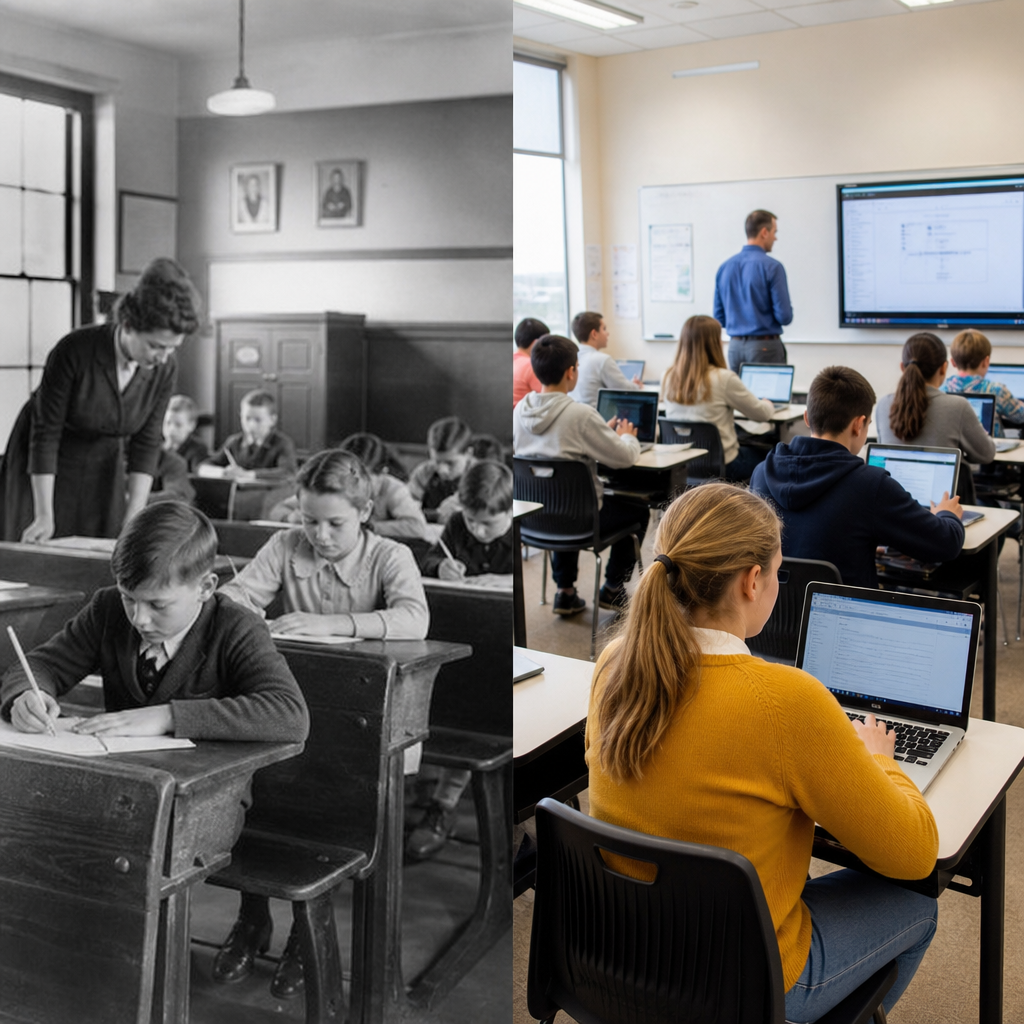

How educators can balance assessment and evaluation is a practical question at the center of effective teaching. In schools, colleges, and training programs, both terms are often used interchangeably, yet they serve different purposes and lead to different decisions. Assessment is the systematic process of gathering evidence about student learning. Evaluation is the process of judging the value, quality, or effectiveness of that learning, or of the instruction that shaped it. When educators confuse the two, classrooms drift toward either constant measurement without action or high-stakes judgment without enough evidence.
This distinction matters because teaching is not only about assigning grades. It is about understanding what learners know, where misconceptions sit, what support they need next, and whether the curriculum is doing its job. In my own work with teachers designing unit plans, the strongest classrooms are never the ones with the most quizzes. They are the ones where evidence is gathered intentionally, interpreted carefully, and used at the right moment. A quick exit ticket, a standards-based rubric, a final project score, and a program review all belong in the same ecosystem, but they should not be treated as identical tools.
Balancing assessment and evaluation means creating a system in which evidence improves learning before it is used to certify learning. It also means recognizing the levels at which decisions happen. Teachers assess daily understanding. Departments evaluate course outcomes. Schools evaluate program effectiveness. Students themselves can assess their own progress and respond to feedback before any formal judgment is made. Clear balance protects fairness, improves instruction, and helps educators meet accountability demands without reducing learning to a spreadsheet.
For a sub-pillar within Foundations of Educational Assessment, this hub article explains assessment vs. evaluation comprehensively: what each term means, how they differ, where they overlap, why the balance is hard to maintain, and how educators can build a reliable framework for practice. If you need a direct answer, here it is: assessment asks, “What evidence of learning do we have?” evaluation asks, “What decision or judgment should we make based on that evidence?” Strong teaching requires both, in the right order, for the right purpose.
Assessment and evaluation: the core difference educators must protect
The clearest way to separate assessment and evaluation is by purpose. Assessment is evidence collection. Evaluation is value judgment. A teacher observing a small-group discussion, marking a rubric during a presentation, or reviewing a draft essay is assessing. A teacher assigning a report card grade, deciding whether a student met a proficiency benchmark, or determining whether a curriculum produced acceptable outcomes is evaluating. The same artifact, such as a research paper, can support both processes, but the educator’s intent changes the function.
Assessment can be formative, interim, diagnostic, or summative. Diagnostic assessment identifies prior knowledge and gaps before instruction. Formative assessment happens during learning and informs next steps. Interim assessment checks progress across a wider period, often using common benchmarks. Summative assessment captures learning at the end of a unit or course. Evaluation usually follows the interpretation of one or more assessments and may extend beyond student performance to teacher practice, program quality, or institutional effectiveness.
One common mistake is assuming that every scored task is an evaluation. It is not. If a science teacher gives a low-stakes lab check to identify confusion about control variables, that score should guide reteaching, not necessarily become a permanent judgment. Another mistake is treating evaluation as inherently negative. In reality, evaluation is essential. Schools must decide if standards were met, if interventions worked, and if a course design should continue. The goal is not to avoid evaluation. The goal is to ensure that evaluation rests on sufficient, valid evidence.
Validity and reliability are central here. Validity asks whether the method measures what it claims to measure. Reliability asks whether results are consistent enough to support decisions. A single oral response may be useful for formative assessment, but it may be too narrow for a high-stakes evaluation. Balanced educators match the strength of evidence to the weight of the decision.
Why balance is difficult in real classrooms
Balancing assessment and evaluation is difficult because schools operate under competing pressures. Teachers want to support learning, but they also must produce grades, document progress, respond to parents, and align with district or accreditation requirements. Time is limited. Large class sizes make detailed feedback harder. Learning management systems can encourage frequent scoring because point entry is easy, even when those scores add little instructional value. Under pressure, educators may default to what is simplest to record rather than what is most useful for learning.
I see this most often when teachers overweight compliance tasks. Homework completion, attendance-related participation points, and extra-credit systems can dominate a gradebook while providing weak evidence of mastery. In those cases, assessment becomes fragmented and evaluation becomes distorted. A student may earn a respectable course grade while still lacking command of core standards, or a student with strong understanding may be penalized heavily for late work unrelated to actual learning outcomes. Neither result is educationally sound.
Another challenge is emotional. Students and families tend to hear any assessed task as a judgment, even when the teacher intends it as feedback. That perception can reduce risk-taking. If every draft “counts,” students become strategic rather than reflective. They aim to protect grades instead of improving work. Balanced systems create room for rehearsal, error, and revision. This is especially important in writing, mathematics problem solving, laboratory work, and language learning, where improvement depends on visible iteration.
Institutional culture matters too. In standards-based systems, teachers may feel more freedom to separate practice from final proficiency judgments. In traditional percentage systems, categories often blur. Without clear policy, formative checks quietly become mini-evaluations. The result is grade inflation in some classrooms, punitive grading in others, and weak comparability across sections of the same course.
What balanced practice looks like across the learning cycle
A balanced approach aligns assessment and evaluation to the sequence of learning. Before instruction, educators use diagnostic assessment to identify readiness, misconceptions, and access needs. During instruction, they gather formative evidence and adjust teaching. Near the midpoint, they use interim checks to monitor progress and pacing. At the end, they use summative evidence to evaluate achievement against standards or outcomes. This sequence sounds straightforward, but its power lies in disciplined design: each assessment has a stated purpose, and each evaluation uses evidence proportionate to the decision being made.
In a middle school mathematics unit on proportional reasoning, for example, a teacher might begin with a short diagnostic task asking students to interpret ratios in recipes and maps. The responses reveal whether students confuse additive and multiplicative relationships. Over the next two weeks, the teacher uses mini whiteboard checks, one-minute written explanations, and problem sorts as formative assessments. Midway through the unit, a common benchmark assesses application across representations. At the end, students complete a performance task and a selected-response quiz. Only then does the teacher evaluate overall mastery.
Notice the balance: early evidence informs teaching; later evidence supports judgment. The formative tasks matter because they shape instruction, but they do not carry the same evaluative weight as the end-of-unit measures. This preserves the integrity of both processes. It also improves fairness because students are not permanently judged on the basis of first attempts.
| Stage | Main Purpose | Typical Methods | Best Use |
|---|---|---|---|
| Before instruction | Identify readiness and misconceptions | Pre-tests, surveys, quick writes, interviews | Group students, plan scaffolds, set entry points |
| During instruction | Monitor learning in progress | Exit tickets, observations, drafts, questioning | Reteach, extend, give feedback, adjust pacing |
| Mid-course | Check progress toward outcomes | Benchmarks, common assessments, conferences | Identify trends, intervention needs, curriculum gaps |
| End of learning cycle | Judge achievement and effectiveness | Projects, exams, portfolios, final performances | Assign grades, certify proficiency, review program results |
This framework also works in higher education and workforce training. In a nursing course, simulation debriefs are formative assessments; the clinical competency checkoff is evaluative. In a corporate training program, reflection journals may assess transfer of learning, while certification results evaluate whether participants reached required performance standards.
How to choose the right evidence for the right decision
Not all evidence should be used the same way. Balanced educators ask four questions before deciding how an assessment will function. First, what learning target is being measured: knowledge, skill, reasoning, product, or disposition? Second, what method produces the strongest evidence for that target? Third, how high stakes is the decision? Fourth, what sources of bias or distortion could affect interpretation? These questions prevent the common error of building major evaluations on weak or misaligned evidence.
Consider writing instruction. If the target is revision skill, then collecting only a timed final essay is insufficient. You need drafts, feedback cycles, reflection, and perhaps conferencing notes. If the target is fluent on-demand writing, then timed performance has stronger alignment. In physical education, evaluating teamwork solely through self-report is weaker than combining observation, peer feedback, and structured criteria. In career and technical education, a machine operation skill should be judged through performance against safety and accuracy standards, not only through a paper test.
Rubrics are especially useful when balancing assessment and evaluation, provided they are analytic, criterion-referenced, and tied to standards. A vague rubric such as “excellent, good, fair, poor” does not create dependable evidence. A stronger rubric names dimensions like argument quality, evidence integration, organization, and language control, with descriptors for each level. During learning, the rubric guides feedback. At the end, the same rubric can support evaluation, but only if students had access to it early and used it in practice.
Educators should also separate academic achievement from behavior whenever possible. Effort, punctuality, and participation matter, but folding them into achievement grades confuses evaluation. Many schools now report “habits of work” separately for this reason. Doing so creates clearer signals for students and families: one indicator communicates mastery, another communicates learning behaviors.
Feedback, grading, and fairness in a balanced system
Feedback is where assessment becomes useful. Effective feedback is timely, specific, and actionable. It tells students what they did, what it means, and what to do next. “Needs work” is not feedback. “Your claim is clear, but your second paragraph summarizes sources without explaining how they support the claim; add reasoning after each quotation” is feedback. In balanced classrooms, feedback appears before final evaluation often enough that students can improve outcomes through informed revision.
Grading policies can either support or undermine this balance. If every practice task is graded heavily, students receive many numbers but little guidance. If no summative expectations are clear, evaluation becomes subjective. The strongest policies distinguish between practice, progress checks, and final demonstrations of learning. Some teachers use weighted categories, such as 20 percent formative evidence and 80 percent summative evidence. Others use standards-based grading, where the most recent and most consistent evidence of proficiency matters more than averages from early attempts. Each model has tradeoffs, but both can work if expectations are explicit and evidence is aligned.
Fairness also requires attention to accessibility and bias. Universal Design for Learning helps educators provide multiple means of engagement, representation, and action or expression. That does not mean lowering standards. It means removing unnecessary barriers. A history student who understands causation should not be blocked from demonstrating knowledge because of avoidable format constraints. At the same time, accommodations should preserve the construct being measured. Reading aloud a reading comprehension test changes the construct; providing extended time on a content test may not.
Moderation strengthens fairness further. When teachers score common tasks together, compare sample work, and calibrate rubric interpretations, evaluative judgments become more consistent. This matters in departments where multiple instructors teach the same course. It also matters in project-based learning, where subjective variation can otherwise widen quickly.
Building a schoolwide framework that lasts
Lasting balance between assessment and evaluation does not come from individual teacher effort alone. It requires a schoolwide framework. Leaders should define common vocabulary, clarify the role of formative evidence, establish grading principles, and schedule time for collaborative review of student work. Professional learning communities are valuable when they focus on four disciplined questions: What should students learn? How will we know they learned it? What will we do if they did not? What will we do if they already did? Those questions keep assessment tied to response and evaluation tied to standards.
Data systems also need restraint. The best schools do not collect everything they can; they collect what they can actually use. A manageable dashboard might include course-level common assessment results, subgroup patterns, growth indicators, and selected student work samples. Beyond that, teachers drown in numbers and stop acting on them. Assessment literacy training is therefore essential. Educators should know how to interpret item analysis, distinguish norm-referenced from criterion-referenced results, and recognize when a measure is too limited for strong evaluative claims.
Finally, balance improves when schools communicate clearly with students and families. Explain which tasks are practice, which are checkpoints, and which contribute substantially to final evaluation. Share rubrics in advance. Make revision policies visible. Report achievement separately from conduct when possible. When stakeholders understand the system, trust increases and grade disputes decrease.
Assessment and evaluation are not competing agendas. Assessment gives educators the evidence needed to improve learning; evaluation turns that evidence into responsible decisions about achievement, instruction, and program quality. The balance matters because students deserve both support while they are learning and fair judgment when learning must be certified. When educators define purposes clearly, align methods to learning targets, protect time for feedback, and limit high-stakes decisions to strong evidence, classrooms become more accurate, humane, and effective.
The key takeaway is simple: assess early and often to inform instruction, evaluate carefully and transparently to certify results. Keep practice low stakes, keep criteria visible, and keep judgments proportional to the quality of evidence. If you are building your Foundations of Educational Assessment resources, use this hub as your starting point, then review your own grading, feedback, and assessment design with the same question in mind: are you gathering evidence to help students learn, or judging them before they have had the chance?
Frequently Asked Questions
1. What is the difference between assessment and evaluation in education?
Assessment and evaluation are closely related, but they are not the same thing. Assessment is the ongoing process of collecting evidence about what students know, understand, and can do. It includes activities such as quizzes, class discussions, observations, drafts, reflections, performance tasks, and informal checks for understanding. Its main purpose is to inform teaching and support learning while it is happening. In other words, assessment helps educators see where students are, what gaps exist, and what next steps may be needed.
Evaluation, by contrast, involves making a judgment about the quality, effectiveness, or value of student learning, instructional strategies, or even an entire program. Evaluation often uses assessment data, but it goes a step further by interpreting that evidence in relation to standards, goals, or outcomes. For example, a teacher may assess a student’s writing through multiple drafts and peer feedback, then evaluate the final piece by assigning a grade based on a rubric. Understanding this distinction matters because assessment is primarily about improvement, while evaluation is primarily about decision-making. When educators balance both well, they can support student growth without losing the accountability and clarity that evaluation provides.
2. Why is it important for educators to balance assessment and evaluation?
Balancing assessment and evaluation is important because relying too heavily on one can weaken teaching and learning. If educators focus only on evaluation, students may experience learning as a series of judgments, grades, and high-stakes outcomes. This can create anxiety, reduce motivation, and limit opportunities for students to learn from mistakes. In that environment, students may become more concerned with performance than progress, and teachers may miss valuable opportunities to adjust instruction before it is too late.
On the other hand, if the focus is only on assessment without meaningful evaluation, students and institutions may lack clear benchmarks for achievement. Educators still need ways to determine whether learning goals have been met, whether standards are being upheld, and whether instructional approaches are effective. Evaluation helps with reporting, accountability, placement, certification, and long-term planning. The most effective educators recognize that assessment and evaluation work best together. Assessment provides the evidence and feedback needed to improve learning, while evaluation offers structure, judgment, and clarity about outcomes. A healthy balance ensures that students are supported throughout the learning process and also fairly measured at key points.
3. What are some practical strategies educators can use to balance assessment and evaluation in the classroom?
One of the most practical strategies is to design learning with both formative and summative purposes in mind. Formative assessment can include quick exit tickets, think-pair-share activities, low-stakes quizzes, journals, conferences, and observations. These methods allow teachers to gather evidence regularly and respond in real time. Summative evaluation can then be reserved for major checkpoints such as final projects, unit exams, presentations, or portfolio reviews. By separating low-stakes opportunities for growth from higher-stakes judgments, educators create a more supportive and accurate learning environment.
Another effective strategy is to use clear learning objectives and transparent success criteria. When students understand what they are expected to learn and how their work will eventually be evaluated, assessment becomes more purposeful and evaluation becomes more fair. Rubrics, exemplars, and guided feedback can help students connect daily learning tasks with larger performance expectations. Educators can also involve students in self-assessment and peer assessment, which builds ownership and helps learners reflect on progress before formal evaluation occurs. In addition, using varied evidence sources rather than a single test gives a fuller picture of learning. A balanced approach often includes observation, discussion, written work, applied tasks, and reflection, so evaluation is grounded in rich and reliable assessment data.
4. How can assessment improve evaluation decisions?
Assessment improves evaluation decisions by making them more accurate, more fair, and more meaningful. When educators gather evidence over time, they are less likely to base judgments on one isolated performance. A student may struggle on a single test for many reasons, including stress, misunderstanding directions, or external distractions. Multiple assessments across different contexts provide a broader view of what that student actually knows and can do. This helps evaluation reflect genuine learning rather than temporary circumstances.
Assessment also strengthens evaluation by revealing patterns. Teachers can see whether a student consistently demonstrates understanding, improves with feedback, or performs better in certain formats than others. That information is valuable not only for assigning grades but also for evaluating instructional effectiveness. If many students show the same misunderstanding, the issue may not be student effort alone; it may point to a need to revise teaching methods, pacing, or materials. In this way, assessment supports better evaluation of both learners and instruction. Instead of evaluation being a final judgment disconnected from the learning process, it becomes an informed conclusion based on meaningful evidence. That leads to decisions educators can defend professionally and explain clearly to students, families, and institutions.
5. How can educators make assessment and evaluation more fair and student-centered?
Fair and student-centered practice begins with clarity, consistency, and responsiveness. Educators should clearly communicate learning goals, expectations, and criteria for success from the start. Students are more likely to engage confidently when they know what they are working toward and how their progress will be measured. Using consistent rubrics, shared standards, and regular feedback reduces confusion and helps ensure that evaluation reflects learning rather than hidden expectations. Fairness also improves when educators provide multiple ways for students to demonstrate understanding, since not all learners show mastery in the same format.
Student-centered assessment and evaluation also require attention to context. Learners come with different backgrounds, strengths, language needs, and levels of prior knowledge. A balanced educator does not lower standards, but does provide appropriate supports, opportunities for revision, and feedback that guides improvement. Allowing students to reflect on their own learning, set goals, and respond to feedback turns assessment into an active partnership rather than a one-sided process. At the evaluation stage, fairness is strengthened when judgments are based on evidence aligned to outcomes instead of behavior, effort alone, or subjective impressions. Ultimately, educators create the best balance when they use assessment to help students grow and evaluation to confirm achievement in a way that is transparent, respectful, and grounded in evidence.