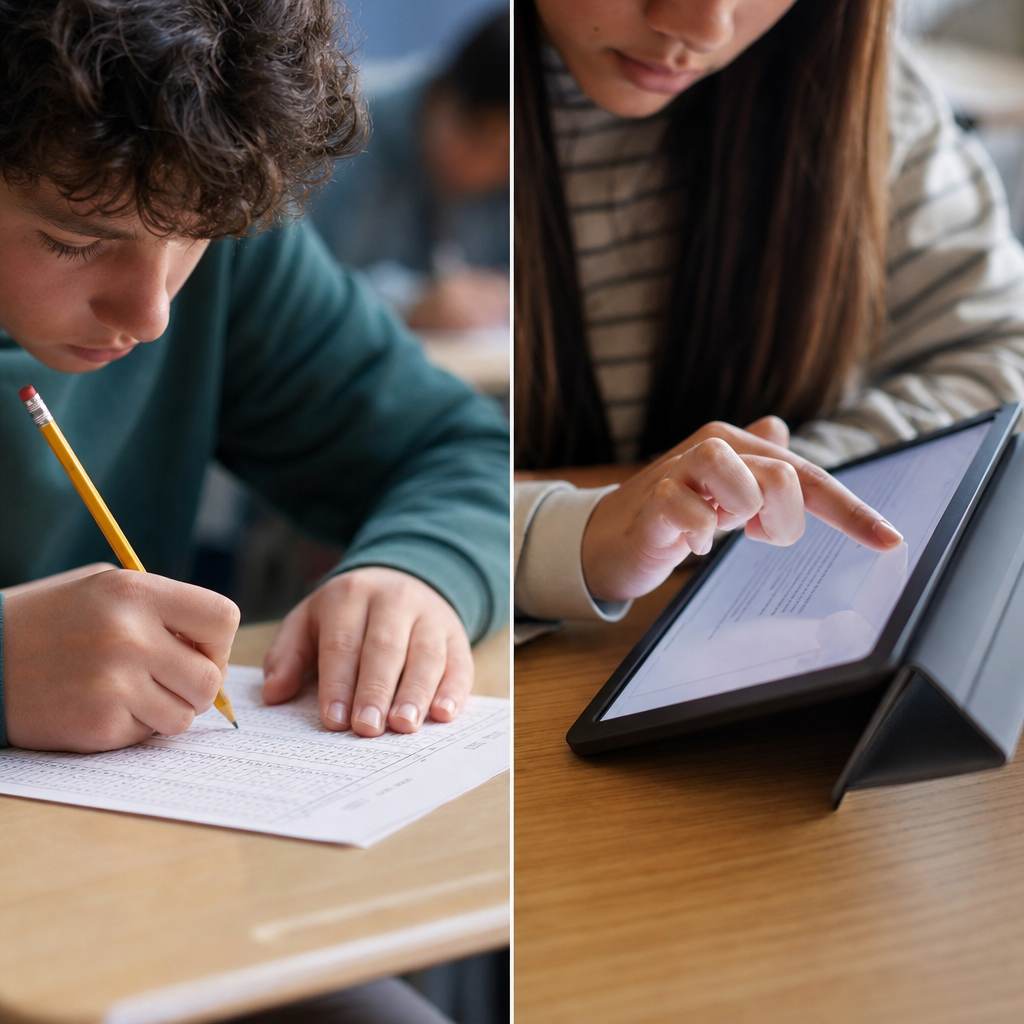
Designing assessments for remote learning requires more than moving a paper test into a browser. It means rethinking what evidence of learning looks like when students work across time zones, devices, and home environments. In practice, remote learning assessments include quizzes in a learning management system, recorded presentations, discussion prompts, digital portfolios, simulations, and project submissions. Assessment formats are the structures used to collect evidence: selected-response, constructed-response, performance tasks, oral demonstrations, peer review, and more. Choosing the right format matters because validity, reliability, accessibility, academic integrity, and student motivation all shift online. I have seen well-written classroom exams fail remotely because bandwidth was unstable, directions were buried, or the task rewarded speed over understanding. Strong remote assessment design solves those issues by aligning format, purpose, and technology. This hub article maps the major assessment formats used in remote learning, explains when each works best, and shows how to combine them into a coherent assessment system for schools, universities, and workplace training.
Start with purpose, evidence, and constraints
The first decision is not the tool. It is the claim you want to make about learning. If the goal is recall of terminology, a low-stakes quiz may be sufficient. If the goal is transfer, analysis, or professional judgment, you need richer evidence such as a case study, lab simulation, or authentic project. In remote settings, I begin with three questions: What knowledge or skill should learners demonstrate, what observable evidence would convince a qualified evaluator, and what constraints shape participation? Constraints include internet stability, device type, assistive technology, time zone differences, privacy rules, and instructor grading capacity.
Those questions prevent a common mistake: selecting a familiar format that measures convenience rather than competence. For example, timed multiple-choice tests are easy to deploy in Canvas, Moodle, Blackboard, or Google Forms, but they are weak measures of complex writing, collaboration, or practical performance. A better approach is to classify assessments by function. Diagnostic assessments identify prior knowledge before instruction. Formative assessments generate feedback during learning. Summative assessments support grades, certification, or progression decisions. Ipsative assessment compares a learner’s current performance to their previous work. In remote learning, the strongest systems use all four, with increasing authenticity as the stakes rise.
Selected-response formats: efficient, scalable, and often overused
Selected-response formats include multiple-choice, multiple-select, matching, true-false, hotspot, and ordering items. Their strength is efficiency. They are easy to administer at scale, can be auto-scored, and produce rapid data for item analysis. In remote courses with large enrollments, these formats are useful for prerequisite checks, retrieval practice, and concept discrimination. A nursing program, for instance, might use weekly scenario-based multiple-choice items to test triage decisions before students attempt a virtual patient simulation.
Quality depends on item construction. Effective items use plausible distractors, avoid grammatical clues, and target misconceptions rather than trivial recall. Scenario-based stems are especially valuable online because they test application without requiring lengthy writing. Platforms such as Questionmark, Respondus, and built-in LMS quiz engines support randomization, question banks, and feedback layers. However, reliability gains from standardization do not guarantee validity. If students can pass by test-taking tricks or answer sharing, the format is measuring something narrower than intended. For higher-order outcomes, selected-response should support learning, not dominate it.
Constructed-response formats: visible thinking and stronger evidence
Constructed-response formats ask learners to generate an answer rather than pick one. Short-answer prompts, problem explanations, essays, annotated diagrams, and code submissions fall into this category. They are powerful in remote learning because they reveal reasoning, not just recognition. A history teacher can ask students to compare two primary sources in 200 words. A mathematics instructor can require students to upload a photographed solution with a written justification. A cybersecurity course can request a brief incident-response memo based on log files.
These formats work best when scoring criteria are explicit. Analytic rubrics improve consistency by separating dimensions such as accuracy, use of evidence, organization, and technical precision. In my own course reviews, short constructed responses often outperform long essays for reliability because prompts are narrower and scoring criteria are tighter. Tools like SpeedGrader, Turnitin Feedback Studio, Gradescope, and Microsoft Teams assignments streamline annotation and rubric-based marking. The main tradeoff is labor. Constructed-response assessments demand more instructor time, so they should be reserved for outcomes where explanation and judgment are central.
Performance tasks and authentic assessment formats
Performance tasks are the most important assessment formats for remote learning when the goal is transfer to real-world contexts. They ask students to produce, perform, design, troubleshoot, or decide under conditions that resemble actual practice. Examples include recorded teaching demonstrations, business case analyses, design briefs, virtual science labs, spreadsheet models, podcasts, policy memos, and software prototypes. Unlike traditional tests, performance tasks capture integrated competence: knowledge, process, communication, and professional judgment.
Authenticity does not mean complexity for its own sake. A strong task mirrors the core decisions of the field. In teacher education, asking candidates to record a ten-minute mini-lesson and annotate where they checked for understanding produces richer evidence than a timed pedagogy exam. In accounting, analyzing a messy data set and justifying reconciliation choices is more authentic than memorizing definitions. Remote platforms make these tasks feasible. Students can submit video through Panopto or Flip, build portfolios in Google Sites or Mahara, and complete simulations in Labster or other virtual lab environments. The design challenge is standardization: prompts, resources, time windows, and scoring must be clear enough to support fairness.
Discussion, oral, and collaborative formats
Remote learning can easily become text-heavy and impersonal, so discussion and oral assessment formats are valuable for measuring communication, interpretation, and interpersonal skill. Asynchronous discussion boards work well when prompts require argument, evidence, and response to peers, not simple opinion posting. A good prompt narrows the claim, sets a word range, and defines what counts as a substantive reply. Synchronous oral exams, vivas, and presentations add identity assurance and allow immediate probing. Language courses, counseling programs, and doctoral seminars often rely on them because fluency and reasoning are best observed live.
Collaborative assessment formats include group presentations, shared documents, design sprints, peer critique, and team-based case analysis. They are appropriate when collaboration is part of the intended outcome, as it is in engineering, healthcare, and project management. The weakness is attribution. To solve that, I recommend combining a shared product with individual reflection, contribution logs, and rubric dimensions for teamwork behaviors. Peer assessment can also improve quality if students are trained with exemplars. Tools such as Peergrade, Eli Review, and Google Workspace revision history make contributions more visible and reduce free-rider problems.
Comparing remote assessment formats
Different formats answer different questions about learning. The table below summarizes how major options compare in remote environments and where they fit in an assessment strategy.
| Format | Best use | Main strength | Main limitation | Typical tools |
|---|---|---|---|---|
| Selected-response quiz | Checking recall, concepts, misconceptions | Fast scoring and strong scalability | Limited evidence of reasoning | Canvas Quizzes, Moodle, Google Forms |
| Short constructed response | Explaining process or interpretation | Shows thinking clearly | Higher marking load | Gradescope, Turnitin, LMS assignments |
| Essay or memo | Argument, synthesis, evidence use | Rich demonstration of judgment | Variable scoring without strong rubrics | Word processors, LMS submissions |
| Performance task | Applied, authentic outcomes | High validity for transfer | Complex design and scoring | Panopto, simulation platforms, portfolios |
| Discussion or oral assessment | Communication and reasoning | Allows probing and clarification | Scheduling and consistency challenges | Zoom, Teams, discussion boards |
| Collaborative project | Teamwork and problem solving | Reflects workplace practice | Harder to attribute individual performance | Google Workspace, Miro, Peergrade |
Accessibility, integrity, and feedback by design
Any hub on assessment formats for remote learning must address three design factors that cut across every option: accessibility, academic integrity, and feedback. Accessibility starts with Universal Design for Learning principles. Provide multiple means of response, avoid unnecessary time pressure, caption videos, supply readable file formats, and confirm compatibility with screen readers and keyboard navigation. If a learning outcome does not require speed, remove speed as a scoring factor. If handwriting quality is irrelevant, do not make photographed handwritten work the only submission option. Remote assessment becomes fair when barriers unrelated to the construct are minimized.
Academic integrity is best handled through design rather than surveillance alone. Remote proctoring tools such as Proctorio, Examity, and Honorlock can deter some misconduct, but they also raise privacy, bias, and false-flag concerns. More defensible strategies include open-book assessments that require application, unique data sets, question pools, randomization, staged submissions, oral follow-up checks, and reflective commentary on process. Feedback then closes the loop. Short audio notes, rubric comments, automated quiz explanations, and model answers improve learning when delivered quickly. Across formats, the most effective remote assessments make expectations transparent, collect meaningful evidence, and return guidance that students can use on the next task.
Designing assessments for remote learning is ultimately an exercise in fit. The best assessment format is the one that captures the intended learning with the least irrelevant barrier and the clearest scoring logic. Selected-response quizzes are useful for practice and checkpoints. Constructed responses reveal reasoning. Performance tasks provide the strongest evidence for transfer. Oral, discussion, and collaborative formats measure communication and teamwork that static tests miss. No single format is sufficient for a complete course, which is why this assessment formats hub should anchor a broader assessment design strategy built on variety, alignment, and clear standards.
When you build or revise a remote course, audit every assessment against five questions: What outcome is being measured, why is this format the right match, what evidence will be collected, how will it be scored consistently, and what barriers might disadvantage capable learners? Answer those questions before choosing technology. Then create a balanced mix of low-stakes and high-stakes tasks, supported by rubrics, exemplars, and timely feedback. That approach improves validity, reduces avoidable integrity problems, and gives students more than a grade: it gives them a fair chance to demonstrate what they can actually do. Use this hub as the starting point for selecting assessment formats that make remote learning credible, rigorous, and humane.
Frequently Asked Questions
What makes assessment design for remote learning different from traditional in-person assessment?
Remote learning changes both the conditions under which students complete assessments and the kinds of evidence instructors can realistically collect. In a classroom, teachers can control timing, environment, access to materials, and opportunities for clarification. In remote settings, students may be working asynchronously, on different devices, with varying internet reliability, and in home environments that affect concentration, privacy, and scheduling. Because of that, effective remote assessment design starts by asking what students should demonstrate and what format will capture that learning fairly and clearly, rather than simply transferring a paper test into an online platform.
In practice, this means broadening the definition of assessment. A remote course might use LMS quizzes for quick checks, discussion prompts for reasoning and participation, recorded presentations for communication skills, digital portfolios for growth over time, simulations for applied decision-making, and project submissions for authentic performance. Each format provides different evidence. Selected-response items can efficiently measure recall and recognition, while constructed-response tasks can reveal explanation, synthesis, and judgment. Performance-based and portfolio assessments are especially valuable in remote learning because they allow students to show learning in ways that are often more authentic than a timed test.
The design priorities also shift. Clarity becomes essential because students cannot always ask immediate questions. Instructions, rubrics, deadlines, submission steps, and examples need to be explicit. Accessibility matters more as well, since students may rely on mobile devices, assistive technologies, captions, transcripts, flexible windows, or downloadable materials. Finally, academic integrity is best addressed through thoughtful task design rather than surveillance alone. Questions that require application, reflection, comparison, creation, or use of local examples tend to produce stronger evidence of individual learning than heavily proctored recall tests.
Which assessment formats work best in remote learning environments?
The best assessment format depends on the learning objective, not on convenience alone. If the goal is to check foundational knowledge quickly, selected-response formats such as multiple-choice, matching, or short auto-graded quizzes can work well in a learning management system. These are useful for retrieval practice, low-stakes progress checks, and identifying misconceptions early. However, they should be designed carefully with clear wording, plausible distractors, and alignment to the intended skill. Overreliance on these formats can narrow what is measured, especially if the course aims to assess analysis, communication, creativity, or problem-solving.
Constructed-response formats are often more powerful in remote learning because they require students to generate their own answers. Short-answer prompts, essays, case analyses, data interpretations, and reflection responses can reveal how students reason and organize ideas. Discussion boards can be effective when prompts ask for evidence-based contributions, application to real scenarios, and meaningful peer response instead of superficial agreement. Recorded presentations allow instructors to assess explanation, organization, and speaking skills while giving students flexibility in timing. Project-based assessments and digital portfolios are particularly strong options when the objective is sustained inquiry, iterative improvement, or demonstration of applied competence across multiple pieces of work.
Simulations, scenario-based tasks, and authentic projects are also highly effective because they mirror real-world use of knowledge. For example, students might analyze a case, create a product, solve a community-based problem, or document a process over time. These formats often improve validity because they capture what students can do, not just what they can recognize on a test. The key is to use a balanced assessment system: low-stakes quizzes for feedback, discussion and written responses for reasoning, and larger performances or projects for deeper demonstration. A mix of formats provides a more complete and equitable picture of learning than any single assessment type alone.
How can instructors make remote assessments fair, accessible, and inclusive for all students?
Fairness in remote assessment begins with recognizing that students do not participate under identical conditions. Differences in internet access, device quality, time zone, caregiving responsibilities, work schedules, language background, and home environment can all affect performance. An equitable approach does not lower standards; it removes unnecessary barriers that interfere with students’ ability to demonstrate learning. That often means offering flexible timing windows instead of narrow test periods, allowing mobile-friendly submissions, using accessible file formats, and avoiding tasks that require specialized technology unless that technology is central to the learning goal and support is provided.
Accessibility should be built in from the beginning rather than added later. Instructions should be clear, chunked, and easy to scan. Videos should include captions, audio content should have transcripts, and documents should work with screen readers. Visual design matters too: readable fonts, strong contrast, consistent formatting, and uncluttered layouts improve usability for everyone. If students are being asked to submit presentations or multimedia work, instructors should provide alternative pathways when bandwidth, disability-related needs, or privacy concerns make the default format difficult. Rubrics should focus on the intended learning outcomes so students are not penalized for irrelevant technical limitations.
Inclusion also depends on the kinds of prompts and examples instructors choose. Assessment tasks should avoid cultural assumptions that advantage only some learners and should invite multiple ways of showing understanding when appropriate. Transparency helps significantly: explain the purpose of the assessment, how it connects to course outcomes, what success looks like, and how work will be judged. Sharing models, checklists, and annotated exemplars reduces ambiguity. Many instructors also improve fairness by using a combination of assessment types, allowing revision opportunities, and incorporating low-stakes practice before high-stakes submissions. These strategies create a more accurate picture of learning by reducing the impact of external circumstances and hidden expectations.
How do you maintain academic integrity in remote assessments without relying only on online proctoring?
Academic integrity in remote learning is strongest when it is designed into the assessment itself. While online proctoring may be used in some contexts, it can raise concerns about privacy, accessibility, false flags, technology failures, and student stress. A more durable approach is to create assessments that make simple answer-sharing less useful. Open-book or resource-enabled assessments, for example, can require students to analyze, compare, justify, apply concepts to new situations, or reflect on their process. When questions ask for judgment, evidence, local examples, or individualized responses, students are more likely to demonstrate genuine understanding than when they are only asked to recall isolated facts.
Assessment structure matters as well. Large, high-stakes exams are often more vulnerable than a series of smaller checkpoints. Breaking assessment into stages such as proposal, outline, draft, peer review, final submission, and reflection creates a visible learning process and reduces opportunities for misconduct. Randomized quiz banks, question pools, reasonable time limits, and varied versions of tasks can also help when objective testing is necessary. For written or project-based work, requiring students to connect course ideas to class discussions, current events, personal observations, datasets, or specific case materials can make responses more distinctive and harder to outsource.
Just as important is building a culture of integrity. Students are more likely to act honestly when expectations are explicit, support is available, and the purpose of the assessment is clear. Instructors should communicate what collaboration is allowed, what resources may be used, how citation should work, and what counts as misconduct in that particular course. Providing study guides, practice opportunities, and feedback reduces panic-driven cheating. In many cases, integrity improves when students feel that assessments are meaningful, achievable, and aligned with what they were actually asked to learn. Good remote assessment design treats integrity as a pedagogical issue, not only a monitoring problem.
What are the best practices for aligning remote assessments with learning outcomes and using results to improve instruction?
Alignment begins by identifying the specific learning outcomes students are expected to meet and then selecting assessment formats that generate valid evidence for those outcomes. If an outcome emphasizes remembering terminology, a short quiz may be sufficient. If it emphasizes evaluating evidence, communicating an argument, or applying concepts to realistic situations, a more open-ended format such as a case analysis, project, discussion, or presentation is a better match. This is the central principle of backward design: decide what students should know or be able to do, determine what evidence would convincingly show that learning, and only then choose the assessment method and task details.
Strong alignment also requires clear criteria. Rubrics, scoring guides, and checklists should map directly to the knowledge, skills, and habits of mind named in the outcomes. In remote learning, explicit criteria are especially important because students may complete work independently and need a reliable guide to expectations. High-quality prompts should identify the task, audience, constraints, and standards for success. Whenever possible, include examples of strong work and explain why they are effective. This helps students focus on the intended target instead of guessing what the instructor values.
Using results well is what turns assessment into a tool for learning rather than just grading. Instructors should look for patterns in submissions, quiz data, discussion responses, and project performance to identify where students are thriving and where they are struggling. If many learners miss the same concept, the issue may be instructional clarity rather than individual effort. Remote platforms often make this analysis easier by providing item-level data, completion trends, and timestamps. Those insights can guide reteaching, targeted feedback, revised materials, and differentiated support. Over time, reviewing assessment results also helps instructors refine the assessments themselves by removing unclear prompts, improving rubrics, adjusting workload, and ensuring that each task truly measures the learning it claims to assess.