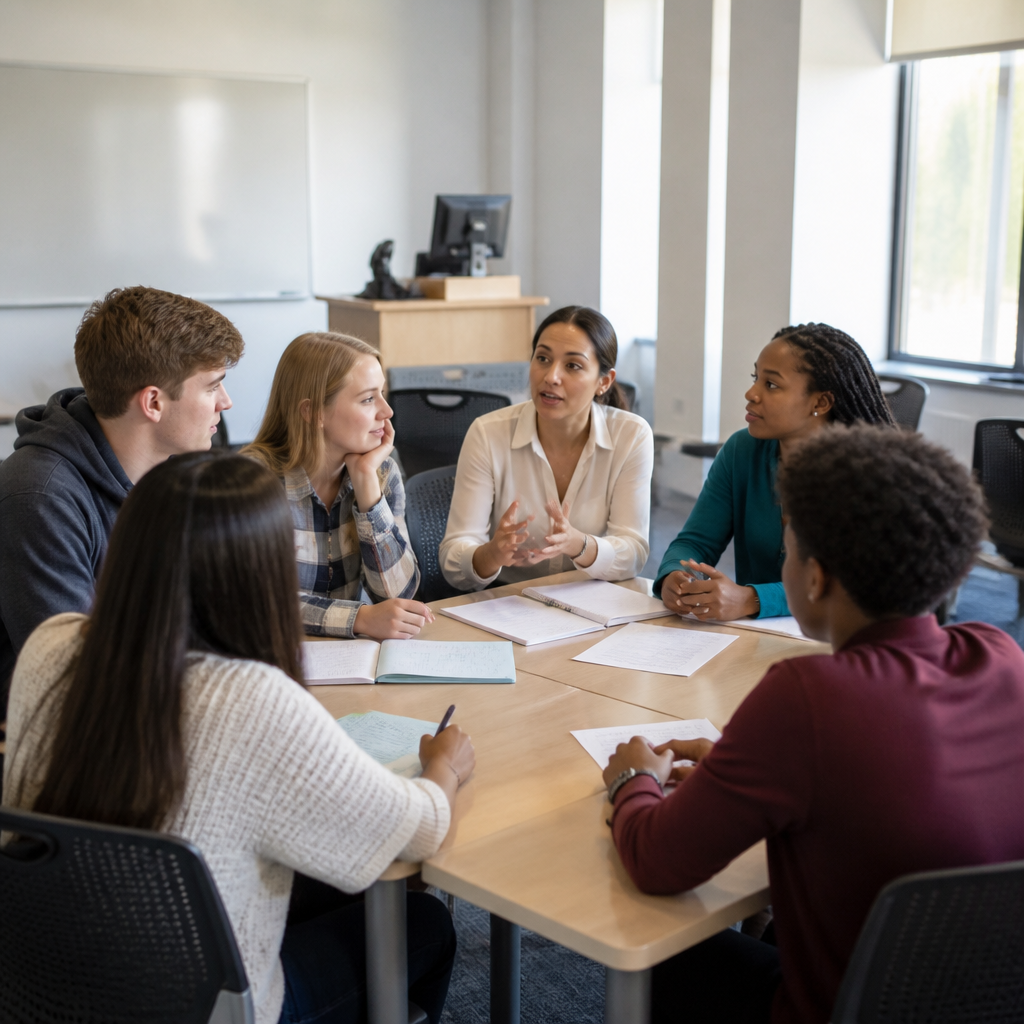
Focus groups in educational studies are a core qualitative research method for understanding how students, teachers, families, and administrators interpret learning experiences, school policies, and classroom change. In educational research, a focus group is a structured discussion with a small group of participants led by a moderator who uses open-ended questions to elicit perceptions, beliefs, language, and shared meanings. Unlike surveys, which measure predefined variables, or one-to-one interviews, which capture individual depth, focus groups reveal how opinions form, shift, and gain support in social settings. That social interaction is exactly why they matter in schools and universities, where decisions are rarely individual and are often shaped by peer norms, institutional culture, and power relationships. I have used focus groups in curriculum evaluation, student support reviews, and faculty development projects, and the method consistently surfaces issues that questionnaires miss, such as unspoken assumptions, conflicting interpretations of the same event, and the language participants themselves use to describe educational quality. As a hub within qualitative research methods, this article explains what focus groups are, when they are the right choice, how they fit beside interviews, observation, case study, ethnography, and document analysis, and how to design them rigorously. It also addresses practical concerns that educational researchers face every time: sampling, moderation, ethics, transcription, coding, validity, and reporting. For researchers building a broader educational research methods toolkit, mastering focus groups is valuable because the method is efficient, comparatively low cost, and well suited to exploratory questions about experience, meaning, and improvement.
What focus groups add to qualitative research in education
Qualitative research methods aim to understand meaning rather than simply measure frequency, and focus groups are especially useful when the research question depends on interaction. In education, that includes questions such as how first-generation students define belonging, why teachers interpret a new assessment policy differently, or what families see as barriers to attendance. A well-run group does more than collect opinions. It captures agreement, disagreement, hesitation, examples, and the social cues that show which views are widely shared and which are fragile. In practice, this makes focus groups a strong hub method within qualitative research methods because they connect naturally to other approaches. A researcher may begin with classroom observations, use focus groups to test emerging themes with participants, then conduct follow-up interviews for sensitive topics. The method also works across educational levels: elementary family engagement studies, secondary school climate reviews, higher education course redesign, adult literacy programs, and online learning evaluation. The key strength is comparative insight delivered efficiently. In ninety minutes, a researcher can hear participants react to each other, clarify concepts in real time, and generate a vocabulary that later improves interview guides or survey items.
When focus groups are the right method
Focus groups are appropriate when the goal is to explore perceptions, not estimate prevalence; generate hypotheses, not test causality; and understand shared experiences, not private histories alone. They are ideal early in a project when a researcher needs to map the terrain before designing a larger study. For example, before launching a districtwide survey on homework equity, a researcher might convene separate groups with students, caregivers, and teachers to identify how homework burden is actually experienced. Focus groups are also effective in program evaluation. A university can assess a first-year seminar by bringing together participants to discuss what supports retention, which activities felt performative, and what changes would make the course more relevant. However, they are a poor fit when confidentiality risk is high, the topic is deeply sensitive, or participants have strong hierarchical differences. Asking adjunct faculty to critique department leadership in front of tenured professors will distort data. Asking bullied students to discuss incidents in front of peers may cause harm and silence critical voices. In those cases, interviews, anonymous qualitative surveys, or diary methods are safer. The method succeeds when discussion is likely to stimulate recall and comparison rather than suppress honesty.
Designing strong focus groups for educational studies
Good focus groups begin with a sharply defined research purpose, because every later decision depends on it. Group composition should support open discussion while matching the study question. In educational studies, homogeneous groups often work best: students with students, novice teachers with novice teachers, parents with parents. Shared roles reduce status anxiety and encourage candid examples. Size matters. Most education researchers aim for six to eight participants, enough diversity for discussion without making moderation unmanageable. Smaller groups of four to six can work well with young people or specialized populations; larger groups usually reduce depth. A semi-structured protocol is standard. The guide should move from broad, easy prompts to more specific questions, then end with reflection and prioritization. For instance, a study on feedback practices might begin with “Describe the kinds of feedback you usually receive,” then probe timing, fairness, usefulness, and emotional impact. Questions should be open, neutral, and concrete. Avoid asking, “Do you support formative assessment?” if participants may not share the term. Ask instead, “When teachers give comments before a grade, how does that affect your work?” Pilot testing the guide is essential. In my projects, pilot groups almost always reveal jargon, sequencing problems, or prompts that generate generic answers rather than usable narratives.
Sampling, recruitment, and logistics
Sampling in qualitative research is purposeful rather than statistically representative. The aim is to recruit participants who can speak meaningfully to the research question. Common strategies in educational studies include criterion sampling, such as students who completed a bridge program; maximum variation sampling, such as teachers across grade bands and school types; and stratified purposeful sampling, such as separate groups for commuter and residential students. Recruitment should be transparent and ethical. Invitations need to explain the study purpose, expected duration, voluntary nature, and any incentive, such as a small gift card or meal voucher permitted by institutional rules. Scheduling affects data quality more than many new researchers expect. Teachers after school may be exhausted; university students near exams may give shallow answers. Online focus groups can improve access, especially for geographically dispersed participants, but they reduce nonverbal cues and can magnify turn-taking problems. In-person groups remain advantageous when rapport and observation matter. Venue selection also matters in education. Neutral, accessible spaces are better than administrators’ offices or classrooms associated with discipline. Recording quality should never be an afterthought. Use two audio devices, test microphones, and assign a note-taker to capture seating order, emotional tone, interruptions, and key moments that transcripts alone may miss.
| Method | Best use in education | Main strength | Main limitation |
|---|---|---|---|
| Focus groups | Exploring shared perceptions of programs, policies, or learning experiences | Shows how views are formed, challenged, and refined in discussion | Confidentiality is limited and dominant voices can skew data |
| Interviews | Understanding personal histories, sensitive experiences, or expert perspectives | Depth and privacy | Less insight into peer influence and social meaning making |
| Observation | Studying classroom practice, routines, and interaction patterns | Captures behavior directly | Cannot fully explain participant intentions without follow-up |
| Document analysis | Reviewing syllabi, policies, student work, and institutional records | Provides stable evidence and historical context | Documents may not reflect lived experience |
| Case study | Investigating a bounded program, school, or reform effort | Integrates multiple sources for rich context | Time intensive and not designed for broad generalization |
Moderation, group dynamics, and ethics
The moderator determines whether a focus group produces evidence or mere conversation. Effective moderation in educational studies requires neutrality, active listening, and disciplined probing. The moderator should invite all voices, manage dominant participants, and protect quieter members without putting them on display. Practical techniques include round-robin opening questions, directed probes such as “Let’s hear from someone who sees it differently,” and reflective summaries that test understanding without imposing interpretation. With adolescents and younger participants, prompts should be shorter and more concrete, and visual or scenario-based elicitation can help. Ethics are central because group settings limit confidentiality. Participants must be told clearly that researchers will protect recordings and transcripts, but cannot guarantee what other members repeat outside the room. Consent procedures should reflect participant age and institutional policy, including parental permission where required. In school-based studies, power relations require extra care. If participation feels tied to grades, services, or employment, the data are ethically compromised. Researchers should also prepare for distress disclosures. Discussions about exclusion, racism, disability support, or harassment can surface harm. A referral plan to counseling or safeguarding channels is part of responsible design. The ethical standard is not only formal approval from an institutional review board but practical respect for participants’ dignity, autonomy, and risk.
Analyzing focus group data with rigor
Analysis starts before transcription is complete, with analytic memos written immediately after each session. These memos capture emerging themes, notable contrasts, and moderation issues that may shape later groups. Full verbatim transcription is usually necessary for rigorous qualitative analysis, especially when the study examines language, disagreement, or interaction. Researchers then code the data using an explicit analytic approach. Thematic analysis is common because it is flexible and suitable across epistemological positions. Grounded theory may be appropriate when the aim is theory generation, while framework analysis is especially useful for policy or evaluation studies with predefined domains. In educational studies, strong analysis looks at both content and interaction. It matters not only what participants said about tutoring, for example, but how quickly others agreed, whether dissent emerged, and which examples carried authority. Software such as NVivo, MAXQDA, Dedoose, or ATLAS.ti can support data management, though software does not do the analysis. Trustworthy interpretation requires a clear codebook, comparison across groups, and attention to negative cases. Researchers should also triangulate where possible, comparing focus group findings with interviews, attendance records, classroom observations, or relevant documents. Member reflection can help in some projects, but it should be used carefully; participants may refine meaning, yet they are not the final arbiters of all interpretation.
Using focus groups as the hub within qualitative research methods
As a sub-pillar within educational research methods, focus groups work best when connected to the wider family of qualitative research methods rather than treated as a standalone technique. In exploratory sequential designs, focus groups often come first, identifying concepts that later shape interviews or surveys. In convergent designs, they sit beside observation and document analysis, helping explain why visible practices occur. In case study research, they add multiple stakeholder perspectives to a bounded educational setting. In action research, they can serve as a participatory feedback mechanism during cycles of planning, implementation, reflection, and revision. Consider a school introducing restorative practices. Observations may show circles happening regularly, documents may outline policy intent, and discipline records may show fewer referrals. Focus groups with students and staff reveal whether circles feel authentic, coerced, equitable, or merely symbolic. That is the distinctive contribution of the method: it captures lived interpretation. The best hub pages on qualitative research methods make this connection explicit. Researchers choosing among methods should ask four questions: What kind of knowledge is needed, who holds it, what setting shapes it, and what risks does data collection create? Focus groups answer these questions powerfully when meaning is socially produced and discussion itself is analytically valuable.
Focus groups in educational studies remain one of the most practical and revealing qualitative research methods because schooling is inherently social. They help researchers understand not just what participants think, but how shared meanings emerge around teaching, assessment, support, equity, and institutional change. Used well, they generate actionable insight for curriculum design, program evaluation, student services, and policy review. Used poorly, they produce superficial consensus, muted dissent, and ethical risk. The difference lies in careful design: purposeful sampling, well-sequenced questions, skilled moderation, secure logistics, transparent consent, and systematic analysis. As part of a broader qualitative research methods toolkit, focus groups are strongest when combined with interviews, observation, documents, or case study evidence. That combination gives educational researchers both context and explanation. If you are building expertise in educational research methods, start by matching your research question to the kind of interaction you need to hear. When the goal is to understand experience as it is discussed, negotiated, and contested in real educational settings, focus groups are often the right place to begin. Use this hub as your foundation, then map related methods to create stronger, more credible studies.
Frequently Asked Questions
What is a focus group in educational studies, and how does it differ from other research methods?
A focus group in educational studies is a planned, moderator-led discussion with a small group of participants who share perspectives on a topic such as classroom instruction, student support, curriculum change, school climate, or policy implementation. The goal is not simply to collect individual opinions, but to observe how people explain experiences, respond to one another, build on shared ideas, and reveal the language they use to make sense of education. This makes focus groups especially valuable when researchers want to understand meanings, perceptions, tensions, and group-level interpretations rather than just count responses.
What distinguishes focus groups from surveys is the depth and flexibility of the conversation. Surveys are useful for measuring predefined variables across large populations, but they typically limit participants to fixed response categories or short written comments. Focus groups, by contrast, allow participants to clarify their views, challenge assumptions, and raise unexpected issues that may not have been anticipated by the researcher. Compared with one-to-one interviews, focus groups add an interactive dimension. Participants can react to each other’s comments, prompting richer discussion and revealing consensus, disagreement, or variation across experiences. In educational settings, that interaction can be especially revealing because teaching and learning are social processes shaped by institutions, relationships, and shared norms.
For example, a survey might show that students feel “moderately supported” in school, while a focus group can uncover what support actually means to them, when they feel it is missing, and how peer and teacher relationships influence that perception. In short, focus groups are a core qualitative method for understanding how educational stakeholders interpret experiences and policies in their own words.
When are focus groups most useful in educational research?
Focus groups are most useful when researchers need insight into how people interpret educational experiences, not just whether they approve or disapprove of them. They are particularly effective in exploratory phases of a study, when a researcher is trying to identify key themes, understand stakeholder language, or surface issues that structured instruments may miss. In schools, colleges, and community education settings, this can include topics such as student engagement, assessment practices, inclusion, school discipline, parent communication, curriculum reform, and technology adoption.
They are also highly useful when studying shared experiences across a group. For example, if a school introduces a new literacy initiative, a focus group with teachers can reveal not only individual reactions but also common implementation barriers, informal workarounds, and differences in how the policy is interpreted across grade levels. Similarly, student focus groups can help researchers understand the lived experience of classroom routines, belonging, motivation, and academic pressure in a way that quantitative measures alone often cannot capture.
Another strong use case is program evaluation. Educational researchers often use focus groups to assess how participants experienced an intervention, whether its goals were understood, and what contextual factors shaped its impact. Because participants can compare experiences in real time, focus groups often uncover practical details about timing, communication, access, or trust that are essential to improving a program. They are especially powerful when combined with other methods such as surveys, observations, or interviews, allowing researchers to build a fuller and more credible picture of educational life.
Who should participate in a focus group for an educational study?
Participants should be selected based on the research question and the specific educational perspective the study needs to understand. In educational research, common participant groups include students, teachers, school leaders, support staff, parents or caregivers, and sometimes community partners. The most effective focus groups are usually composed of people who share enough background to discuss the topic meaningfully, but who also bring some diversity of experience within that shared context. This balance helps create both comfort and useful variation in the discussion.
For instance, if a study is examining how middle school students experience project-based learning, the participants should ideally be students who have directly engaged with that instructional model. If the topic is district policy implementation, school administrators or teachers may be more appropriate. In some cases, researchers conduct separate focus groups for different stakeholder groups so that each group can speak openly from its own position. This is often preferable to mixing participants with unequal power relationships, such as teachers and students or principals and staff, because power dynamics can limit honesty and participation.
Group size also matters. In many educational studies, focus groups work well with roughly six to eight participants, though smaller or slightly larger groups may be appropriate depending on the age of participants and complexity of the topic. Younger students may benefit from smaller groups and more structured facilitation. Above all, participant selection should be purposeful rather than random in the everyday sense. Researchers are typically seeking information-rich cases: people who can speak directly and thoughtfully about the educational issue being studied.
How are focus groups conducted effectively in schools and other educational settings?
Effective focus groups in educational settings begin with careful planning. Researchers first define a clear purpose, identify the right participant group, and develop a discussion guide built around open-ended questions. Strong questions invite reflection and description rather than yes-or-no responses. A moderator might ask, for example, “Can you describe a time when you felt especially supported in class?” or “How has the new attendance policy affected your daily experience at school?” These kinds of prompts encourage participants to provide examples, explain reasoning, and respond to one another.
The moderator plays a central role in the success of the session. In educational studies, the moderator should create a respectful, inclusive environment where participants feel safe sharing their views. This includes setting ground rules, explaining confidentiality limits, encouraging quieter members to contribute, and preventing one or two voices from dominating the conversation. In student groups especially, the moderator must use language that is age-appropriate and nonjudgmental. In teacher or parent groups, the moderator should remain attentive to institutional sensitivities that may make participants cautious.
Practical considerations are equally important. The setting should be comfortable and private enough to support honest discussion. Sessions are usually audio-recorded, with consent, so the researcher can accurately transcribe and analyze the conversation. In school-based research, timing should minimize disruption to instruction and respect participants’ responsibilities. After data collection, researchers typically code transcripts for themes, patterns, contrasts, and recurring language. They do not simply summarize what was said; they analyze how participants frame issues, where views converge or diverge, and what those patterns suggest about educational experiences or systems. When done well, focus groups produce nuanced data that are highly relevant for both scholarship and practice.
What are the main strengths and limitations of focus groups in educational studies?
The greatest strength of focus groups is their ability to generate rich, context-sensitive insight into how educational stakeholders understand their experiences. Because participants interact with one another, researchers can observe not just isolated opinions but also agreement, disagreement, hesitation, shared assumptions, and emerging ideas. This interaction often reveals dimensions of school life that are difficult to capture through surveys alone, such as how students talk about fairness, how teachers collectively make sense of reform, or how families interpret communication from schools. Focus groups can also be efficient, allowing researchers to hear from multiple participants in a relatively short amount of time.
Another major strength is that focus groups can surface language and concepts that matter to participants themselves. This is especially valuable in education, where institutional terms may not match lived experience. A researcher may begin with formal categories such as “engagement” or “inclusion,” but a focus group may reveal that participants think in terms of trust, voice, belonging, pressure, or respect. Those insights can sharpen theory, improve survey design, strengthen interventions, and make findings more meaningful for practitioners.
At the same time, focus groups have limitations. Not everyone is equally comfortable speaking in a group, and sensitive topics may be difficult to discuss openly, especially where power dynamics are present. A dominant participant can influence the conversation, and some individuals may conform to what seems socially acceptable rather than state what they truly think. Focus groups also do not produce statistically generalizable findings in the way large-scale quantitative studies might. Their value lies in depth, interpretation, and understanding context, not population estimates. For that reason, educational researchers often use them alongside other methods. When researchers acknowledge these limitations and design the study carefully, focus groups remain one of the most informative tools for examining how people experience learning, teaching, and educational change.